





Global Technical Regulations, or GTRs, deliver performance-based rules for vehicle safety, emissions, and energy efficiency. They operate under the 1998 Agreement managed by the World Forum for Harmonization of Vehicle Regulations (WP.29).
As of April 2026, exactly 25 GTRs sit in the official UN Global Registry. Forty contracting parties—including the EU, US, China, Japan, India, and Korea—use them.
These rules fix a core problem. Different national standards force manufacturers to run the same tests multiple times. That adds time and cost before vehicles reach new markets. GTRs let one set of tests cover multiple countries.
The 1998 Agreement creates these GTRs by consensus. It differs from the 1958 Agreement, which focuses on type-approval with mutual recognition. GTRs stay voluntary until a country adopts them into law. Yet once adopted, they cut duplication fast.
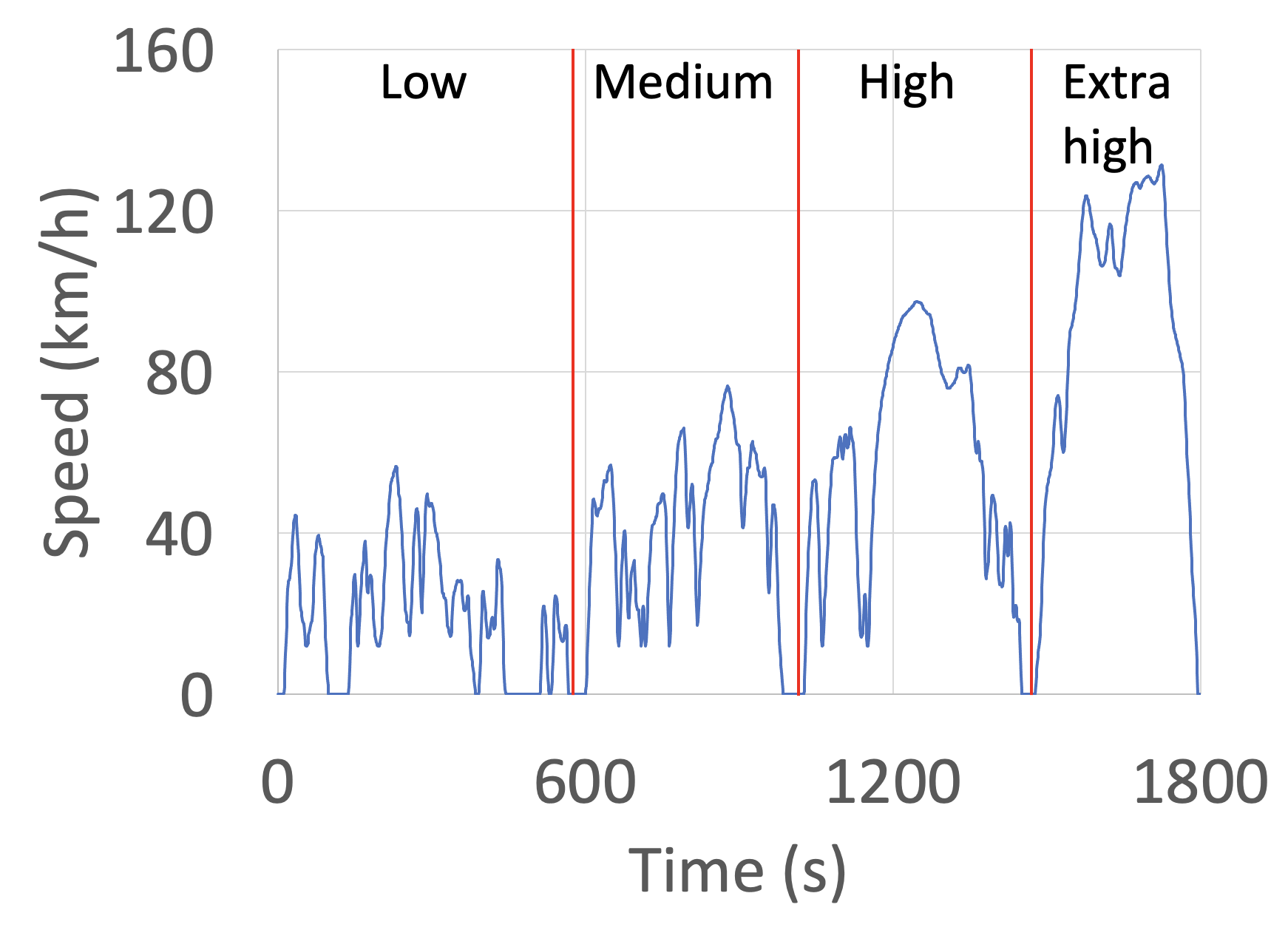
International: Light-duty: Worldwide Harmonized Light Vehicles Test Procedure (WLTP) | Transport Policy
That setup explains why compliance teams track GTRs so closely. One aligned test report can unlock several export markets at once.
1998 Agreement vs 1958 Agreement – Which One Matters for Your Vehicles?
The two agreements run in parallel. The 1958 Agreement uses UN Regulations (UNRs) with type approval and mutual recognition. A single approval works across all 1958 parties.
The 1998 Agreement produces GTRs instead. These stay performance-focused, not design-prescriptive. No automatic mutual recognition exists. Each contracting party must still transpose the GTR into local rules.
Here is the practical difference for manufacturers:
- Use 1958 UNRs for type approval in Europe or Asia.
- Use GTRs when self-certification markets like the US or Canada want harmonized data.
Many OEMs combine both. A GTR-compliant test often satisfies part of a UNR requirement too. That overlap saves engineering hours.
Complete 2026 List of All 25 UN GTRs – Scope, Key Requirements & Industry Impact
Here is the current full list straight from the UNECE Global Registry:
| GTR No. | Title | Focus Area | Key Requirement Example |
|---|---|---|---|
| 1 | Door locks and door retention components | Safety | Door opening force after crash |
| 2 | WMTC | Motorcycle emissions | Worldwide test cycle |
| 3 | Motorcycle brakes | Braking | Performance and ABS |
| 4 | WHDC | Heavy-duty emissions | Certification procedure |
| 5 | WWH-OBD | On-board diagnostics | Heavy-duty diagnostics |
| 6 | Safety glazing | Glazing | Material strength |
| 7 | Head restraints | Occupant protection | Whiplash and height |
| 8 | Electronic stability control systems | Stability | Dynamic testing |
| 9 | Pedestrian safety | Pedestrian protection | Head, legform impacts |
| 10 | Off-cycle emissions (OCE) | Emissions | Real-world controls |
| 11 | Non-road mobile machinery engines | Emissions | NRMM certification |
| 12 | Motorcycle controls and displays | Controls | Ergonomics |
| 13 | Hydrogen and fuel cell vehicles | Alternative fuel | Hydrogen safety |
| 14 | Pole side impact | Side crash | Pole test |
| 15 | WLTP | Light-vehicle emissions | Worldwide test procedure |
| 16 | Tyres | Tyres | Rolling resistance |
| 17 | Crankcase and evaporative emissions (L-cat) | Motorcycle emissions | Evaporative controls |
| 18 | OBD for L-category vehicles | Diagnostics | Motorcycle OBD |
| 19 | WLTP EVAP | Evaporative emissions | WLTP evaporative test |
| 20 | Electric Vehicle Safety (EVS) | EV safety | Electrical isolation, crash |
| 21 | Determination of Electrified Vehicle Power | EV power | Power measurement |
| 22 | In-vehicle Battery Durability (light duty) | Battery durability | SOH monitoring, 80% retention |
| 23 | Durability of pollution control (L-vehicles) | Emissions durability | Two- and three-wheelers |
| 24 | Laboratory Measurement of Brake Emissions | Brake particles | Light-duty measurement |
| 25 | In-vehicle Battery Durability (heavy duty) | HD EV battery | Heavy-duty SOH requirements |
GTR 15 (WLTP) alone replaced older cycles in dozens of markets. GTR 20 and 22 set clear EV battery safety and durability benchmarks.
Proven Benefits – How GTRs Cut Costs, Speed Market Entry, and Boost Safety
Harmonized testing removes the need for separate protocols per country. Manufacturers report fewer redundant crash and emissions tests. Industry analyses from the Center for Automotive Research highlight measurable savings when major markets align on core requirements.
Real-world gains appear in EV programs. GTR 20 unified electrical safety tests that once differed between the US, EU, and Asia. One validation run now supports multiple approvals.
Pedestrian safety improved under GTR 9. Head and legform requirements raised global standards without forcing unique bumper designs everywhere.
Contracting parties now total 40. That coverage lets exporters reach key growth markets faster.
Step-by-Step GTR Compliance Checklist for Manufacturers (2026 Edition)
Follow these eight steps to stay audit-ready:
- Map every vehicle model to the relevant GTRs from the list above.
- Run a gap analysis against current FMVSS, EU WVTA, or GB standards.
- Align lab protocols with the exact GTR test conditions.
- Prepare documentation for contracting party notifications.
- Update CAD and simulation models to meet performance thresholds.
- Include GTR clauses in supplier contracts for components.
- Build a post-market surveillance plan for durability claims.
- Assemble an evidence pack that regulators can review quickly.
Use the free WLTP gearshift calculator provided on the UNECE site for GTR 15. It saves hours during certification.
Country-by-Country Adoption Guide – Where GTRs Override or Supplement Local Rules
The US treats GTRs as voluntary. NHTSA reviews them and may reference elements in future FMVSS updates. Comments on the draft ADS GTR remain open.
The EU incorporates approved GTRs directly through Commission regulations.
China and India adopt GTRs on a fast-track basis for new energy vehicles and two-wheelers. Japan and Korea already reference several in their national codes.
Check the latest WP.29 status document before any new model launch. One missing transposition can block type approval.
Major Challenges & Solutions – Avoid These Common GTR Compliance Pitfalls
Performance-based rules demand a safety-case approach instead of simple pass/fail checklists. Document every assumption and validation step.
Amendments arrive regularly. GTR 7 received Amendment 2 in early 2025. Track the UNECE registry monthly.
EV-specific testing under GTR 20–25 requires dedicated battery labs. Schedule early to avoid bottlenecks.
The draft Automated Driving Systems GTR advanced through GRVA in January 2026. WP.29 will consider final adoption in June 2026. Start safety-case planning now if your roadmap includes Level 3+ features.
Latest Developments & Future of GTRs (2026 Focus)
GRVA adopted the draft ADS GTR in January 2026 after two years of drafting. The June 2026 WP.29 session holds the key vote. Once established, it becomes GTR 26 and sets a global safety-case framework for autonomous systems.
Battery durability rules keep expanding. GTR 22 and 25 already require state-of-health monitors that show at least 80 % retained energy after five years or 100 000 km for light-duty vehicles.
Brake particle emissions under GTR 24 entered force recently. Heavy-duty durability and life-cycle assessment topics sit on the current GRPE agenda.
Real Case Studies – How OEMs Successfully Implemented GTRs
One major motorcycle maker used GTR 3 and GTR 2 to certify a new platform for Europe, India, and ASEAN markets with a single brake and emissions test suite. Time-to-market dropped by several months.
An EV manufacturer applied GTR 20 and GTR 22 early. The unified battery safety and durability data supported approvals in the EU, Korea, and China without re-testing the pack.
Conclusion + FAQ
GTRs give manufacturers a practical path to global compliance. The 25 current regulations, plus the upcoming ADS framework, continue to reduce fragmentation.
Download the latest GTR mapping template from the UNECE site and run your next gap analysis this quarter.
FAQ Are GTRs mandatory? No, until a contracting party adopts them. How do they differ from UN Regulations? GTRs focus on performance; UNRs include administrative type approval. What is the impact on small OEMs? Smaller teams still benefit from shared test data and fewer market-specific redesigns. Next steps for ADS compliance? Monitor the June 2026 WP.29 vote and begin safety-case documentation now.





[…] Visit for More Tech News : Global Technical Regulations GTRs: Complete 2026 Guide […]
[…] OpenAI rolled out iterative updates to its multimodal models, improving reasoning accuracy and response consistency in enterprise workflows. […]
[…] 2025 was not about flashy demos. It was about measurable improvements, tighter regulation, and real business adoption.Major AI labs released upgraded models with […]
[…] OpenAI introduced Atlas, an AI-powered browser designed to complete tasks instead of just displaying pages. […]
[…] Most articles are concise.This reduces reading time and increases accessibility. […]
[…] People Also Read : Global Technical Regulations GTRs: Complete 2026 Guide […]
[…] is why governance is becoming mandatory—not […]
[…] This is where Stability AI stands today. […]