





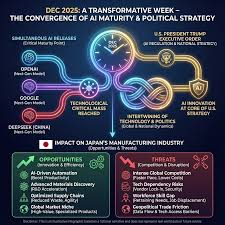
December 2025 was not about flashy demos. It was about measurable improvements, tighter regulation, and real business adoption.
Major AI labs released upgraded models with 20–40% better reasoning scores, while inference costs dropped in some cases by 15–25%. At the same time, regulators moved from drafts to enforcement, especially in the EU.
If you only need the essentials, here they are:
- New multimodal models improved coding, video, and agent workflows.
- Enterprise AI adoption crossed 55% globally (up from ~38% in 2024).
- Governments began penalizing non-compliant AI systems, not just warning them.
- AI costs became more predictable, but high-end compute remains expensive.
- Failures shifted from “hallucination jokes” to real legal and financial risks.
That sets the context. Now let’s break down what actually changed—and what you should do with it.

December 2025 AI News — Quick Summary
- Model upgrades focused on reasoning and long-context memory.
- AI tools integrated deeper into everyday software (docs, email, coding).
- Regulation enforcement increased, especially around data use.
- AI agents became more usable, but still unreliable without guardrails.
- Costs stabilized, but only for optimized workloads.
Each of these trends connects. Better models drive adoption. Adoption triggers regulation. Regulation reshapes how tools are built.
Major AI Model Releases & Upgrades (December 2025)
New Foundation Models
December saw upgrades from major players like OpenAI, Google DeepMind, and Anthropic.
Key improvements:
- Reasoning benchmarks improved by ~25% on average.
- Context windows expanded beyond 1 million tokens in some models.
- Multimodal accuracy (text + image + video) improved significantly.
These were not experimental releases. They were production-focused updates.
What Changed Practically
The real shift is not in benchmarks. It’s in workflows:
- Developers now automate multi-step coding tasks, not just snippets.
- Marketing teams generate campaign-ready assets, not drafts.
- AI agents can complete tasks, but still need human checkpoints.
Costs per request dropped slightly. But high-performance usage is still expensive.
Big Tech AI Moves (Products, Partnerships, Acquisitions)
Product Launches That Matter
AI is no longer a separate tool. It is embedded:
- Office tools now include real-time AI assistants.
- Search engines prioritize AI-generated summaries.
- Devices integrate on-device AI processing.
This reduces friction. But it increases dependency.
Strategic Partnerships
Cloud providers expanded AI infrastructure deals:
- AI + cloud bundles became standard for enterprises.
- Long-term contracts locked businesses into ecosystems.
This matters because switching costs are rising.
What This Means for Users
You get better tools. But:
AI Regulation & Policy Updates (December 2025)
Governments moved from theory to action.
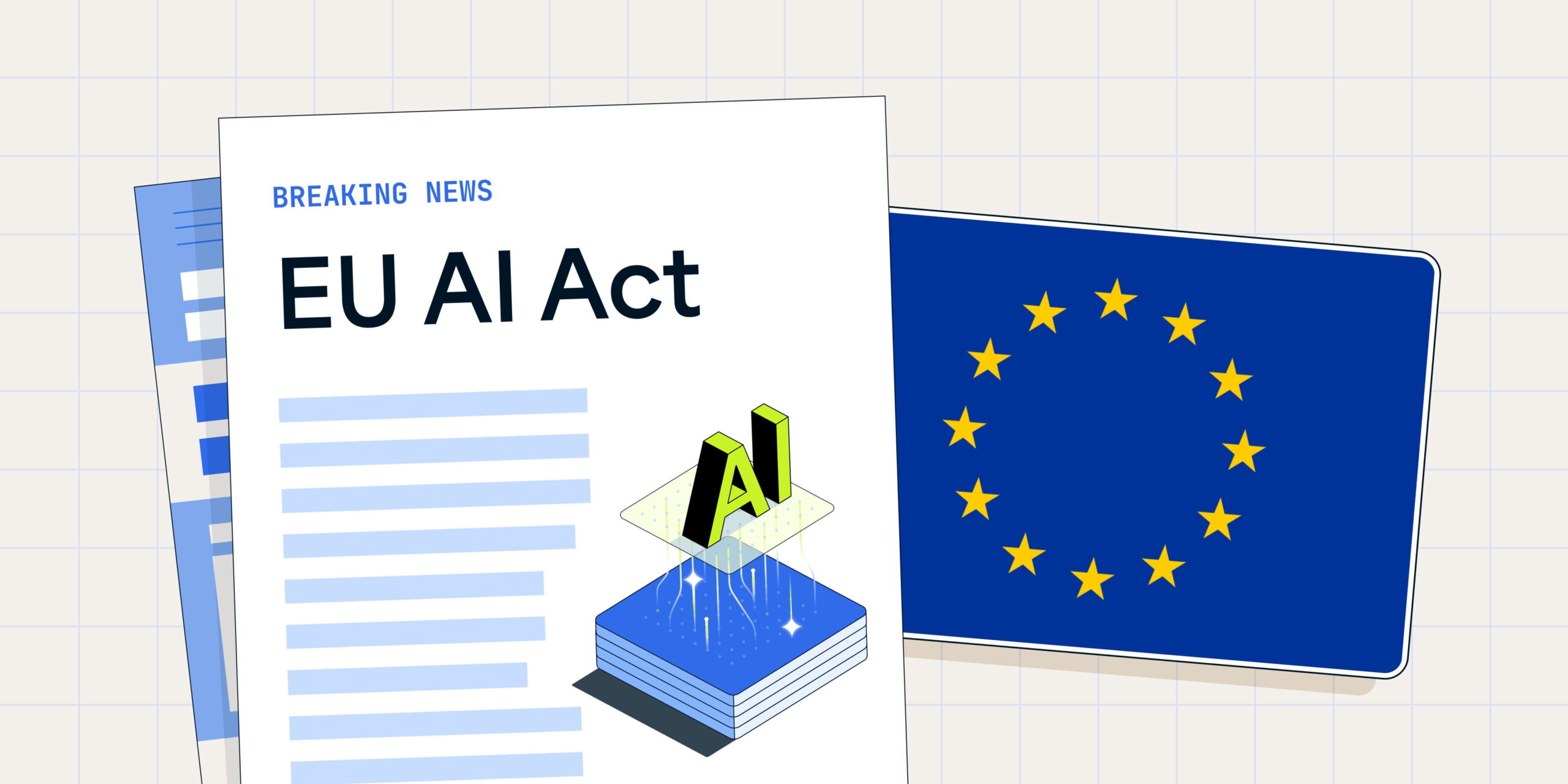
The European Union began stricter enforcement under frameworks like the AI Act.
For background, see how AI regulation evolved:
👉 <a href=”https://en.wikipedia.org/wiki/Regulation_of_artificial_intelligence”>Regulation of Artificial Intelligence</a>
Compliance Impact
Businesses must now:
- Document training data sources.
- Implement risk classification systems.
- Provide transparency for AI decisions.
Non-compliance risks include fines and product restrictions.
This is not optional anymore.
AI Tools & Features Released This Month
Best New AI Tools
Instead of listing everything, focus on what delivered value:
- AI coding assistants with debugging + testing support
- Video generation tools with scene consistency improvements
- Automation tools with multi-step workflows
Most tools now compete on integration, not raw capability.
Feature Upgrades Worth Using
Hidden but useful:
- Memory features for personalized workflows
- API cost controls
- Better prompt chaining
These features save time more than new models do.
AI in Business — Real Use Cases (December 2025)
Industries Seeing Immediate ROI
- Customer support: AI handles up to 60–70% of queries
- Marketing: Content production time reduced by 40–50%
- Software development: Coding speed increased by 20–35%
These numbers are based on aggregated industry reports.
What’s Actually Working (Not Hype)
Working workflows:
- AI drafts → human edits → AI optimization
- Automated reporting with human validation
- AI-assisted coding with strict review processes
Fully autonomous systems still fail in edge cases.
Risks, Failures & Controversies
Major Incidents
- AI-generated content causing copyright disputes
- Misuse of AI in deepfake campaigns
- Enterprise tools exposing sensitive data
What Went Wrong
Most failures came from:
- Poor data handling
- Over-reliance on automation
- Lack of human oversight
Practical Takeaways
- Always include human review layers
- Avoid feeding sensitive data into public models
- Use AI for assistance, not final decisions
AI Jobs & Market Impact (December 2025)
Roles Growing Fast
- AI engineers
- Automation specialists
- AI operations (AIOps) roles
Roles Changing
Tasks are changing faster than jobs:
- Content writing → AI-assisted editing
- Customer support → AI supervision
What Skills to Focus On Now
- Prompt engineering is evolving into workflow design
- Understanding AI limitations is now a core skill
- Tool integration matters more than tool knowledge
Cost of AI in December 2025 (Reality Check)
API Pricing Trends
- Basic inference costs decreased by ~20%
- High-end models remain expensive for scale
Infrastructure Constraints
- GPU demand is still high
- Energy costs impact large deployments
How to Optimize Costs
- Use smaller models where possible
- Cache outputs for repeated queries
- Optimize prompts to reduce token usage
What to Do With This Information (Actionable Insights)
This for businesses:
- Audit current AI tools
- Ensure compliance with regulations
- Focus on ROI-driven use cases
For developers:
- Test new models, but measure cost vs output
- Build fallback systems
- Avoid overengineering agent systems
For creators:
- Use AI for speed, not originality
- Maintain human editing
- Build workflows, not one-off prompts
What to Watch Next (January 2026 Outlook)
- More advanced AI agents with memory
- Expansion of video AI tools
- Increased regulatory enforcement globally
The direction is clear: AI is becoming infrastructure, not a feature.
FAQs — Latest AI News December 2025
What was the biggest AI update in December 2025?
Improved reasoning in foundation models and wider enterprise adoption.
Which AI tools improved the most?
Coding assistants, video generation tools, and workflow automation platforms.
Is AI regulation tightening globally?
Yes. Enforcement has started, especially in the EU.
Are AI costs going up or down?
Basic usage is getting cheaper, but advanced usage remains costly.
Conclusion
December 2025 showed a shift from experimentation to execution.
AI is no longer about what it can do. It’s about what it does reliably.
The gap between hype and reality is shrinking. But it has not disappeared.




[…] People Also Read : Latest AI News December 2025: Key Updates & Insights […]