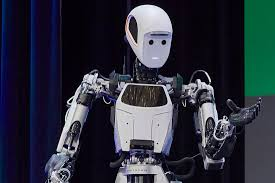

Humanoid robotics is no longer limited to research labs. In 2026, multiple companies are moving toward real-world deployment, especially in factories and logistics. Recent updates show measurable progress in mobility, autonomy, and cost reduction.
In the past 12 months, at least $6–8 billion has been invested globally into humanoid robotics startups and development programs. At the same time, early pilot deployments are already replacing repetitive human tasks in controlled environments.
More importantly, the conversation has shifted. It is no longer about if humanoid robots will work, but where they can work reliably today. This shift is driving the most important news in this space.
Now, to understand what is actually happening, we need to break down the latest developments, key players, and real-world limitations—because the gap between headlines and reality is still significant.
Latest Humanoid Robotics News (2026 Updates)
The biggest update in 2026 is not a single breakthrough. It is the consistency of incremental improvements across multiple companies.
One notable development is humanoid robots completing endurance-based physical tasks. In controlled trials, some robots have matched human walking efficiency for extended durations. This signals progress in energy optimization and balance control, two long-standing challenges.
At the same time, new product announcements are focusing less on appearance and more on task-specific capability. Companies are prioritizing:
- Object handling accuracy
- Battery life improvements
- Autonomous navigation in semi-structured environments
This shift is important. It shows the industry is moving from demonstration to deployment readiness.
Top Humanoid Robots Making Headlines
Several humanoid robots are consistently appearing in 2026 news, but each represents a different strategy.
Industrial-Focused Robots
- Tesla Optimus is being tested for repetitive factory tasks
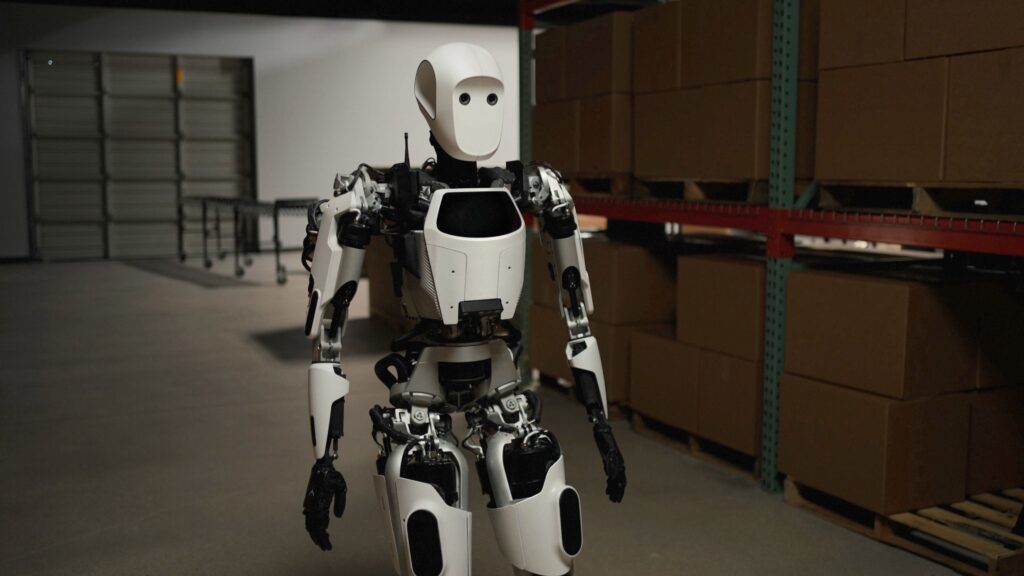
- Figure AI’s robots are targeting warehouse operations
- Boston Dynamics’ Atlas is transitioning from demos to real-world applications
These robots are not designed to replace all human labor. They are being trained for specific workflows, such as lifting, sorting, and transporting items.
This targeted approach is why deployment is finally becoming practical.
Low-Cost and Emerging Competitors
Another major trend is cost reduction. Some newer companies are introducing humanoid robots at significantly lower price points.
In 2024, estimated humanoid robot costs ranged between $80,000–$150,000 per unit. By 2026, some manufacturers are targeting prices below $40,000 for limited-function models.
This matters because cost—not technology—has been the biggest barrier to adoption.
Lower pricing is opening the door for:
- Small and mid-sized manufacturers
- Retail logistics operations
- Experimental deployments in developing markets
Experimental and Viral Robots
Not all news is about progress. Some robots still fail in unpredictable ways.
Videos of robots losing balance or misidentifying objects highlight a critical issue: real-world environments are far more complex than lab settings.
These failures are not setbacks. They are indicators of where improvement is still needed—especially in perception and decision-making.
Key Trends Driving Humanoid Robotics News
To understand the bigger picture, it helps to look beyond individual updates.
1. Shift from Demo to Deployment
For years, humanoid robots were built to impress. Now they are built to work.
Companies are focusing on:
- Repetitive industrial tasks
- Controlled environments
- Measurable ROI
This is why early deployments are happening in factories instead of homes.
2. AI is Now the Bottleneck
Hardware has improved significantly. Robots can walk, lift, and maintain balance.
But intelligence is still limited.
Most humanoid robots struggle with:
- Unexpected obstacles
- Complex decision-making
- Multi-step task planning
This is where advancements in AI—especially vision-language-action models—are becoming critical.
For deeper context on robotics fundamentals, you can explore <a href=”https://en.wikipedia.org/wiki/Robot” target=”_blank”>robotics on Wikipedia</a>.
3. Rise of Physical AI
Physical AI refers to systems that combine perception, reasoning, and action in real-world environments.
Instead of pre-programmed movements, robots are now being trained using:
- Simulation environments
- Real-world data feedback
- Reinforcement learning
This allows them to adapt rather than follow fixed instructions.
Real-World Use Cases Emerging
The most practical applications are already visible.
Manufacturing and Warehousing
This is currently the strongest use case.
Humanoid robots are being used for:
- Picking and placing items
- Moving goods between stations
- Operating in environments designed for humans
Labor shortages are a key driver here. In some regions, manufacturing sectors report 10–20% workforce gaps, making automation necessary.
Household Applications (Still Limited)
Despite media attention, home robots are not ready for mass adoption.
The main challenges include:
- High cost
- Safety concerns
- Lack of generalized intelligence
Most companies are not prioritizing this segment yet.
Hazardous Environments
Humanoid robots are being tested in:
- Mining operations
- Disaster response scenarios
- High-risk industrial sites
These environments benefit from robots that can use tools designed for humans.
Risks, Failures, and Limitations
This is one of the most underreported areas in humanoid robotics news.
Safety Concerns
Robots operating near humans must meet strict safety standards.
Even minor errors in movement or object handling can cause injuries.
Reliability Issues
Consistency is still a challenge.
A robot may perform a task correctly 90% of the time, but that remaining 10% is critical in real-world applications.
Regulatory Gaps
There are no globally standardized regulations for humanoid robots.
This creates uncertainty for:
- Manufacturers
- Businesses adopting the technology
- Insurance providers
What to Expect Next (2026–2030)
The next few years will focus on scaling and refinement.
Short-Term (Next 12 Months)
- More pilot programs in factories
- Improved battery efficiency
- Narrow-task specialization
Mid-Term (2–3 Years)
- Increased production volumes
- Better AI-driven autonomy
- Gradual cost reduction
Long-Term Outlook
- Broader adoption across industries
- Early-stage household robots
- Integration with existing automation systems
How to Track Humanoid Robotics News Effectively
Not all updates are equally important.
Focus on these signals:
- Actual deployments, not demos
- Cost trends
- Performance benchmarks
- Partnerships with major industries
These indicators provide a clearer picture than viral videos or concept reveals.
Conclusion: Where Humanoid Robotics Stands Today
Humanoid robotics in 2026 is defined by practical progress, not hype.
The most important development is the shift toward real-world use. Robots are being tested where they can deliver measurable value, especially in industrial settings.
At the same time, limitations in AI, cost, and reliability are still shaping the pace of adoption.
The next phase will not be driven by new designs alone. It will depend on how effectively companies can scale production and improve real-world performance.
This is what makes current humanoid robotics news worth following—not for speculation, but for measurable change.