



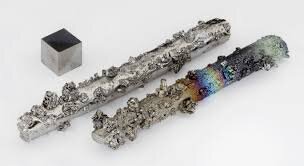

Tungsten and volfram name the same metal. Atomic number 74. Chemical symbol W. It melts at 3,422 °C—the highest of any metal. Its density reaches 19.25 g/cm³, 1.7 times heavier than lead and close to gold. These numbers explain why engineers pick it when heat, wear, or weight creates problems no other metal solves.
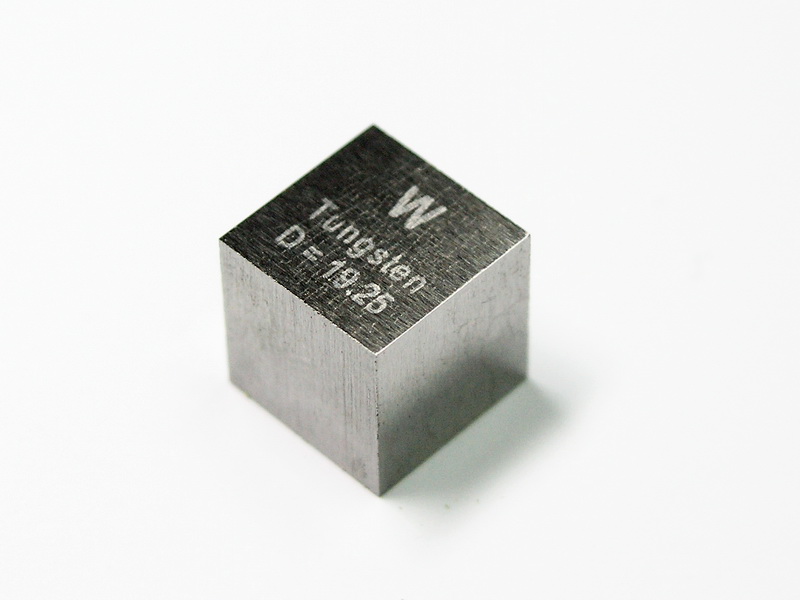
TUNGSTEN precision density cube 10mm – 19.25g – Smart-Elements
Tungsten volfram shows up in tool bits, welding electrodes, and radiation shields. Half of global output becomes tungsten carbide. The rest goes into alloys for aerospace, electronics, and defense. China produced 67,000 metric tons in 2024—82 percent of the world total of 81,000 tons. Vietnam followed at 3,400 tons. Russia hit 2,000 tons.
The two names trace back to the 18th century. Swedish “tung sten” means heavy stone and gave us tungsten. German “wolf rahm” described how the ore ate tin during smelting and became volfram or wolfram. IUPAC kept the symbol W. Both terms appear on product labels today. Search either one and you land on the same material.
This guide pulls together the facts you need. You will see exact properties, current supply numbers, real applications, and a clear buying checklist. No fluff. Just the details that help you decide when tungsten volfram fits your project.
Why the Names Matter in Practice
Product listings switch between “tungsten electrodes” and “volfram rods.” The chemistry stays identical. If you import from Europe you often see volfram. North American suppliers use tungsten. Knowing both terms saves time when you compare quotes or check certificates.
The element itself stays the same. Pure tungsten is gray-white, very hard, and brittle at room temperature. Heat it above 1,000 °C and single-crystal forms become ductile enough to draw into wire. That combination of hardness plus ductility drives its value.
Key Physical and Chemical Properties
Tungsten boils at 5,930 °C. Thermal expansion sits at 4.5 × 10⁻⁶ per kelvin—the lowest of any pure metal. Tensile strength holds steady above 1,650 °C where most metals soften. It resists most acids and alkalis at room temperature.
Compare it quickly:
- Versus molybdenum: tungsten wins on melting point and density.
- Versus tantalum: tungsten offers better high-temperature strength.
- Versus graphite: tungsten provides higher density without oxidation risk below 400 °C.
These numbers come straight from lab data and field performance. They explain why tungsten lasts longer in cutting tools and plasma environments.
How Tungsten Volfram Reaches the Market
Miners extract it from wolframite ((Fe,Mn)WO₄) and scheelite (CaWO₄). The ore goes through crushing, gravity separation, and flotation. Chemical processing yields tungsten trioxide (WO₃). Hydrogen reduction turns the oxide into metal powder. Sintering presses that powder into solid shapes because industrial furnaces cannot melt it at scale.
In 2024 world mine production reached 81,000 metric tons. China’s share stayed near 80 percent. New mines in Australia and South Korea added a few thousand tons outside China. Supply still depends heavily on one region, which affects price stability.
Tungsten Carbide Solves the Hardest Wear Problems
Roughly 50 percent of all tungsten becomes tungsten carbide (WC). Combined with cobalt binder it reaches Mohs hardness 9.5. That beats most ceramics and cobalt tools in mining and drilling. Tool life often triples or multiplies by ten in high-heat cutting compared with standard high-speed steel.
You see carbide inserts in lathe tools, mining drill bits, and wear plates. The same material lines oil-well drills and road-milling machines. When abrasion and heat hit together, carbide delivers measurable ROI through fewer tool changes and less downtime.

Tungsten Carbide Drill | Stanford Advanced Materials
Heavy tungsten alloys (90–97 percent W with nickel and iron) reach densities up to 18.5 g/cm³. They replace lead in counterweights, kinetic energy penetrators, and radiation shields. These alloys machine easier than pure tungsten yet keep the weight advantage.
Everyday and High-Tech Uses
Incandescent lamp filaments used tungsten for decades because nothing else survived the heat. Modern uses shifted to vibration motors in phones, glass-to-metal seals in electronics, and plasma-facing parts in fusion research. X-ray targets rely on its high density and heat resistance.
In jewelry, tungsten carbide rings stay scratch-free for years. Fishing sinkers made from tungsten avoid the environmental issues of lead. Even some bacteria use tungsten in enzymes, though human biology shows low absorption of the pure metal.
Health, Safety, and Environmental Notes
Pure tungsten metal shows low toxicity. Dust or grinding fumes create the real hazard. Workers in machining shops wear proper masks and ventilation. Recycling rates stay high because scrap returns value. Closed-loop processing cuts primary mining impact.
Buyers now ask for conflict-free certificates. Wolframite from certain regions carries extra checks. Ethical suppliers publish mine-source details and ISO compliance.
Buying Guide: Spot Quality and Avoid Pitfalls
Check purity first—99.95 percent minimum for most industrial needs. Verify density with a simple scale and water-displacement test. Cheap imports sometimes fall short on density and wear faster.
Price volatility rose sharply in early 2026 after export controls tightened supply. Track ammonium paratungstate (APT) benchmarks for timing. Certified suppliers offer material test reports and batch traceability.
When tungsten costs too much, consider molybdenum for moderate heat or ceramics for pure wear. But in extreme temperature or density-critical jobs, nothing matches tungsten volfram.
Quick FAQ
Is volfram the same as tungsten? Yes. Different names, identical element.
Why does it cost more now? China supplies about 80 percent of world output. Recent export limits tightened availability and pushed prices higher in 2026.
Can you melt it at home? No. Industrial sintering is the practical route.
Tungsten jewelry—safe? Yes. The carbide form is inert and hypoallergenic for most users.
Future role? Fusion reactors, green energy components, and advanced electronics all need its unique properties. Recycling will grow as demand rises.
Tungsten volfram stays irreplaceable where heat, hardness, and density meet. Use the properties, production facts, and buying steps above to make confident choices. For the full scientific background, see the Tungsten page on Wikipedia.



[…] bottlenecks are delaying new AI infrastructure by 12–36 months in some areas. At the same time, electricity costs have risen 20–40% for data center operators in key markets, directly impacting AI […]
[…] your order stays below the de minimis threshold (for example, $800 in the US), it usually enters without import duty. Once you cross that limit, […]
[…] The connection between the Pentagon, Big Tech companies, and the Tesla Cybertruck is no longer just an internet rumor cycle. Over the last two years, defense agencies in the United States have increased their focus on commercial technologies that can support military logistics, mobility, surveillance, and energy efficiency. That includes electric vehicles, AI software, satellite systems, and connected transportation platforms. […]