
Software subscription costs are rising faster than many companies expected. Over the last two years, major SaaS vendors have changed pricing models, reduced free features, and introduced AI add-ons that increase monthly costs. For many businesses, SaaS spending is no longer a small operational expense. It is now a budgeting issue that directly affects profitability.
According to industry spending reports, global SaaS spending is projected to cross hundreds of billions of dollars in the coming years as companies rely more on cloud-based tools for sales, marketing, analytics, collaboration, and AI automation. At the same time, software vendors are under pressure to increase revenue per customer. That pressure is changing how SaaS pricing works.
Many businesses expected SaaS to simplify software costs. Instead, pricing structures are becoming more complicated. Usage-based billing, AI credit systems, hidden enterprise fees, and storage restrictions are now common across the industry.
Before discussing the latest pricing trends, it is important to understand what “SaaS pricing news” actually means for buyers and decision-makers.
What SaaS Pricing News Actually Covers
SaaS pricing news is not only about price increases. It also includes structural changes in how software companies charge customers.
This usually includes:
- Monthly or annual subscription increases
- AI feature pricing updates
- Usage-based billing changes
- Removal of free plan features
- API access restrictions
- Enterprise-only feature migration
- Storage or seat limitations
For example, many collaboration and CRM platforms now place advanced analytics, integrations, or security controls inside higher-tier plans. Businesses that relied on mid-level subscriptions often discover that critical features have moved behind enterprise pricing.
This trend is becoming more common because SaaS vendors are trying to increase average revenue per user without dramatically changing their public pricing pages.
Biggest SaaS Pricing Trends in 2026
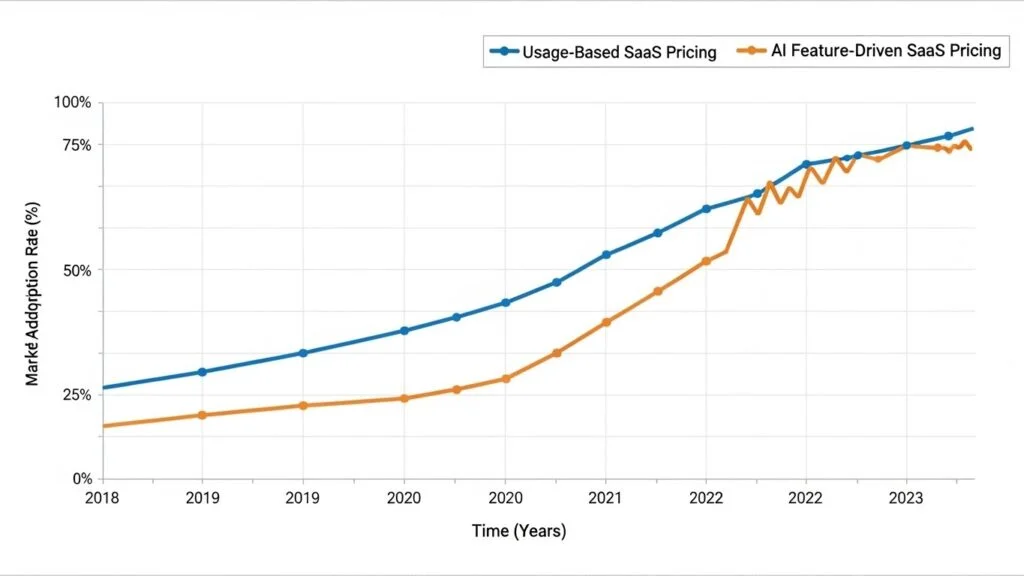
The SaaS market is shifting away from predictable flat-rate subscriptions. Several pricing models now dominate the industry.
Shift From Per-Seat to Usage-Based Pricing
Traditional SaaS billing relied heavily on seat-based pricing. Companies paid a fixed monthly fee per employee or user.
That model is changing rapidly.
AI platforms, analytics tools, cloud infrastructure providers, and API services increasingly use usage-based pricing. Instead of paying per employee, businesses pay based on:
- API requests
- AI token consumption
- Data processing volume
- Storage usage
- Workflow executions
- Automation runs
This model benefits vendors because revenue grows automatically as customers scale usage.
However, it creates budgeting problems for businesses. Monthly invoices can vary significantly depending on activity levels.
A company using AI customer support tools, for example, may see costs increase unexpectedly during high-traffic months.
AI Features Are Becoming Paid Add-Ons
AI integration is now one of the biggest drivers behind SaaS price increases.
Many software companies originally included AI features inside standard plans. Now those same features are becoming premium add-ons.
Examples include:
- AI writing assistants
- Automated reporting
- AI copilots
- Meeting summarization
- Predictive analytics
- AI search tools
Instead of a simple subscription increase, vendors often introduce separate AI pricing layers.
Some platforms now charge:
- Per AI request
- Per AI-generated output
- Per token usage
- Per AI-enabled user
This pricing structure makes costs harder to predict.
It also creates confusion because businesses may pay for a software platform and then pay separately for AI functionality inside that same platform.
Reduction of Free Plans
Free SaaS plans are becoming more limited across the industry.
Many vendors now restrict:
- Data exports
- User seats
- Integrations
- Cloud storage
- Automation limits
- API access
This change is especially visible in productivity and collaboration software.
SaaS companies are reducing free-tier generosity because infrastructure and AI processing costs have increased significantly.
For startups and small businesses, this means tools previously used at no cost may now require paid upgrades earlier than expected.
Hybrid Pricing Models Are Increasing
Modern SaaS pricing rarely relies on a single metric anymore.
Many platforms now combine:
- Base subscription fees
- Usage-based charges
- AI consumption billing
- Premium integration fees
- Advanced support costs
This hybrid model creates flexibility for vendors but complexity for buyers.
Pricing pages also become harder to compare because total software cost depends on usage patterns rather than advertised starting prices.
That is one reason many procurement teams now focus on total cost forecasting instead of entry-level pricing.
Recent SaaS Pricing Changes Businesses Should Watch
Different SaaS categories are approaching pricing changes differently.
CRM and Sales Platforms
CRM providers continue pushing advanced automation and forecasting tools into higher pricing tiers.
Features increasingly locked behind premium plans include:
- Revenue forecasting
- AI-generated sales insights
- Workflow automation
- Advanced reporting
- Enterprise security
This affects growing businesses that originally adopted lower-cost CRM plans expecting gradual scaling.
Instead, they often face steep pricing jumps once advanced workflows become necessary.
AI SaaS Platforms
AI SaaS companies are experimenting with pricing more aggressively than any other category.
Many platforms adjust pricing multiple times per year because infrastructure costs remain unpredictable.
Common trends include:
- AI credit systems
- Token usage billing
- Request-based pricing
- Tiered AI limits
This makes vendor comparison difficult because two tools with similar subscription prices may have completely different usage restrictions.
Productivity and Collaboration Tools
Collaboration software pricing has increased steadily over the past few years.
Several vendors now charge more for:
- Large cloud storage
- Video recording features
- Team management tools
- Workspace analytics
- Administrative controls
Remote and hybrid companies feel these increases more heavily because collaboration tools are used daily across departments.
Developer and Infrastructure Platforms
Infrastructure SaaS providers continue moving toward aggressive usage billing.
This includes charges for:
- API requests
- Data transfer
- Build minutes
- Cloud storage
- Serverless executions
Small increases in traffic can significantly affect monthly costs if monitoring systems are weak.
This is why engineering teams increasingly track infrastructure usage weekly instead of monthly.
Common Problems Businesses Face With SaaS Pricing
The biggest frustration businesses report is unpredictability.
Companies often approve software budgets expecting stable costs. Usage-based billing changes that assumption completely.
Unpredictable Monthly Bills
Usage spikes can create unexpected invoices.
This is especially common with:
- AI tools
- Cloud hosting
- Automation software
- Analytics platforms
Without monitoring systems, businesses may discover overage charges only after billing cycles close.
Hidden Enterprise Costs
Some SaaS vendors reserve critical business features for enterprise plans.
These may include:
- Single sign-on (SSO)
- Compliance tools
- Audit logs
- Advanced security
- Premium support
This strategy increases total ownership cost far beyond advertised entry pricing.
Confusing Pricing Pages
Modern pricing pages often prioritize sales conversations over transparency.
Many vendors now replace public pricing with “Contact Sales” models for advanced plans.
That creates comparison difficulties for buyers evaluating multiple platforms.
For readers interested in the history of subscription software economics, the concept of <a href=”https://en.wikipedia.org/wiki/Software_as_a_service”>Software as a Service (SaaS)</a> explains how cloud-based licensing evolved into today’s recurring revenue model.
How Businesses Can Control SaaS Costs
Companies are becoming more disciplined about SaaS spending management.
Audit SaaS Usage Regularly
Quarterly software audits help identify:
- Unused seats
- Duplicate tools
- Underutilized features
- Expensive legacy subscriptions
Many businesses discover they pay for overlapping platforms across departments.
Monitor Pricing Changes Early
Vendors often announce pricing changes months before renewals.
Monitoring these announcements early gives procurement teams time to negotiate or evaluate alternatives.
Businesses relying heavily on AI tools should monitor usage reports weekly instead of waiting for invoices.
Negotiate Before Renewal Dates
Renewal timing matters.
Vendors are usually more flexible near contract renewal periods, especially for multi-year agreements or larger teams.
Usage data strengthens negotiation leverage because businesses can demonstrate actual platform value versus projected expansion.
Compare Total Cost Instead of Entry Pricing
Low starting prices can be misleading.
Businesses should calculate:
- Usage growth costs
- AI feature charges
- Support costs
- Integration fees
- Storage expansion pricing
This approach provides a more realistic estimate of long-term SaaS spending.
What Makes a Good SaaS Pricing Model
The most sustainable SaaS pricing structures usually share several characteristics:
- Transparent billing metrics
- Predictable monthly costs
- Clear feature separation
- Public pricing visibility
- Reasonable scaling paths
Businesses increasingly prefer vendors that simplify pricing instead of maximizing short-term monetization opportunities.
That preference is influencing purchasing decisions across the SaaS industry.
Final Thoughts
SaaS pricing is changing faster than many businesses anticipated. AI integration, infrastructure costs, and revenue pressure are reshaping how software companies charge customers.
The biggest challenge is no longer finding software. It is predicting long-term software costs accurately.
Businesses that actively monitor pricing changes, audit software usage, and evaluate total ownership costs are in a stronger position to control spending and avoid unexpected billing problems.
As SaaS platforms continue evolving, pricing transparency and predictability will likely become major competitive advantages for vendors trying to retain long-term customers.
Frequently Asked Questions
Why are SaaS companies increasing prices?
Most SaaS companies are facing higher infrastructure, AI processing, and cloud computing costs. Many are also trying to increase revenue per customer through premium features and usage-based billing.
What is usage-based SaaS pricing?
Usage-based pricing charges customers according to actual software consumption, such as API requests, storage, AI token usage, or workflow executions.
Are free SaaS plans disappearing?
Free plans are becoming more limited. Many vendors now restrict integrations, storage, exports, and automation features to encourage paid upgrades.
How can businesses reduce SaaS costs?
Regular software audits, monitoring usage patterns, removing inactive seats, and negotiating renewals early are among the most effective cost-control strategies.
Why do some SaaS companies hide enterprise pricing?
Enterprise pricing often depends on team size, usage levels, support requirements, and contract length. Vendors use custom pricing to maximize flexibility and negotiation opportunities.