





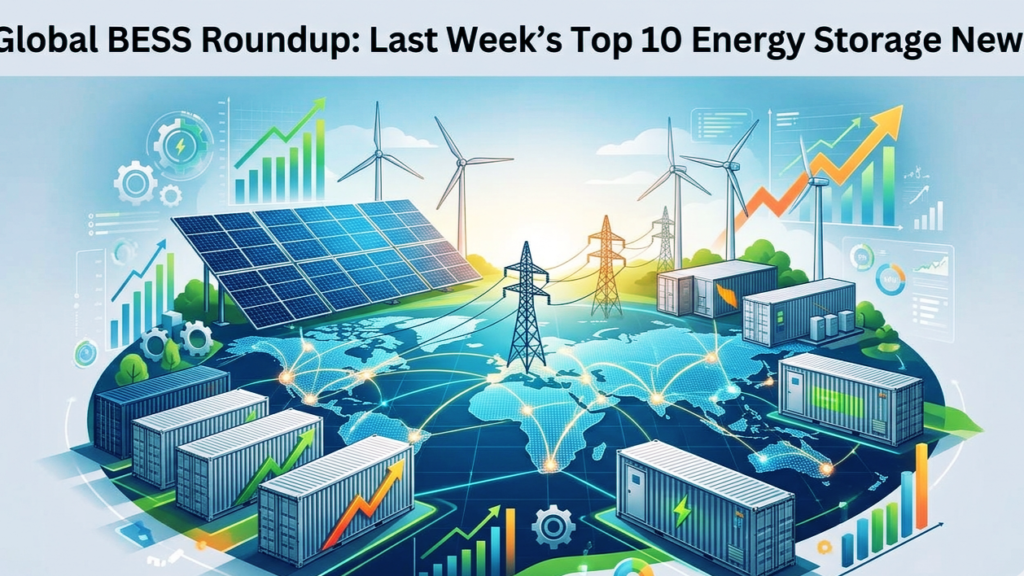
Energy storage is scaling faster than most power infrastructure segments in 2026. Global installed battery storage capacity has crossed 200 GW, with over 500 GWh deployed, driven by grid instability and renewable expansion. The average cost of utility-scale lithium-ion storage has dropped to around $120–$140 per kWh, though volatility in lithium prices still creates short-term spikes.
In the last 60 days alone, more than 25 GW of new storage projects have been announced or moved into construction globally. The U.S., China, and Europe continue to dominate deployments, but India and the Middle East are accelerating faster than expected. At the same time, long-duration storage (8+ hours) is finally moving from pilot to early commercial projects.
That’s the snapshot. Now, here’s what actually matters behind these numbers—and what most “energy storage news” pages miss.
What’s New in Energy Storage (Last 30–60 Days)
Recent developments are not just announcements—they are tied to real grid needs.
- China connected multiple gigawatt-scale battery farms to stabilize renewable-heavy grids
- The U.S. approved new storage projects under expanded tax credits tied to clean energy policies
- Europe fast-tracked storage permits after winter grid stress events
More importantly, over 60% of newly announced projects are already funded, which signals execution—not speculation. This reduces the typical delay risk that plagued projects in 2022–2024.
This leads directly to the next shift: technology is no longer the bottleneck—deployment is.
Battery Technology Updates That Change the Market
Lithium-ion still dominates over 90% of installed capacity, but improvements are incremental, not revolutionary.
- Cycle life has improved to 6,000–8,000 cycles for grid batteries
- Energy density gains are marginal, but cost efficiency is improving
- LFP (Lithium Iron Phosphate) is now the default chemistry for grid storage due to safety and lower cost
Solid-state batteries remain in pilot phases. Companies are targeting commercialization by 2027–2028, but no large-scale deployment exists yet.
Sodium-ion batteries are gaining attention. They are 20–30% cheaper due to abundant raw materials, but energy density is lower. Early deployments are already happening in China.
So while headlines focus on “breakthroughs,” the real story is optimization of existing tech.
Utility-Scale Storage Projects: Where Capacity Is Expanding
Deployment data shows clear geographic concentration.
- China leads with over 40% of new global installations
- United States follows, driven by federal incentives
- Europe focuses on grid stability rather than scale alone
Individual projects are getting larger. It’s now common to see 500 MW to 1 GW installations, compared to 100–200 MW just a few years ago.
However, not all projects succeed.
- Delays are often caused by grid interconnection issues
- Cost overruns come from supply chain disruptions
- Permitting remains a bottleneck in Europe and parts of the U.S.
This highlights a key issue: building storage is no longer just about batteries—it’s about infrastructure readiness.
Energy Storage Costs: Are Prices Actually Falling in 2026?
Costs are trending down, but not smoothly.
- Average utility-scale battery cost: $120–$140 per kWh
- Residential storage: $400–$600 per kWh installed
- Lithium prices dropped nearly 50% from peak levels, stabilizing supply chains
However, nickel and cobalt remain volatile. This impacts NMC battery chemistry more than LFP.
Manufacturing localization is another major factor. The U.S. and Europe are investing heavily in domestic production to reduce reliance on Asian supply chains.
For a deeper understanding of how energy systems work, see this overview of energy storage.
The key takeaway: costs are falling long-term, but short-term fluctuations still affect project economics.
Policy & Regulation Updates That Affect Adoption
Policy is now one of the biggest drivers of growth.
- The U.S. continues offering standalone storage tax credits
- Europe is introducing capacity market incentives
- China mandates storage integration with new renewable projects
These policies directly impact ROI. In some markets, incentives can reduce project payback periods from 10 years to 5–7 years.
But policy uncertainty remains a risk. Sudden changes can delay investments or shift capital to other regions.
Funding, M&A, and Startup Activity
Investment trends show where the industry is heading.
- Over $15 billion invested in energy storage startups in the past year
- Major acquisitions by oil & gas companies entering the storage market
- Increased funding for long-duration storage technologies
Venture capital is moving away from early-stage battery chemistry startups and toward scalable infrastructure and software solutions.
This includes AI-based battery management systems and grid optimization platforms.
Grid Reliability & Real-World Performance
Energy storage is proving its value in real scenarios.
- Batteries prevented outages during peak demand in California
- Grid-scale storage reduced renewable curtailment by up to 30% in some regions
- Frequency regulation services are now a major revenue stream
However, failures still occur.
- Thermal runaway incidents highlight safety concerns
- Poor system integration can reduce efficiency
This is where engineering and system design matter more than battery chemistry.
Emerging Trends You Shouldn’t Ignore
Several trends are shaping the next phase of growth:
- AI-driven battery optimization improving efficiency and lifespan
- Second-life EV batteries being reused for grid storage
- Long-duration storage (8–12 hours) gaining commercial traction
- Hybrid systems combining solar + storage + hydrogen
These trends are not yet dominant but are moving beyond experimentation.
Challenges Slowing Down Energy Storage Growth
Despite strong growth, several issues remain:
- Supply chain dependence on critical minerals
- Safety risks, especially in dense urban installations
- Lack of standardized recycling infrastructure
- Grid integration delays due to outdated infrastructure
These challenges are not theoretical—they directly affect project timelines and costs.
Regional Breakdown: Where Growth Is Actually Happening
Growth is uneven but predictable.
- North America: Policy-driven expansion
- Europe: Focus on grid resilience and energy security
- Asia (China): Manufacturing and deployment dominance
- India & Middle East: Rapid growth with fewer legacy constraints
Emerging markets face financing challenges but offer high long-term potential.
What This Means for Businesses, Investors & Consumers
For businesses, storage is becoming a cost-control tool.
- Reduces peak electricity charges
- Improves energy independence
- Provides backup power
For investors, returns depend heavily on policy and location.
For consumers, residential storage adoption is rising, especially in regions with unstable grids.
Expert Outlook: Next 12–24 Months
- Battery costs likely to drop another 10–15%
- LFP will remain dominant in grid storage
- Long-duration storage will scale slowly but steadily
- Policy will continue to shape market direction
The biggest risk: grid infrastructure failing to keep up with storage deployment.
Quick Summary (What Actually Matters)
- Energy storage capacity is scaling rapidly, with real deployments—not just announcements
- Lithium-ion remains dominant, with incremental improvements
- Costs are declining but still volatile
- Policy is the biggest growth driver
- Grid integration is the main bottleneck
- Long-duration storage is the next major shift
Visual Insights
FAQs
What is the latest news in energy storage?
Recent news focuses on large-scale deployments, falling battery costs, and policy-driven growth.
Are battery costs decreasing in 2026?
Yes, but with short-term fluctuations due to raw material prices.
Which energy storage technology is most promising?
LFP batteries dominate today, while long-duration storage is emerging for future needs.
This overview focuses on real deployments, cost trends, and system-level challenges—because that’s what determines whether energy storage projects succeed or fail in 2026.





[…] – 27Apr2026 News Image Search Techniques : Verify Images, and Improve Results News Energy Storage News 2026: Key Updates, Costs & Projects […]