



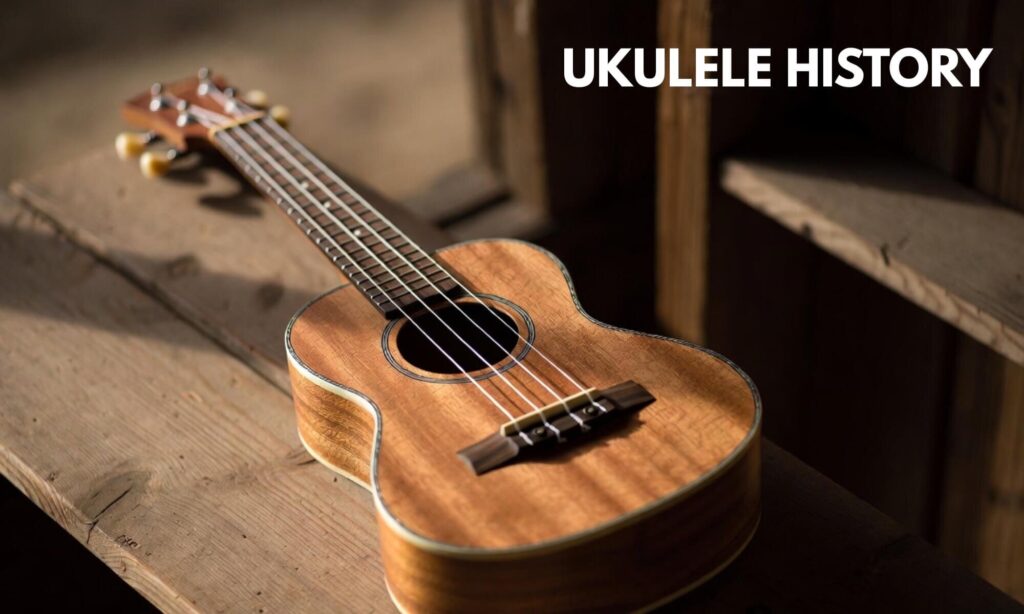

The ukulele reached Hawaii on August 23, 1879. The British clipper ship SS Ravenscrag docked in Honolulu Harbor after a 12,000-mile, four-month voyage from Madeira, Portugal. It carried 419 immigrants, including three cabinetmakers: 40-year-old Manuel Nunes, 37-year-old Augusto Dias, and 28-year-old Jose do Espirito Santo. These men brought small four-string instruments called the braguinha (also known as machete), rajão, and cavaquinho. Within days, locals heard the first performances. The Hawaiian Gazette soon described the “strange instruments” as a cross between a guitar and a banjo.

When the Ukulele as We Know it Arrived in Hawaii | Ukulele Magazine
This was no ancient Hawaiian invention. The ukulele formed right there in Honolulu workshops. Nunes opened the first dedicated shop by 1880. Dias and Espirito Santo followed. They adapted Portuguese designs using local koa wood. They settled on four strings and the now-famous GCEA tuning. By the early 1890s the instrument had a Hawaiian name and royal backing. King Kalākaua featured it at palace parties. Queen Liliʻuokalani later called it a “gift that came here.”
These facts clear up the biggest myths right away. The ukulele is a 19th-century fusion instrument. Its story explains why it sounds the way it does today. It also shows why certain sizes and woods still matter for tone. Over 25,000 Madeirans emigrated to Hawaii in that era due to famine and economic collapse back home. The sugar plantations needed workers. The timing created the perfect cultural collision.

Calling All ‘Ukes’!
Pre-Hawaii Roots in Madeira
Madeira faced disaster in the 1860s and 1870s. Famine, floods, and vine disease wiped out jobs. Islanders crafted simple street instruments for extra income. The braguinha measured about 21 inches with four gut strings. The rajão added a fifth string and re-entrant tuning. These were cheap, portable, and loud enough for outdoor music. Portuguese immigrants packed them for the long journey. They played them on deck to pass time. That habit traveled straight to Hawaii.
The 1879 Voyage and First Hawaiian Sounds
The SS Ravenscrag carried families and tools. Joao Fernandes, a fellow passenger and musician, borrowed a braguinha upon arrival. He strummed and danced on the quay. Locals gathered fast. One account notes the “jumping” reaction that later inspired the name. The three cabinetmakers soon left plantation work. They set up furniture shops that doubled as instrument workshops by 1884–1885.
How the Ukulele Took Shape in Honolulu
Nunes, Dias, and Espirito Santo collaborated more than competed. They shortened the neck to 17 frets. They swapped Portuguese woods for Hawaiian koa. The result fit local song structures perfectly. The GCEA tuning (with the fourth string re-entrant) became standard. No single “inventor” exists. All three makers produced early examples that survive in museums today. By the 1890s they supplied both Hawaiians and tourists.
The Name “Ukulele” and Its Three Theories
Hawaiians named it ukulele. The most common explanation links “uku” (flea) and “lele” (to jump). It described fast fingerwork on the fretboard. A second theory credits Edward Purvis, a British officer nicknamed “Ukulele” for his energetic style. Queen Liliʻuokalani offered a third: “the gift that came here.” She removed the glottal stop to shift the meaning toward gratitude. All three appear in historical records. The “jumping flea” stuck because it matched the lively playing style.
Royal Support and Quick Local Adoption
King Kalākaua loved the new sound. He hosted bungalow parties where musicians played for hours. The ukulele slipped into hula performances and everyday life. It became the Kingdom of Hawaii’s informal national instrument. Early sales grew steadily. The three original makers could barely keep up. This royal push gave the ukulele cultural status before it ever left the islands.
1915 Breakthrough at the Panama-Pacific Exposition
The big U.S. launch happened in San Francisco. The Royal Hawaiian Quartet and maker Jonah Kumalae performed daily at the Hawaiian Pavilion. Over 17 million visitors heard the instrument. Tin Pan Alley songs like “On the Beach at Waikiki” followed. Vaudeville acts spread it coast to coast. Roy Smeck and “Ukulele Ike” turned it into a stage staple. What began as a small Hawaiian export became a mainland fad almost overnight.
1920s–1960s: Jazz Age Boom, Plastic Era, and Shifting Image
Production exploded in the 1920s. Martin, Regal, and Harmony factories churned out models. The instrument’s low cost and easy chords made it ideal for amateurs. Post-World War II, Mario Maccaferri produced over 9 million plastic ukuleles. Arthur Godfrey’s TV show introduced it to millions more. The 1959 film Some Like It Hot showed both the fun and the comedy stereotype. Tiny Tim’s 1968 hit kept the novelty image alive while serious players pushed back.
Modern Revivals Keep the Story Alive
Israel Kamakawiwoʻole’s 1993 “Over the Rainbow” medley reached new generations. Jake Shimabukuro’s 2006 YouTube video of “While My Guitar Gently Weeps” proved the ukulele could handle complex music. Sales jumped. One report notes a 300% worldwide surge between 2005 and 2015. The global ukulele market is projected to hit $16.93 billion by 2034, growing at 9.84% annually. Schools in Canada, ukulele orchestras in Britain, and clubs in Japan expanded the reach. YouTube and TikTok now teach millions of beginners each year.
Common Myths and Practical Lessons for Players
Myth one claims the ukulele is purely ancient Hawaiian. Records show the 1879 arrival date and Portuguese designs. Myth two says one man invented it. The three makers worked together. Myth three limits the name to “jumping flea.” The other theories add cultural depth.
Knowing this history helps you choose instruments today. Look for koa or solid-wood models when you want authentic tone. Understand re-entrant tuning to match classic Hawaiian recordings. It also encourages respectful playing. You carry forward a 145-year fusion story every time you pick it up. Check the full background on the Wikipedia Ukulele page for primary sources and surviving instruments.
The timeline runs clear: 1879 arrival, 1880s workshops, 1915 U.S. explosion, 1920s–1950s mass adoption, and 1990s–present digital revival. Each era solved a problem. Madeira needed jobs. Hawaii needed music. America wanted something portable and affordable. The ukulele delivered every time.
Today it remains one of the easiest entry points into music. Four chords open hundreds of songs. Its size fits travel bags and school programs. The same qualities that won over Hawaiian royalty and San Francisco crowds still work in living rooms and online. When you play, you join a direct line from those 1879 deck performances to whatever you strum next.





[…] People Also Read this : Ukulele History: Origins, Timeline & Evolution from Portugal to Hawaii […]