




You don’t start snowboarding by riding fast. You start by learning how to stop, control edges, and stay balanced. Most beginners fail in the first hour because they skip setup and rush downhill. This guide fixes that.
Before you ride, you need three things dialed in: correct stance, proper balance, and edge control. Without these, turning won’t work. You’ll just fall repeatedly.
The fastest way to progress is simple:
- Learn how to stand and slide safely
- Practice heel and toe edge control
- Then connect those into controlled turns
Everything below follows that exact progression. Keep reading, because each step builds directly into the next.
What You Actually Need Before Your First Ride
Start with the essentials only. Overcomplicating gear slows you down.
- Snowboard: Size based on weight, not height
- Boots: Tight fit, no heel lift
- Bindings: Secure, aligned with your stance
- Helmet: Non-negotiable for beginners
Renting is practical for your first 3–5 days. It lets you test without committing.
Avoid cotton clothing. It holds moisture and makes you cold fast. Use waterproof outer layers.
Now that your gear is ready, setup becomes the next critical step.
Setting Up Your Snowboard Correctly
A wrong setup creates balance problems instantly.
First, determine your stance:
- Regular = left foot forward
- Goofy = right foot forward
Simple test: slide on a smooth floor. The foot you lead with is usually your front foot.
Binding angles for beginners:
- Front: +12° to +15°
- Back: 0° to -6°
Keep stance width shoulder-width apart. Too wide reduces control. Too narrow affects balance.
Once setup is correct, standing on the board feels stable. That stability is what you’ll use next.
First 30 Minutes on Snow: What to Do
Start on flat terrain. Not a slope.
Strap in one foot only. Practice skating (pushing forward with your free foot). This is essential for moving and using lifts.
Then learn how to stop before moving downhill:
- Stand sideways
- Dig your heel edge into the snow
- Feel the board grip and stop
Most beginners point downhill too early. That leads to loss of control.
Once stopping feels natural, you’re ready to work on balance.
Mastering Balance: The Real Foundation
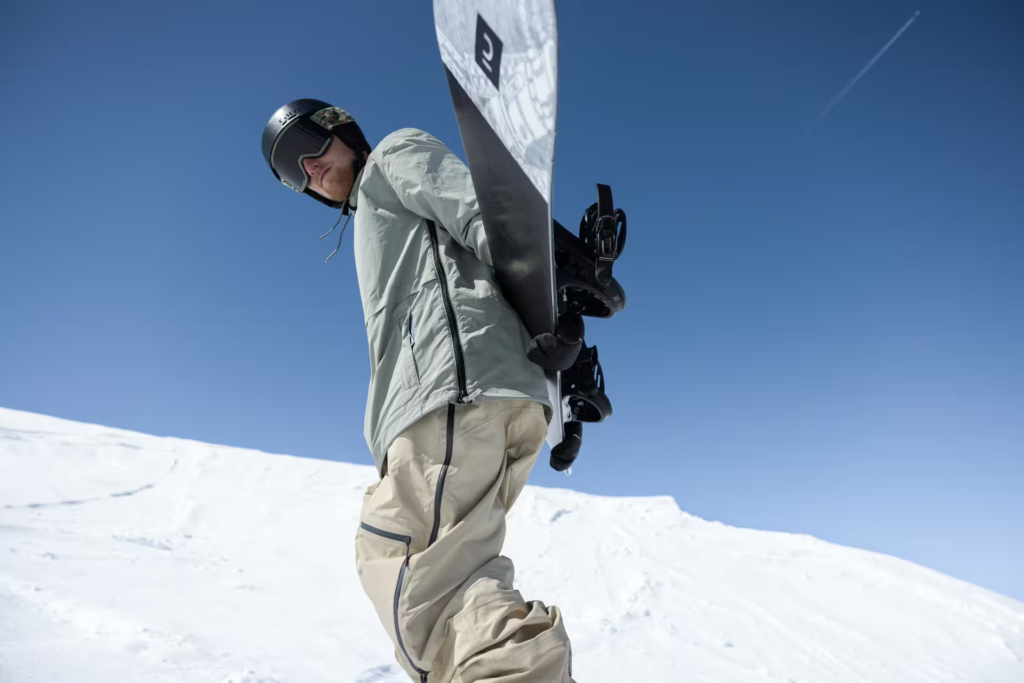
Balance is not standing straight. It’s controlled alignment.
- Knees slightly bent
- Shoulders aligned with the board
- Weight centered, not leaning back
There are two edges:
- Heel edge (leaning backward slightly)
- Toe edge (leaning forward into boots)
Practice standing still and switching between edges. This builds awareness.
According to general ski industry data, over 60% of beginner falls happen due to poor edge control, not speed. That’s why this step matters.
Once you feel both edges, you can start moving safely.
Your First Movement: Controlled Sliding
Now move to a gentle slope.
Start with the falling leaf technique:
- Stay on heel edge
- Slide left and right across the slope
- Never point straight downhill
Control comes from pressure, not force. Small adjustments matter.
Keep your weight centered. Leaning back feels safe but causes loss of control.
Once you can slide and stop consistently, you’re ready to connect movements.
Linking Your First Turns
Turning is where snowboarding starts to feel natural.
Here’s the sequence:
- Start on heel edge
- Shift weight slightly forward
- Roll onto toe edge
- Complete the turn across the slope
Then repeat in reverse.
The key is timing the weight shift, not forcing the board.
If you catch an edge, it’s usually because:
- You leaned too far back
- You switched edges too abruptly
Practice slow, wide S-turns. Speed will come later.
How to Use Ski Lifts Without Issues
This is where many beginners struggle.
For chairlifts:
- Keep one foot strapped in
- Sit straight, board forward
- At exit, stand and glide straight
Don’t stop immediately at the top. Move forward to clear the area.
For surface lifts (button lifts), balance on your front foot and let the lift pull you.
Once you can use lifts comfortably, you can focus more on riding.
How to Fall Safely
Falling is part of learning. Doing it wrong causes injuries.
- Avoid using your hands to break falls
- Keep arms in and land on forearms or side
- Try to fall uphill, not downhill
Wrist injuries are the most common among beginners.
Learning how to fall reduces fear. That confidence improves your riding.
Fixing Common Beginner Problems
These issues are predictable and fixable.
1. Problem: Falling on toe edge
Cause: Not committing weight forward
Fix: Press shins into boots gently
2. Problem: Can’t turn
Cause: No weight shift
Fix: Lead with front shoulder and hips
3. Problem: Board feels too fast
Cause: Riding flat base
Fix: Stay on an edge, even slightly
4. 17Problem: Legs burn quickly
Cause: Tension and stiff posture
Fix: Relax knees and breathe steadily
Each fix builds directly on earlier steps. That’s why skipping basics slows progress.
Progression Plan: What to Expect
Day 1:
- Learn balance and stopping
Day 2–3:
- Link basic turns
By the end of week 1:
- Ride confidently on beginner (green) slopes
Most people need 3–5 days to gain basic control. This varies, but consistent practice matters more than time.
Beginner Tips That Actually Help
Small adjustments create big improvements.
- Look where you want to go. Your body follows your head.
- Practice on gentle slopes. Steep terrain slows learning.
- Take a lesson early. Even 1 hour improves technique significantly.
- Ride in soft snow conditions. Ice makes control harder.
For deeper background on the sport itself, see this overview on
Snowboarding on Wikipedia.
FAQs
Is snowboarding harder than skiing?
Yes at the start. But progression becomes smoother after basics.
How long does it take to learn?
Most beginners gain control within 3–5 days.
Can you teach yourself?
Yes, but guided learning reduces mistakes early.
What’s the best age to start?
Any age works. Fitness and balance matter more.
Quick Checklist Before You Ride
- Gear fits properly
- Bindings adjusted
- Helmet secured
- Warm-up done
- Focus on balance and edges
Final Thought
Snowboarding is not about speed early on. It’s about control.
Once you understand edges, balance, and timing, everything connects.
And when that happens, progression becomes steady instead of frustrating.






[…] the festival name directly inside Spotify usually reveals official playlists […]
[…] providers route internet traffic through foreign servers to reduce operational costs. This can affect latency, streaming quality, and privacy […]