




Japan passed its first dedicated AI law on May 28, 2025. The Act on Promotion of Research, Development and Utilization of Artificial Intelligence-Related Technologies (AI Promotion Act) focuses on promoting innovation while addressing risks through light-touch measures.
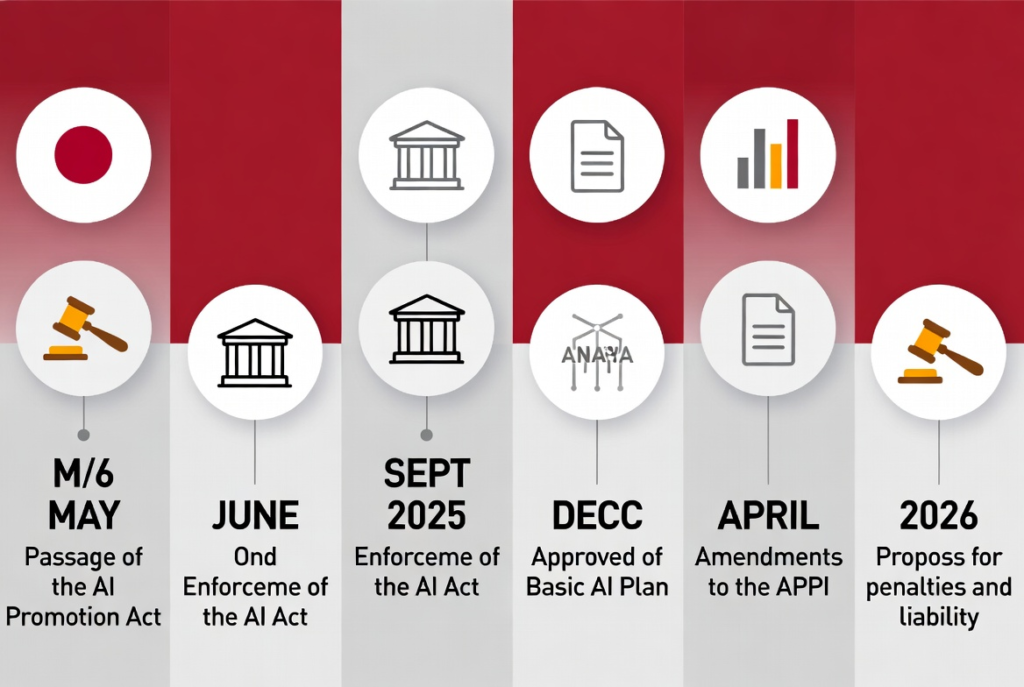
Full enforcement came in September 2025. The government established the AI Strategic Headquarters, chaired by the Prime Minister, and approved the Basic AI Plan titled “Revitalizing Japan through ‘Trustworthy AI’” on December 23, 2025. In April 2026, the Cabinet approved amendments to the Personal Information Protection Act (APPI) to ease data use for AI development while introducing stricter penalties for malicious violations.
These steps reflect Japan’s consistent approach: promote AI R&D and utilization with minimal new burdens on businesses. The framework relies on guidelines, government guidance, and naming-and-shaming for bad actors rather than heavy fines like the EU AI Act. Recent proposals from the ruling Liberal Democratic Party suggest possible penalties for non-compliant malicious operators.
This article covers the key developments, timeline, provisions, privacy updates, comparisons with other regions, and practical steps for companies operating in or with Japan.
People Also Read : APPI Amendment News Today: Latest Updates, Key Changes
Timeline of Japan AI Regulation Developments
Japan followed a phased rollout. Before 2025, it used soft-law tools such as the AI Governance Guidelines for Business (updated in 2025) and contributed to the Hiroshima AI Process during the 2023 G7 summit.
The AI Promotion Act passed on May 28, 2025. Most provisions took effect on June 4, 2025. The sections creating the AI Strategic Headquarters and requiring the Basic AI Plan became fully operational on September 1, 2025.
The Cabinet approved the Basic AI Plan on December 23, 2025. This plan organizes measures into four chapters and sets national goals for trustworthy AI. In April 2026, the government moved to relax certain APPI consent requirements to remove barriers for AI training data. At the same time, it strengthened enforcement against malicious data misuse.
Key Provisions of the AI Promotion Act
The Act sets basic policies for government measures. Its main goal is to promote research, development, and utilization of AI technologies while ensuring safety, fairness, privacy, transparency, and accountability.
It created the AI Strategic Headquarters under the Prime Minister with all Cabinet members as participants. This body coordinates cross-government efforts and monitors implementation of the Basic AI Plan.
The law outlines five fundamental principles aligned with human-centric AI. Businesses are encouraged — but not strictly required — to follow government-issued guidelines. There are no monetary penalties or criminal fines in the core Act for general non-compliance.
Instead, the government can investigate cases, issue guidance, and publicly name malicious actors. It relies on existing laws for copyright, privacy, and sector-specific rules. This structure aims to keep Japan agile and attractive for AI investment.
The approach differs from heavy ex-ante regulation. Japan prioritizes innovation while using soft tools to manage risks.
Latest in Ai Tech : Latest AI News December 2025: Key Updates & Insights
April 2026 Privacy Law Changes for AI Development
Current privacy rules had become a major obstacle for AI training in Japan. In April 2026, the Cabinet approved amendments to the Act on the Protection of Personal Information (APPI).
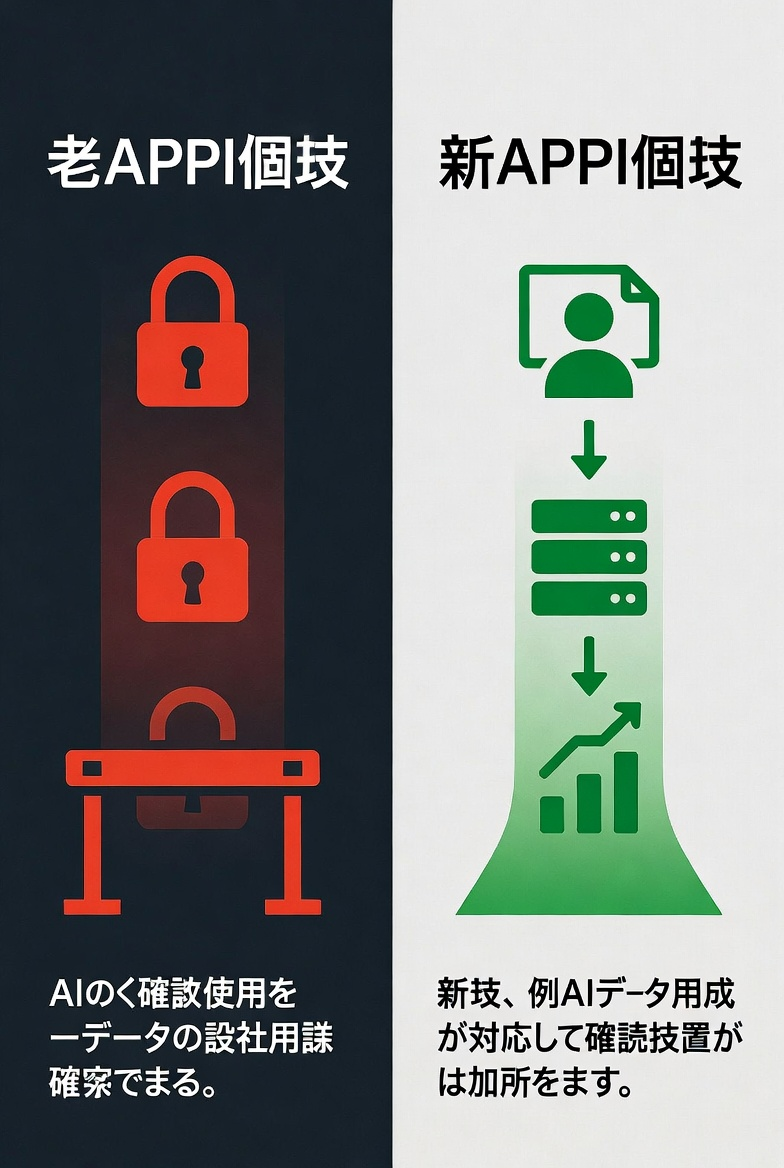
The changes introduce exemptions from opt-in consent for certain data used solely for “statistical processing,” which includes AI model development and training. Businesses can now more easily acquire and share personal data for these purposes, provided they maintain transparency and contractual safeguards.
The amendments also expand exceptions for publicly available sensitive personal data in statistical or AI contexts. At the same time, they tighten rules in higher-risk areas, such as biometric data and information related to minors. A new penalty system targets malicious violations to balance the relaxed rules.
Government officials stated these updates aim to make Japan one of the easiest countries for AI development. The changes address previous legal uncertainties that slowed large language model training on Japanese datasets.
Companies should still conduct proper risk assessments and document compliance. Over-reliance on exemptions without safeguards could trigger future scrutiny.
Japan’s Light-Touch Model vs EU, US, China, and Others
Japan’s framework stands out for its promotion-first stance. The AI Promotion Act is short and principle-based. It imposes no broad risk classifications, mandatory conformity assessments, or turnover-based fines.
By contrast, the EU AI Act uses a detailed risk-based system with unacceptable, high-risk, limited, and minimal-risk tiers. High-risk systems face strict obligations, and fines can reach 6-7% of global annual turnover. The EU focuses heavily on protecting fundamental rights through ex-ante controls.
The United States follows a more fragmented, sector- and state-driven approach with executive actions and voluntary commitments. China applies stricter national security reviews and mandatory assessments for certain AI systems.
Japan’s model aligns closer to agile governance. It emphasizes “trustworthy AI” in line with OECD principles and the Hiroshima AI Process. The country invests in infrastructure, such as its $6.34 billion physical AI plan, while keeping compliance costs lower for developers.
This light-touch approach has helped attract interest from global tech firms seeking friendlier environments for R&D. However, critics note that weak enforcement tools may prove insufficient against persistent malicious use, which is why penalty proposals surfaced in April 2026.
Businesses operating across jurisdictions often map their Japan activities to lighter local requirements while satisfying stricter EU obligations where needed.
Practical Implications and Compliance Steps for Businesses
Global companies, startups, and enterprises working in Japan face lower immediate regulatory burden but growing expectations around trustworthiness.
Opportunities include easier access to training data under the 2026 APPI changes, government support for AI and robotics projects, and a coordinated national strategy that can speed up approvals in priority sectors like healthcare, finance, and autonomous systems.
Risks remain in reputational damage from public naming of bad actors, copyright disputes with generative AI outputs, and potential future tightening of rules if malicious use increases.
Recommended actions:
- Align internal policies with the AI Governance Guidelines for Business and the Basic AI Plan principles (safety, fairness, privacy, transparency, accountability).
- Document how your AI systems support “trustworthy AI” goals.
- Review data practices against the new APPI amendments — implement transparency notices and safeguards for statistical processing exemptions.
- Monitor outputs from the AI Strategic Headquarters for new guidelines.
- Prepare for possible penalty expansions by maintaining audit trails, especially for high-impact or public-facing generative AI tools.
- In finance and critical infrastructure, integrate existing sectoral rules with the national AI framework.
For many organizations, Japan offers a practical testing ground for AI deployment with lighter overhead than the EU, provided they maintain strong internal governance.
Challenges, Criticisms, and Outlook for 2026–2027
Japan’s soft-law starting point enables faster innovation but raises questions about effectiveness against deliberate misuse. The lack of automatic penalties has led to calls for stronger measures, especially around deepfakes, copyright violations, and harmful content generation.
Public trust depends on visible enforcement actions and clear communication. Balancing relaxed data rules with privacy protection will require careful oversight.
Looking ahead, expect continued investment in AI infrastructure and possible legislative tweaks in 2026–2027 to address enforcement gaps. Japan positions itself as an AI-friendly hub in Asia while contributing to international standards through forums like the OECD and G7.
The country’s emphasis on human-centric and trustworthy AI provides a middle path between heavy regulation and unchecked development.
Featured Post : AI News October 2025: Key Updates & What Changed
Key Takeaways
Japan’s AI regulation news in 2026 centers on a promotion-focused framework. The AI Promotion Act, active Strategic Headquarters, Basic AI Plan, and April 2026 privacy amendments create a lighter but structured environment for AI growth.
Businesses benefit from reduced consent barriers for AI training data and lower compliance costs compared to the EU. They must still prioritize transparency, risk management, and alignment with trustworthiness principles to avoid reputational or future regulatory issues.
Stay updated through official Cabinet Office and Personal Information Protection Commission sources. Regular policy monitoring helps companies turn Japan’s approach into a competitive advantage while operating responsibly.
This framework continues to evolve. Practical adaptation and documentation remain the most effective ways to navigate it successfully.
Editor's Pick : VO Technology: How It Works, Use Cases, Tools
Further Reading
- Act on the Protection of Personal Information (APPI) – for background on Japan’s data protection law. More on Wekipedia
FAQs
Does Japan’s AI Promotion Act include fines?
No monetary penalties in the core Act. Enforcement relies on guidance and public disclosure for malicious cases, though new penalty proposals are under discussion.
How do the 2026 privacy changes help AI development?
They ease consent requirements for statistical processing and AI training data while adding safeguards and penalties for misuse.
Is Japan’s approach stricter than the EU?
No. Japan uses a lighter, promotion-oriented model without risk tiers or heavy fines, unlike the EU’s comprehensive risk-based regulation.





[…] People Also Read : Japan AI Regulation News 2026:Updates on the AI Promotion Act […]