





Modern websites are becoming harder to navigate. Large ecommerce stores, SaaS dashboards, news platforms, and documentation sites often contain hundreds or thousands of pages. Users do not want to browse complex menus anymore. They want direct access to the next relevant page in seconds. This is where Quick Links AI is becoming important.
Quick Links AI uses artificial intelligence to generate smart navigation links based on user intent, browsing patterns, page context, and semantic relevance. Instead of showing the same static links to every visitor, AI systems dynamically recommend shortcuts that are more likely to match what users need next.
For website owners, this is not only a UX improvement. It also affects SEO performance, crawl depth, internal linking efficiency, engagement metrics, and session duration. According to research from Google Search Central, internal linking helps search engines understand site structure and discover important pages faster. AI-powered quick links extend this idea further by automating contextual navigation.
Another reason this topic matters is user behavior. Studies published by Nielsen Norman Group consistently show that users prefer predictable and low-friction navigation. When visitors cannot find information quickly, bounce rates increase sharply. AI-generated quick links reduce those navigation gaps.
What Is Quick Links AI?
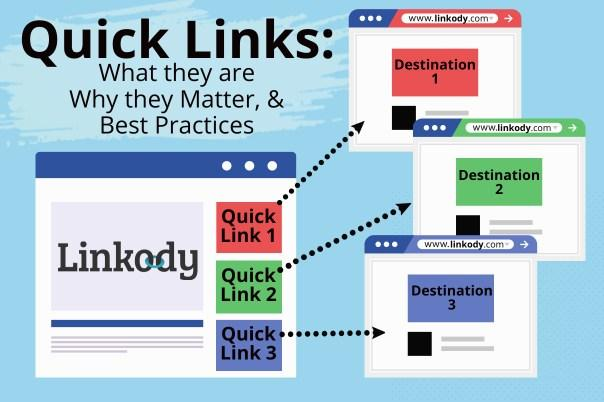
Quick Links AI refers to systems that automatically generate relevant navigation shortcuts for users. These links can appear inside articles, dashboards, menus, search suggestions, help centers, or ecommerce pages.
Traditional quick links are manually added by developers or editors. They usually stay the same for every visitor. AI-powered systems work differently. They analyze user behavior and content relationships in real time.
For example:
- An ecommerce store may recommend related product categories.
- A SaaS platform may show recently used tools.
- A blog may suggest semantically related articles.
- A help center may surface FAQs based on search intent.
This shift from static navigation to adaptive navigation is the main difference between older linking systems and AI-powered quick links.
How AI Generates Smart Quick Links
Quick Links AI depends on multiple technologies working together. Most advanced systems use machine learning, natural language processing, and behavioral analytics.
User Intent Analysis
AI models study what users are trying to accomplish. If someone reads an article about technical SEO, the system may recommend:
- Crawl budget guides
- Internal linking tutorials
- Structured data resources
The suggestions are based on topical relevance instead of simple keyword matching.
Click Behavior Tracking
Modern AI systems monitor:
- Click-through rates
- Time spent on pages
- Exit pages
- Session paths
This data helps the system identify which links solve user problems faster.
Semantic Content Understanding
AI tools now analyze relationships between topics using semantic search models. This is closely connected to concepts explained in Wikipedia’s Natural Language Processing page.
Instead of relying only on exact keywords, AI understands related meanings and entities. That improves the relevance of quick links significantly.
Why Quick Links AI Matters for SEO
Many websites focus heavily on backlinks but ignore internal navigation. In reality, poor internal linking can prevent important pages from ranking properly.
Quick Links AI helps solve several SEO problems simultaneously.
Better Internal Link Distribution
Search engines use internal links to discover pages and understand hierarchy. AI-generated quick links help distribute authority across deeper pages.
This reduces:
- Orphan pages
- Weak crawl paths
- Poor content discoverability
Large content websites especially benefit from automated contextual linking.
Reduced Bounce Rate
When users immediately find the next useful page, they stay longer on the site. This improves:
- Pages per session
- Average session duration
- User engagement signals
According to industry reports from analytics providers like Hotjar, navigation friction is one of the biggest reasons users leave websites early.
Improved Crawl Efficiency
AI systems can prioritize strategically important pages instead of linking randomly. This creates cleaner internal structures for search engine crawlers.
For websites with thousands of pages, crawl optimization becomes increasingly important.
Key Features to Look for in Quick Links AI Tools
Not all AI linking tools work effectively. Some generate irrelevant suggestions that confuse users instead of helping them.
The best platforms usually include these features.
Real-Time Link Recommendations
Good systems adapt based on live user behavior instead of fixed rules.
Example:
- Returning users may see recently visited sections.
- New users may see onboarding shortcuts.
Contextual Internal Linking
Advanced tools analyze article meaning before generating links. This creates stronger semantic relationships between pages.
This is much more useful than random keyword-based automation.
Search Intent Detection
High-quality systems distinguish between:
- Informational intent
- Transactional intent
- Navigational intent
This improves click-through rates because users receive more accurate recommendations.
CTR & Engagement Analytics
Strong AI platforms provide detailed data about:
- Link clicks
- Heatmaps
- Engagement patterns
- Conversion paths
Without analytics, optimization becomes guesswork.
Best Use Cases for Quick Links AI

Quick Links AI is not limited to blogs or search engines. Multiple industries are already using adaptive navigation systems.
Ecommerce Stores
AI-powered quick links help shoppers discover products faster.
Common examples include:
- Related categories
- Frequently bought together items
- Trending collections
- Personalized shortcuts
This reduces search fatigue during shopping sessions.
SaaS Platforms
Complex dashboards often overwhelm users. AI quick links simplify workflows by highlighting:
- Recently used tools
- Frequently accessed reports
- Suggested next actions
This improves productivity and reduces onboarding friction.
Large Content Websites
News sites and blogs use AI linking systems to keep readers engaged through:
- Related articles
- Topic clusters
- Semantic recommendations
This increases session depth naturally.
Customer Support Centers
AI quick links are highly effective in support environments. Instead of forcing users to browse long documentation trees, systems can recommend:
- Relevant FAQs
- Setup guides
- Troubleshooting resources
This lowers support ticket volume.
Common Problems With AI Quick Links
AI-generated navigation is useful, but poor implementation creates problems.
Irrelevant Recommendations
Weak semantic models often generate unrelated suggestions. This damages user trust and reduces engagement.
Quality matters more than quantity.
Too Many Dynamic Links
Overloaded navigation creates clutter, especially on mobile devices.
Users still prefer clean interfaces. AI should simplify navigation, not complicate it.
Crawl Budget Waste
Poorly structured dynamic linking can generate unnecessary URLs and duplicate paths. This can reduce crawl efficiency for large websites.
Technical SEO teams should monitor automated linking carefully.
AI Hallucination Risks
Some AI systems incorrectly connect unrelated topics. This is especially common in low-quality automated content tools.
Human review is still important for important pages.
How to Implement Quick Links AI Correctly
The best results come from combining automation with editorial oversight.
Start With Intent Mapping
Identify:
- High exit pages
- Navigation bottlenecks
- Common search queries
AI works better when trained around real user behavior.
Build Strong Content Structure

Semantic organization improves AI recommendations significantly.
This includes:
- Clear categories
- Logical topic clusters
- Consistent internal hierarchy
Monitor Performance Regularly
Track:
- CTR changes
- Bounce rate trends
- User flow reports
- Crawl behavior
Continuous refinement is necessary because user behavior changes over time.
Popular Quick Links AI Tools
Several platforms currently focus on AI-powered internal linking and navigation optimization.
AI Internal Linking Tools
- Link Whisper
- InLinks
- Surfer SEO
AI Recommendation Engines
- Algolia Recommend
- Dynamic Yield
Enterprise AI Search Platforms
- Elastic Search AI Platform
- Coveo AI Search
These tools vary in complexity, pricing, and use cases.
The Future of Quick Links AI

Search and navigation systems are moving toward predictive experiences. Instead of users manually exploring websites, AI systems increasingly guide navigation dynamically.
This includes:
- Conversational navigation
- Personalized site structures
- Entity-based recommendations
- Predictive user journeys
As semantic search technology improves, quick links will become more context-aware and personalized.
However, websites still need balance. Automation should improve usability without creating clutter or losing editorial control.
Final Thoughts
Quick Links AI is becoming an important part of modern website architecture. It improves navigation, strengthens internal linking, and helps users discover relevant content faster.
The biggest advantage is not automation alone. It is contextual relevance. Users stay engaged when the next step feels useful and immediate.
At the same time, poor AI implementation can create irrelevant navigation, cluttered interfaces, and technical SEO issues. The best approach combines AI recommendations with structured content strategy and human oversight.
For websites with growing content libraries, ecommerce catalogs, or complex dashboards, AI-powered can significantly improve both user experience and discoverability when implemented carefully.
Relevant Images
AI-Powered Website Navigation

Quick Links AI in SEO & User Experience




[…] reality is no longer limited to placing 3D objects on a phone screen. Modern AR systems are moving toward environment-aware experiences that understand objects, remember spaces, and […]