



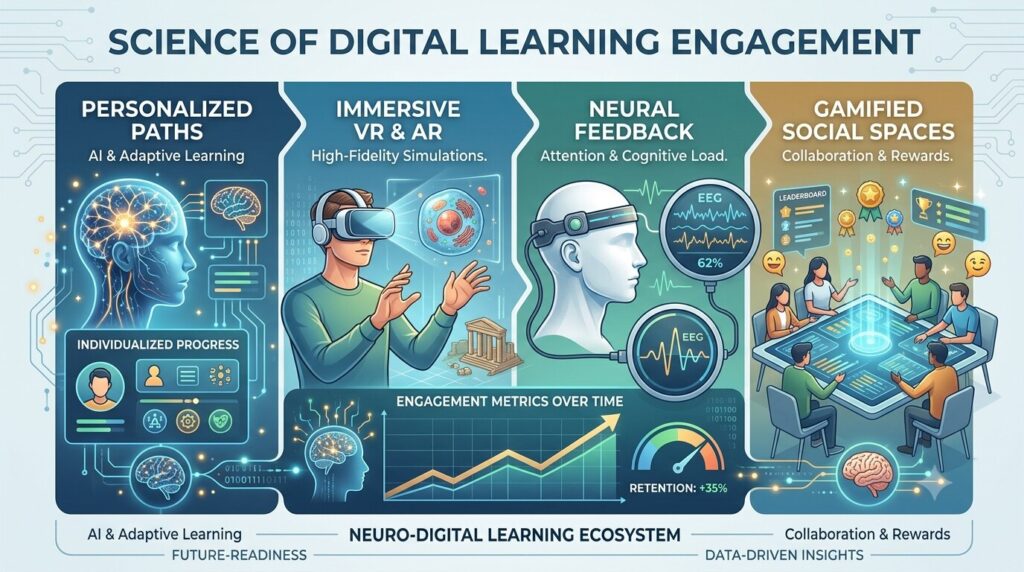

Digital learning engagement refers to the behavioral, cognitive, and emotional involvement of learners with digital educational content and platforms. It combines active participation, sustained attention, motivation, and deep processing, leading to better knowledge retention (often 25-60% higher than traditional methods) and improved academic or professional outcomes. Research shows interactive tools, personalization, and gamification drive this by aligning with how the brain processes information.
What Is Digital Learning Engagement?
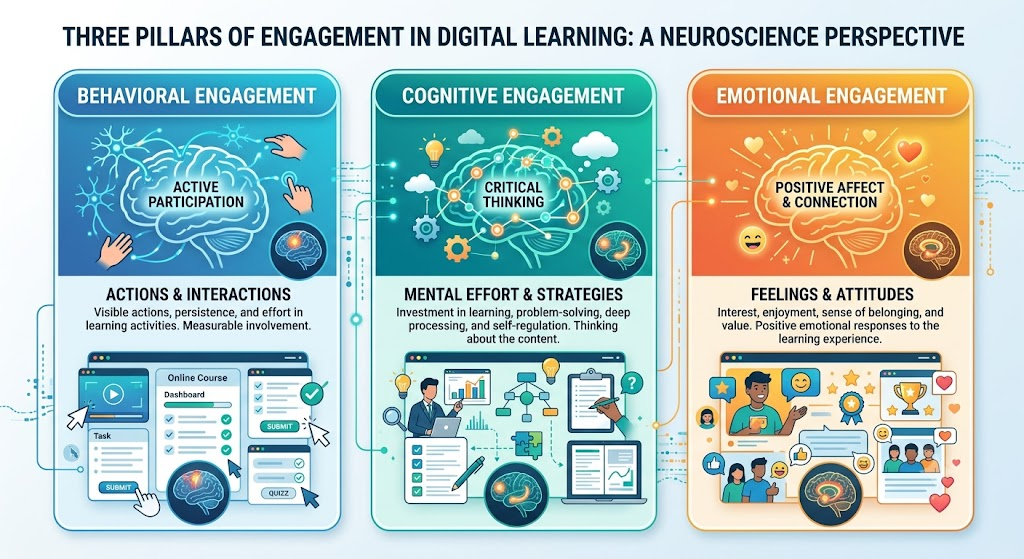
Digital learning engagement is a multi-dimensional construct involving:
- Behavioral engagement: Observable actions like completing modules, participating in discussions, and time spent on tasks.
- Cognitive engagement: Mental effort, such as problem-solving, critical thinking, and self-regulation.
- Emotional engagement: Feelings of interest, enjoyment, frustration, or belonging.
Studies grounded in Self-Determination Theory (autonomy, competence, relatedness) and Community of Inquiry frameworks highlight these as predictors of success in online environments.
Also See : Instructional Technology Services: Complete Guide & Benefits
Unlike passive consumption, true engagement activates reward pathways in the brain, releasing dopamine during meaningful interactions, which reinforces learning.
The Neuroscience Behind Digital Learning Engagement
The brain’s response to digital stimuli explains why certain designs succeed. Attention networks, including the prefrontal cortex for focus and the limbic system for emotion, are key.
Dopamine surges with rewards, feedback, and novelty, motivating continued engagement. Positive emotions reduce cognitive load and enhance memory consolidation via the hippocampus.
Active learning (quizzes, simulations) promotes deeper encoding than passive lectures, with studies showing up to 13x more learner talk time and higher retention.
Microlearning and spaced repetition combat the Ebbinghaus Forgetting Curve, where learners forget ~60% within 20 minutes without reinforcement.
Key Brain Mechanisms
- Attention and Cognitive Load: Well-designed interfaces minimize extraneous load (e.g., clean UI) and maximize germane load (schema building).
- Motivation Circuits: Intrinsic motivation thrives with autonomy-supportive features like choice in learning paths.
- Social Brain: Virtual interactions activate mirror neurons, fostering connection similar to in-person settings when done right.
Factors Influencing Digital Learning Engagement
Learner-Related Factors
- Motivation and Self-Efficacy: High self-efficacy predicts greater persistence.
- Digital Literacy: Proficiency reduces barriers.
- Emotions and Self-Regulation: Positive academic emotions boost engagement; metacognitive strategies help sustain it.
Technology and Design Factors
Availability, usability, and variety of digital tools correlate positively with engagement (correlation ~0.47 in one study).
Interactive elements like polls, simulations, and personalized feedback are highly effective.
Environmental and Instructor Factors
Teacher digital competency, prompt feedback, and community building are crucial. During disruptions like COVID-19, instructor presence strongly influenced outcomes.
PAA: What are the main challenges to digital learning engagement? Common barriers include technical issues, isolation, cognitive overload, poor instructional design, and low motivation. Solutions involve robust support, intuitive platforms, and blended approaches.
Evidence and Statistics on Digital Learning Engagement
Data underscores its impact:
- Online learning boosts retention rates by 25-60% compared to 8-10% in traditional settings.
- Active learning yields 62.7% participation vs. 5% in lectures.
- Digital tools availability significantly influences behavioral, emotional, and cognitive engagement in science classes.
- AI-embedded tools can increase active reading likelihood by 23x.
- Strong learning cultures double employee retention (57% vs. 27%).
Comparative studies show girls often report higher engagement in digital learning, and androgynous gender roles correlate with better outcomes.
Recommended Table:
| Aspect | Traditional Learning | Digital/Active Learning | Improvement |
|---|---|---|---|
| Retention Rate | 8-10% | 25-60% | +25-60% |
| Participation Rate | ~5% | 62.7% | Significant |
| Time Efficiency | Baseline | 40-60% faster | Substantial |
| Knowledge Application | Lower | Higher (active) | Measurable |
Strategies to Boost Digital Learning Engagement
1. Implement Interactive and Multimodal Content
Use videos, quizzes, simulations, and discussions. Break content into chunks with frequent checks.
2. Leverage Gamification
Points, badges, leaderboards, and narratives activate reward systems. Effective for motivation and retention.
3. Personalize Learning Paths
Adaptive algorithms adjust difficulty and content based on performance, supporting competence needs.
4. Foster Community and Collaboration
Discussion forums, breakout rooms, peer feedback, and social features build relatedness.
5. Provide Timely Feedback and Analytics
Instant responses and progress dashboards enhance self-efficacy.
6. Incorporate Microlearning and Spaced Repetition
Short, focused modules with built-in review intervals combat forgetting.
Numbered How-To: Designing Engaging Digital Modules
- Define Clear Objectives: Align with learner goals and outcomes.
- Choose Intuitive Tools: Prioritize accessibility and low cognitive load.
- Integrate Interactivity: Add polls, scenarios, and hands-on activities every 5-10 minutes.
- Incorporate Multimedia: Mix text, video, audio, and visuals for dual coding.
- Add Assessment and Feedback Loops: Use formative checks with explanations.
- Enable Social Features: Facilitate peer interaction.
- Test and Iterate: Use analytics to refine based on engagement data.
- Ensure Accessibility: Follow WCAG guidelines for inclusivity.
Addressing People Also Ask Questions
PAA: How does digital learning affect student motivation? It enhances motivation through autonomy, immediate feedback, and relevance. However, poor design can lead to disengagement; alignment with Self-Determination Theory is key.
PAA: What role does gamification play in digital engagement? Gamification increases intrinsic motivation by tapping dopamine responses, leading to higher completion rates and enjoyment when balanced with meaningful content.
PAA: How can teachers improve engagement in virtual classrooms? Maintain visual presence, diversify activities, build community, offer choice, and provide regular feedback. Blended models often outperform pure online.
PAA: Are there gender differences in digital learning engagement? Studies during remote periods showed girls often higher in engagement and intrinsic value, with androgynous traits benefiting all.
Readers Favorite : Telemetry: Definition, Applications & How It Works (2026)
Future Trends in Digital Learning Engagement
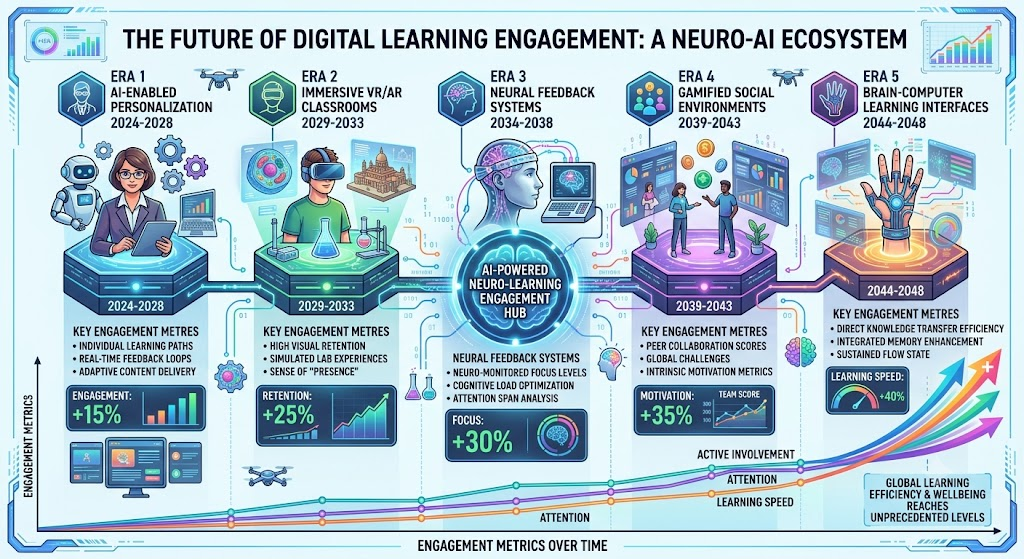
AI personalization, VR/AR immersives, multimodal interfaces, and neuroscience-informed designs will advance. Emphasis on equity, mental health integration, and hybrid models persists.More on Wekipedia .
Conclusion
The science of digital learning engagement reveals it’s not just about technology but designing experiences that align with human cognition, motivation, and emotion. By applying data-backed strategies—interactivity, personalization, community, and feedback—educators and organizations can achieve superior outcomes: higher retention, better performance, and sustained motivation. As digital learning evolves, grounding decisions in evidence ensures meaningful, inclusive impact for all learners.



[…] – 22Jun2026 AI Technology Instructional Technology Data Privacy & Compliance Guide AI Technology Science of Digital Learning Engagement […]
[…] Institutions that move from fragmented, non-integrated teaching tools to a coordinated instructional technology approach consistently report stronger retention rates and more measurable learning outcomes. The reason is straightforward: integrated systems generate data — completion rates, item-level performance, time-on-task — that traditional classroom instruction simply doesn’t produce. That data closes the loop between teaching and improvement in a way lecture-and-textbook models cannot. For a deeper dive into the cognitive mechanisms behind these results, see“The Science of Digital Learning Engagement.” […]