




Most companies don’t struggle because of lack of tools. They struggle because their processes are inefficient, unclear, or outdated. Business process optimization (BPO) fixes that by improving how work actually gets done.
Here’s what matters upfront. Optimization reduces cycle time, cuts costs, lowers error rates, and improves output quality. Companies that actively optimize processes report up to 30–50% efficiency gains and 20–30% cost reductions in targeted workflows.
This is not about theory. It’s about identifying what slows your operations and fixing it step by step. If your team repeats work, waits for approvals, or relies on manual tracking, you already have optimization opportunities.
Now let’s break down how this works in practice.
What Business Process Optimization Actually Means (In Practice)
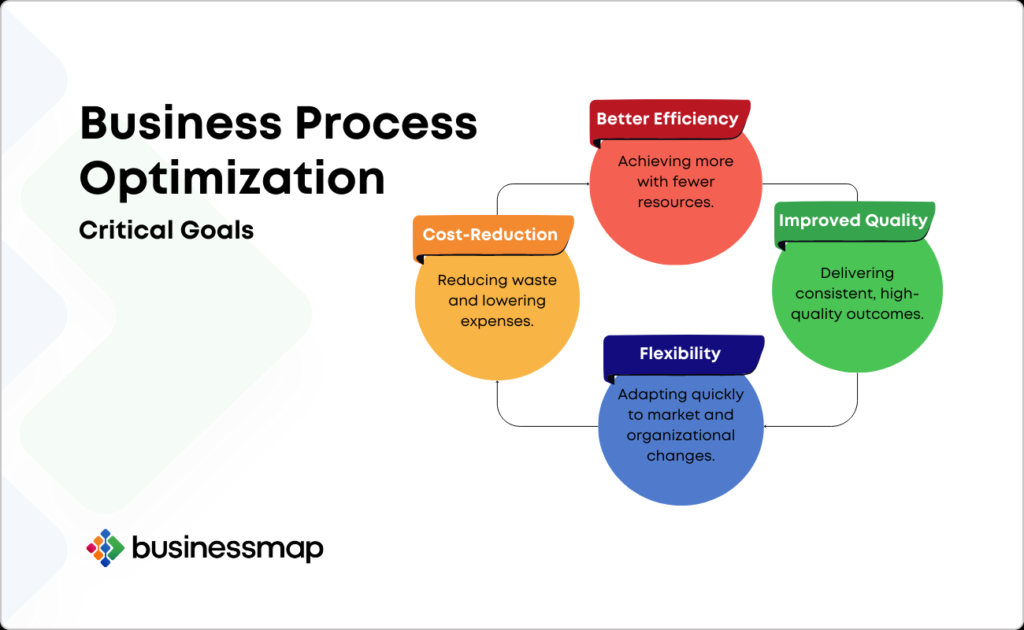
Business process optimization means improving an existing workflow to make it faster, cheaper, and more reliable. It focuses on measurable outcomes, not assumptions.
It is different from:
- Automation: Using tools to perform tasks automatically
- Reengineering: Rebuilding a process from scratch
Optimization improves what already exists instead of replacing it entirely.
If you want a deeper background, you can explore the concept of
<a href=”https://en.wikipedia.org/wiki/Business_process_optimization” target=”_blank”>business process optimization</a> on Wikipedia.
The key idea is simple: remove inefficiencies without disrupting what already works.
Signs Your Business Processes Are Holding You Back
You don’t need a full audit to spot inefficiencies. The signals are usually obvious.
- Tasks require repeated manual input
- Work gets stuck between teams
- Approvals take longer than execution
- Errors require frequent rework
- No one owns the full process
For example, if your invoice processing takes 5 days when it should take 1, the problem is not workload. It’s process design.
This is where most companies lose time and money without realizing it.
How to Optimize a Business Process (Step-by-Step Framework)
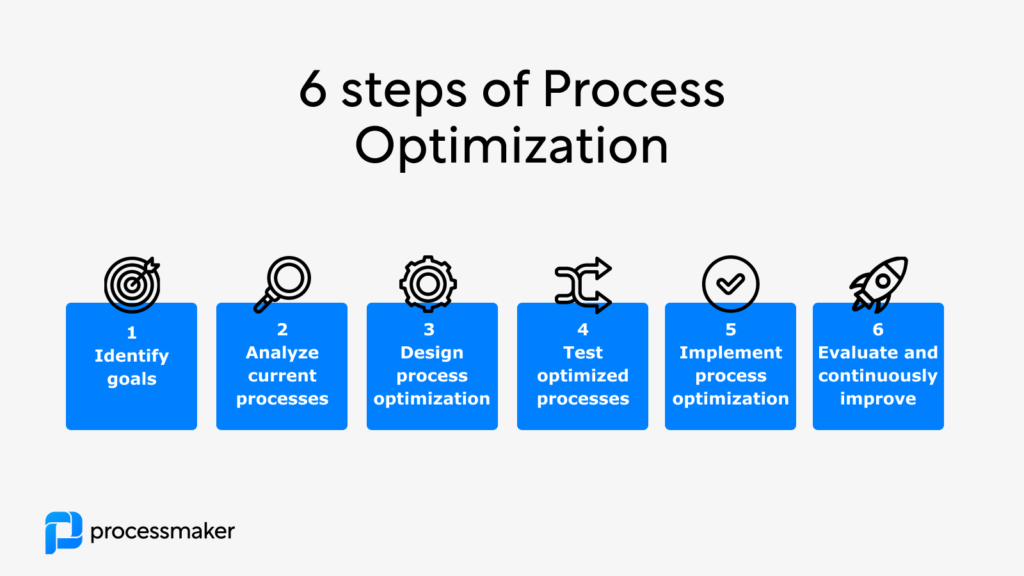
Once you identify inefficiencies, the next step is structured improvement. Random fixes don’t scale. A framework does.
1. Identify High-Impact Processes
Start where optimization matters most.
Focus on:
- Revenue-generating workflows
- Customer-facing operations
- High-cost internal processes
Use an impact vs effort approach. Fix what gives the highest return first.
2. Map the Current Process (As-Is)
You can’t optimize what you don’t fully understand.
Create a visual workflow:
- List every step
- Identify who is responsible
- Track time taken per step
This step often reveals hidden inefficiencies. For example, unnecessary approvals or duplicate data entry.
3. Analyze Bottlenecks and Root Causes
Now you go deeper. Look for delays, not just steps.
Ask:
- Where does work stop or slow down?
- Which step adds no real value?
- What causes repeated errors?
Use simple techniques like the 5 Whys. In many cases, one root issue creates multiple inefficiencies.
4. Redesign the Process (To-Be)
This is where improvement happens.
Focus on:
- Removing unnecessary steps
- Reducing handoffs between teams
- Simplifying decision points
For example, replacing a 3-level approval with a single decision-maker can reduce delays by 40% or more.
5. Implement Changes Without Disruption
Avoid large-scale changes at once.
- Test with a small team
- Gather feedback quickly
- Adjust before scaling
This reduces resistance and ensures smoother adoption.
6. Measure and Improve Continuously
Optimization is not a one-time effort.
Track:
- Cycle time
- Cost per process
- Error rate
Companies that continuously monitor processes see sustained performance improvements over time, not just temporary gains.
Visual Example: Process Optimization Flow
The first image shows a typical inefficient workflow with multiple bottlenecks.
The second shows an optimized version with fewer steps and faster flow.
Proven Techniques That Actually Work
Different methods solve different problems. The key is choosing the right one.
- Lean: Removes waste and unnecessary steps
- Six Sigma: Reduces errors and variation
- Automation: Eliminates manual work
- Standardization: Ensures consistency
- Outsourcing: Moves non-core tasks externally
For example, combining Lean with automation can reduce process time by more than 50% in repetitive workflows.
Tools That Support Optimization (Based on Use Case)
Tools don’t fix processes, but they support execution.
Use:
- Process mapping tools (Lucidchart, Miro)
- Automation tools (Zapier, Make)
- Workflow platforms (ClickUp, Monday.com)
- Analytics tools for performance tracking
Choose tools based on your workflow complexity, not trends.
Real Examples of Business Process Optimization
Let’s make this practical.
Sales Process
Problem: Long deal cycles
Fix: Remove redundant approval steps
Result: Faster conversions
Customer Support
Problem: Slow ticket resolution
Fix: Automated ticket routing
Result: Reduced response time by 35%
Finance Operations
Problem: Manual invoice processing
Fix: Automated data entry and validation
Result: 60% faster processing
HR Onboarding
Problem: Delays in employee setup
Fix: Standardized onboarding workflow
Result: Improved employee experience
Common Mistakes That Kill Optimization Efforts
Many optimization efforts fail for predictable reasons.
- Automating broken processes
- Ignoring employee feedback
- Overcomplicating workflows
- Not tracking measurable results
- Treating optimization as a one-time project
Fixing these mistakes often delivers faster results than new tools.
How to Measure Success (KPIs That Matter)
Without metrics, optimization is guesswork.
Track:
- Cycle time reduction (%)
- Cost per task
- Error rate
- Output per employee
- Customer satisfaction
A simple improvement like reducing approval delays can increase productivity without increasing headcount.
Automation vs Optimization: What Comes First
Many companies automate too early.
The correct approach:
- Optimize the process
- Then automate it
If you automate an inefficient process, you only make inefficiency faster.
Business Process Optimization Checklist
Use this as a quick action guide:
- Identify the process
- Map the current workflow
- Find bottlenecks
- Redesign for efficiency
- Test changes
- Track performance
- Improve continuously
This checklist works for both small teams and large organizations.
Final Takeaway
Business process optimization is not about complexity. It’s about clarity.
Start with one process. Fix what slows it down. Measure the impact.
Then repeat.
That’s how efficient organizations scale without increasing cost at the same rate.





[…] Business is a digital financial content platform focused on market news, stock updates, cryptocurrency trends, and economic insights. It targets […]
[…] Japan Airlines (JAL) business class is built around full-flat seats on long-haul routes, direct aisle access on newer aircraft, and highly consistent service. The flagship Sky Suite seat (1-2-1 layout) is available on most intercontinental routes, while some regional and older aircraft still use angled or staggered seats. […]
[…] budgeting, forecasting, and financial consolidation across multiple departments is still a major problem for many enterprises. Finance teams often work with disconnected Excel […]
[…] Scalable systems […]