



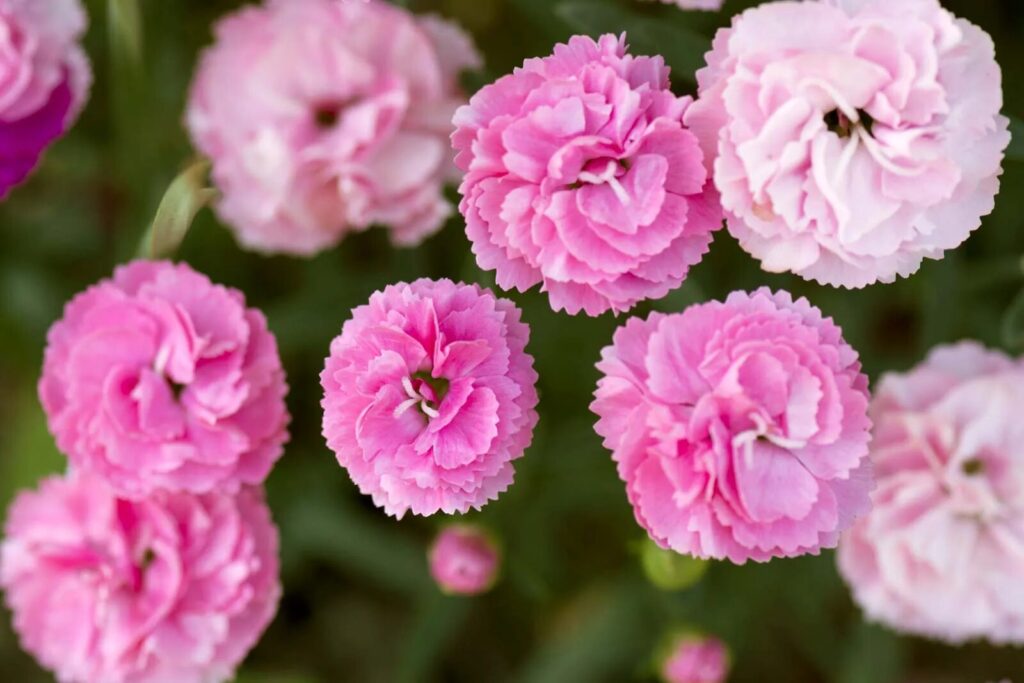

Carnations belong to the species Dianthus caryophyllus. They grow natively in the Mediterranean region and rank among the oldest cultivated flowers in the world, with records stretching back over 2,000 years.
These flowers deliver vibrant colors and a distinct clove-like fragrance. Gardeners and florists use them for borders, bouquets, and container displays. Standard vase life runs 7 to 21 days, with proper handling pushing some varieties to 28 days.
Growers pick carnations for reliable reblooming and low maintenance once established. Different colors carry clear meanings that suit gifts, weddings, or memorials. This Guide gives exact steps to choose the right type, grow them successfully, and fix the most common failures.
History and Origin of Carnations
The name Dianthus comes from Greek words meaning “flower of the gods.” Ancient Greeks and Romans used carnations in wreaths and garlands. Early Christians linked white carnations to the tears of the Virgin Mary.
The word “carnation” traces to Latin roots tied to flesh color or coronation wreaths. By the 16th century, breeders in Europe expanded the color range. The Dianthus caryophyllus Wikipedia page details how selective breeding created the fringed petals and spicy scent we see today.
Modern milestones include the Carnation Revolution in Portugal in 1974 and the flower’s role as the official emblem for Mother’s Day since 1907. Today’s varieties include genetically improved lines bred for longer vase life.
Carnation Symbolism and Color Meanings
Carnations stand for fascination, distinction, and love. Each color sends a precise message.
Red carnations signal deep love and admiration. Pink ones express gratitude and motherly affection. White carnations represent purity and good luck, often used in remembrance.
Purple carnations indicate capriciousness or are chosen for funerals in some cultures. Green carnations connect to St. Patrick’s Day and certain pride symbols. Striped or variegated blooms historically meant regret.
These meanings appear in global traditions. Spain, Monaco, and Slovenia treat carnations as national flowers. Ohio lists them as the state flower. In Korea, they mark Parents’ Day. The clear symbolism helps you match the flower to the exact occasion without guesswork.
Types of Carnations – Which One to Choose
Three main groups cover most needs.
Border or garden carnations grow tall, reach 18–24 inches, and rebloom with strong fragrance. Perpetual-flowering types, like the Chabaud series, produce the longest stems for cutting and hold color best in vases.
Spray carnations carry multiple smaller blooms per stem, ideal for bouquets. Mini or dwarf varieties stay under 12 inches and work perfectly in pots or as edging plants.
Top beginner cultivars include the Fruit Punch series for vivid color, ‘Red Rocket’ for heat tolerance, and ‘Appleblossom Burst’ for fragrance. Compare them by vase life, height, and scent before buying seeds or starts.

9,788 Carnation Close Up Stock Photos – Free & Royalty-Free Stock Photos from Dreamstime
How to Grow Carnations Successfully
Carnations thrive in USDA zones 7–10. In hotter or humid areas like Karachi, plant them where they get morning sun and afternoon shade. Soil must drain well and stay slightly alkaline at pH 6.5–7.5.
Mix in garden lime if your soil tests acidic. Add compost for nutrients without extra nitrogen. Sow seeds indoors 6–8 weeks before last frost or direct-sow after frost danger passes.
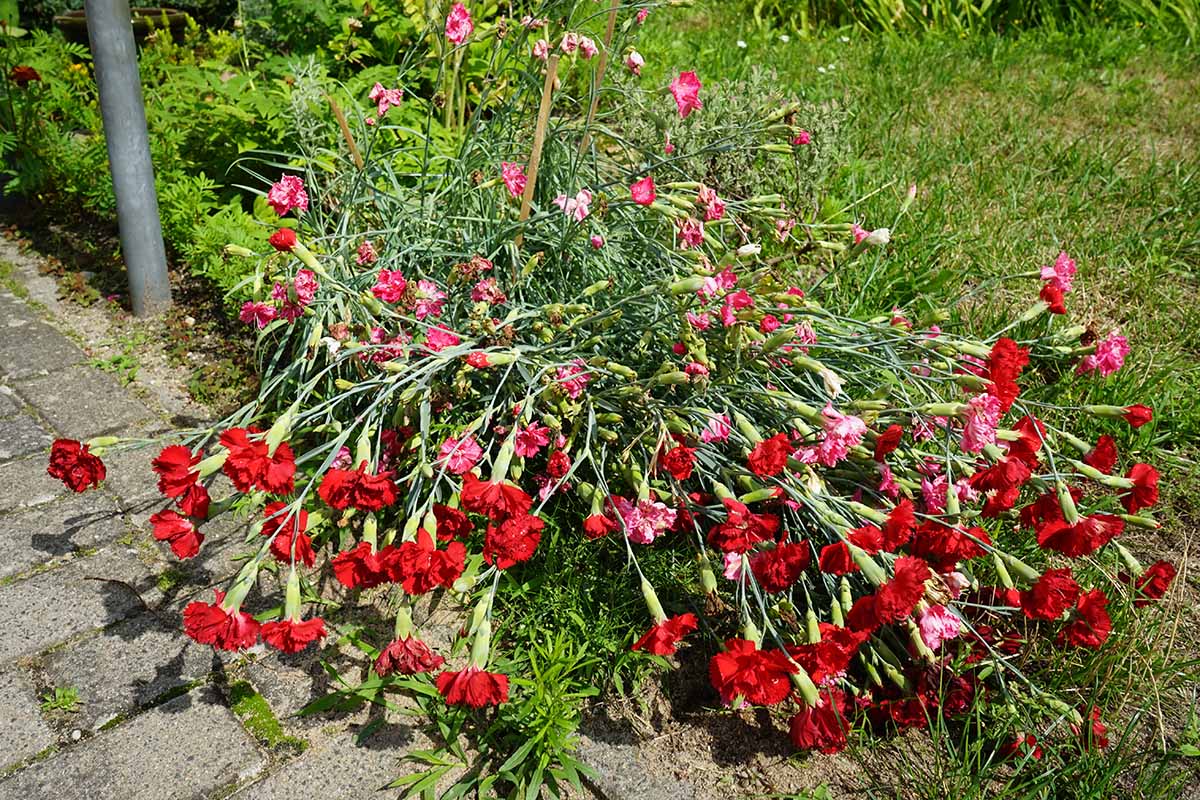
Space plants 10–14 inches apart. Use support netting for tall varieties to prevent stem flop. Water deeply but let the top inch of soil dry between sessions. Full sun of at least six hours drives the best blooms.
Carnation Care Routine That Prevents Most Failures
Feed with a low-nitrogen, high-phosphorus fertilizer every four weeks during growth. Deadhead spent blooms right below the first set of leaves to trigger new buds from spring through fall.
In containers, choose pots at least 8 inches wide with drainage holes. Use a 50/50 mix of potting soil and perlite. Overwinter potted plants by cutting stems back to 2–3 inches and mulching lightly in cooler zones.
Consistent care keeps foliage green and flowers coming. Skip overhead watering to avoid leaf spot. These simple steps stop 90 percent of the yellowing or weak bloom problems gardeners report.
How to Grow and Care for Carnations | Gardener’s Path
Common Carnation Problems and Exact Fixes
Yellow leaves usually mean overwatering or root rot. Cut back water and improve drainage immediately. Spider mites cause similar spotting; rinse leaves with insecticidal soap weekly.
No blooms or tight buds point to low sun or poor phosphorus. Move plants into brighter spots or apply a bloom booster. For stubborn buds, gently squeeze the base to help petals open.
Brown spots signal botrytis from poor air flow. Space plants farther apart and remove affected parts. Aphids cluster on new growth; spray with soapy water and repeat every few days.
Rabbits nibble young shoots but ignore most other plants. Pair carnations with marigolds or garlic as companions. These targeted fixes solve issues fast without guesswork or harsh chemicals.
Cut Carnations: Make Them Last 2–3 Weeks
Choose stems with firm, half-open buds. Recut stems at a 45-degree angle under water. Use clean vases and a simple flower food mix of one teaspoon sugar, one teaspoon bleach, and two teaspoons lemon juice per quart of water.
Change water every two days. Keep arrangements away from fruit bowls and direct heat. These steps extend vase life well beyond the usual 7–14 days most people see.
Propagation Methods for Free Plants
Take 4–6 inch stem cuttings from healthy tips. Dip in rooting hormone and place in moist sand. Roots form in 25–30 days under bright indirect light.
Divide mature clumps every 2–3 years in spring. Each section needs roots and shoots. Seeds work too, but cuttings give identical plants faster.
Creative Uses and Modern Applications
Arrange carnations in simple bouquets with greens for budget-friendly centerpieces. Edible varieties add mild clove flavor to salads, teas, or infused vinegar. Always confirm the specific cultivar is food-safe.
Carnations produce less waste than roses because of their longer field life. Plant them near vegetables to draw pollinators and repel some pests.
FAQs
Are carnations toxic to pets? Most varieties are non-toxic, but keep them out of reach to avoid stomach upset.
Can you grow carnations in hot, humid climates like Pakistan? Yes, with afternoon shade, excellent drainage, and reduced watering frequency.
Best varieties for containers or apartments? Dwarf types in the Fruit Punch series stay compact and bloom heavily.
How do you force earlier blooms? Start seeds indoors earlier and use a high-phosphorus fertilizer once buds form.
What is the difference between carnations and pinks? Pinks are shorter, more fragrant Dianthus species, while carnations focus on larger blooms and cut-flower use.
This guide packs every key detail you need to grow, enjoy, and troubleshoot carnations. Follow the steps and you will see stronger plants and longer-lasting flowers season after season.






[…] – 12Apr2026 News Sweater Guide: Types, Materials, Styling Ideas, and Care Tips News Carnations: Meaning, Types, Growing & Care Guide 2026 […]