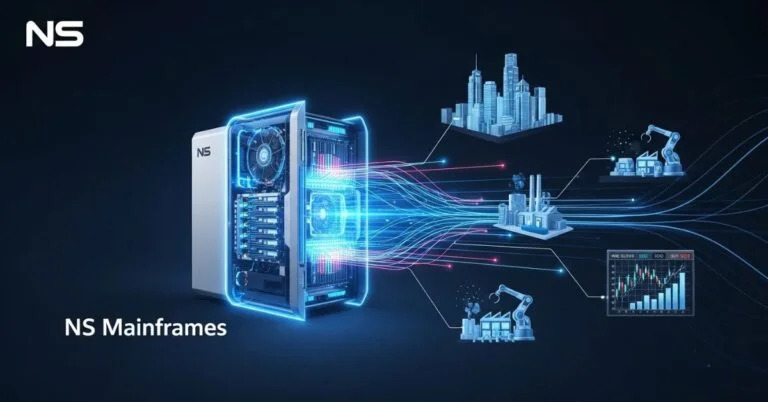

Railway operations depend on systems that can process millions of transactions without interruption. That is where NS Mainframe becomes important. In most search results, “NS Mainframe” refers to the enterprise mainframe infrastructure used by Norfolk Southern to manage freight operations, train scheduling, logistics, employee systems, and operational data.
Unlike regular business servers, railway mainframes handle real-time operational workloads. A delayed transaction can affect train dispatching, shipment tracking, crew coordination, and maintenance planning across thousands of miles of rail infrastructure. That is why transportation companies still rely on mainframes even while adopting cloud technologies.
According to IBM, around 70% of the world’s enterprise transactions still run on mainframes in industries like banking, transportation, and government systems. Railway operators use these systems because uptime, reliability, and transaction consistency matter more than trends in infrastructure modernization.


What Is NS Mainframe?
NS Mainframe is the centralized computing environment used to support large-scale railway operations. These systems process operational data continuously and connect multiple departments through a unified infrastructure.
The mainframe environment typically supports:
- Train dispatching systems
- Freight shipment databases
- Employee scheduling tools
- Maintenance tracking platforms
- Financial and payroll systems
- Customer logistics portals
This is different from standard cloud-based office software. Railway operations require extremely high availability. Mainframe systems are designed to operate with minimal downtime, even during peak workloads.
Most enterprise railway mainframes run on IBM zSystems infrastructure using technologies such as:
- z/OS operating system
- COBOL applications
- CICS transaction processing
- DB2 databases
- Batch processing systems
These technologies may look old compared to modern SaaS platforms, but they remain highly efficient for large transactional workloads.
How NS Mainframe Supports Railway Operations
Rail networks generate huge volumes of operational data every minute. Mainframes help process that data without delays.
Real-Time Train Dispatching
Train dispatching is one of the most critical functions. Dispatch systems track train movement, route assignments, signaling data, and scheduling conflicts in real time.
A single freight railway can operate thousands of locomotives daily. Mainframes help coordinate these operations across large geographical regions.
Without centralized processing, delays and routing conflicts would increase significantly.
Freight Tracking and Shipment Processing
Freight customers expect real-time shipment visibility. Mainframe systems process cargo updates, tracking information, and delivery schedules continuously.
These systems also connect with:
- Warehouse software
- Logistics platforms
- Customer portals
- Intermodal transportation systems
This creates a synchronized freight tracking environment.
Workforce and Crew Management
Rail operations require precise workforce coordination. Mainframes process:
- Crew scheduling
- Shift management
- Payroll operations
- Compliance records
- Workforce availability tracking
Railway companies operate under strict labor and transportation regulations. Mainframes help manage operational compliance at scale.
Asset Monitoring and Maintenance
Modern railways use predictive maintenance systems connected to sensors and monitoring tools.
Mainframes store and process data related to:
- Engine performance
- Brake system conditions
- Fuel efficiency
- Rail equipment diagnostics
- Maintenance schedules
This reduces unexpected equipment failures and improves operational efficiency.
Why Norfolk Southern Still Uses Mainframes
Many users wonder why transportation companies still depend on older computing architectures. The answer is operational reliability.
Mainframes provide several advantages that cloud-only systems still struggle to match for large-scale transportation infrastructure.
High Reliability
Rail systems operate 24/7. Downtime can affect freight movement, customer deliveries, and safety operations.
Enterprise mainframes are built for extremely high uptime. Some environments achieve availability levels above 99.999%.
Massive Transaction Processing
Railway systems process huge transaction volumes daily.
These transactions include:
- Shipment updates
- Signal processing
- Route calculations
- Billing operations
- Crew scheduling changes
Mainframes handle these workloads with very low latency.
Strong Security Controls
Transportation infrastructure is considered critical infrastructure in many countries.
Mainframe environments typically include:
- Role-based access controls
- Multi-factor authentication
- Encrypted transaction processing
- Audit logging
- Centralized security monitoring
This helps reduce cybersecurity risks.


Core Technologies Behind NS Mainframe
Mainframe environments combine legacy software with modern integration tools.
IBM zSystems Infrastructure
Most transportation mainframes operate on IBM enterprise systems because they are optimized for high-volume transactional workloads.
These systems support:
- Parallel processing
- Fault tolerance
- Secure virtualization
- Continuous operations
COBOL and Legacy Applications
Many railway operational applications still use COBOL. Despite its age, COBOL remains heavily used in enterprise systems.
According to IBM industry estimates, billions of lines of COBOL code still run critical business operations globally.
Railway companies continue using COBOL because rewriting stable operational systems creates major risks and costs.
Database and Transaction Systems
Mainframe environments commonly use:
- DB2 databases
- CICS transaction managers
- Batch processing systems
These tools help process large operational datasets efficiently.
NS Mainframe and Modern Technologies
Mainframes are no longer isolated systems. Modern railway infrastructure connects them with AI tools, cloud services, and IoT devices.
AI and Predictive Analytics
Rail companies now analyze operational data for:
- Delay prediction
- Route optimization
- Fuel efficiency analysis
- Predictive maintenance
AI systems often depend on historical data stored inside mainframes.
IoT Integration
Modern locomotives contain sensors that generate operational telemetry.
This includes:
- Engine temperature
- Brake pressure
- Fuel consumption
- Vibration monitoring
Mainframes process and store this data for operational analysis.
Hybrid Cloud Infrastructure
Many railway operators now use hybrid architectures instead of fully replacing mainframes.
This approach combines:
- Mainframe transaction processing
- Cloud analytics platforms
- API integrations
- Modern customer-facing applications
This reduces migration risks while improving flexibility.
Challenges of NS Mainframe Systems
Mainframes remain valuable, but they also create operational challenges.
Legacy System Complexity
Many operational applications were developed decades ago.
These systems may lack:
- Modern APIs
- Cloud-native architecture
- Flexible integrations
Updating them requires specialized expertise.
Mainframe Talent Shortage
Experienced COBOL and z/OS engineers are becoming harder to find.
Many organizations now face skills shortages in:
- Mainframe administration
- COBOL development
- CICS configuration
- Enterprise system maintenance
This is one of the biggest long-term concerns for large enterprises using mainframes.
Integration Limitations
Connecting older systems with modern development environments can be difficult.
Organizations often use middleware and APIs to bridge the gap between legacy systems and modern applications.
NS Mainframe vs Cloud Infrastructure
| Feature | Mainframe Systems | Cloud Infrastructure |
|---|---|---|
| Reliability | Extremely high | Depends on architecture |
| Transaction Processing | Excellent | Good for distributed workloads |
| Scalability | Vertical scaling | Horizontal scaling |
| Security Control | Centralized | Shared responsibility |
| Downtime Risk | Very low | Depends on provider setup |
| Legacy Application Support | Strong | Limited |
Cloud platforms continue growing, but mainframes still dominate industries where transaction reliability is critical.
Industries Using Similar Mainframe Systems
Mainframes are not limited to railway companies.
Industries still using enterprise mainframes include:
- Banking
- Airlines
- Healthcare
- Government agencies
- Insurance providers
- Large logistics companies
For example, airline reservation systems and banking transaction networks still rely heavily on mainframe infrastructure.
Career Opportunities in Mainframe Technology
Mainframe skills remain valuable because many enterprises still depend on these systems.
Common roles include:
- Mainframe developer
- z/OS administrator
- COBOL engineer
- Infrastructure analyst
- Enterprise systems architect
Key technical skills include:
- COBOL
- JCL
- DB2
- CICS
- z/OS administration
Professionals with modernization experience are especially in demand.
Future of NS Mainframe
Mainframes are evolving rather than disappearing.
Most transportation companies now focus on:
- Hybrid cloud integration
- API modernization
- AI-driven analytics
- Operational automation
- Improved cybersecurity
The goal is not to replace every legacy system immediately. Instead, companies modernize gradually while maintaining operational stability.
That approach is common across industries where downtime creates major operational and financial risks.
For additional background on enterprise computing systems, see Mainframe Computers on Wikipedia.
Frequently Asked Questions
What is NS Mainframe used for?
It is primarily used for railway operations, freight logistics, train dispatching, workforce management, and transaction processing.
Does Norfolk Southern still use mainframes?
Large transportation companies, including railway operators, still depend heavily on mainframe systems for critical infrastructure operations.
Why are mainframes important in rail transportation?
They provide high reliability, real-time transaction processing, and operational stability for large transportation networks.
Is NS Mainframe cloud-based?
Most railway environments use hybrid infrastructure that combines mainframes with cloud services and analytics tools.
Are mainframes outdated?
Mainframes use older technologies, but they remain highly relevant in industries requiring stable, high-volume transaction processing.
Conclusion
NS Mainframe systems remain a critical part of modern railway infrastructure. They support train dispatching, freight tracking, workforce coordination, maintenance monitoring, and enterprise transaction processing at large scale.
While cloud computing continues expanding, transportation companies still depend on mainframes because reliability and operational continuity matter more than replacing stable systems quickly.
The future of railway infrastructure will likely combine both approaches. Mainframes will continue handling mission-critical operations, while cloud platforms support analytics, AI, and customer-facing services.