




What is telemetry?
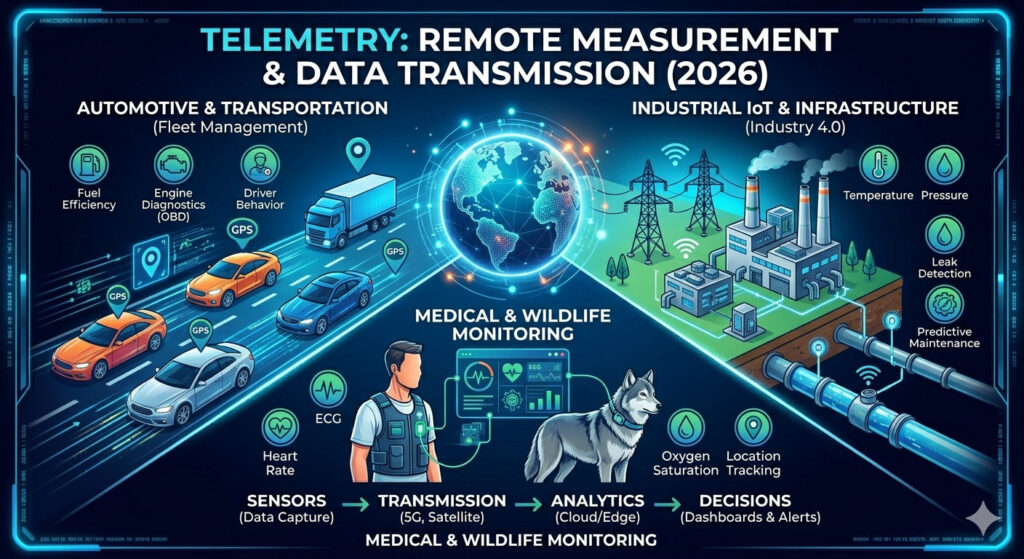
Telemetry refers to the automated process of collecting data from remote sources and transmitting it to a central monitoring system. Telemetry systems measure parameters such as temperature, pressure, GPS location, or machine status and send them in real time via radio, GSM, satellite, or the internet. This enables companies to optimize operations, prevent failures, and reduce costs significantly.
What Is Telemetry and Why Does the Term “Telemetry” Matter?
Telemetry (from Greek tēle meaning “far off” and métron meaning “measure”) is a branch of telecommunications focused on making measurements at a distance and transmitting the results back to a receiving station. The adjective telemetric (or “telemetry” as a modifier) describes any device, system, data, or method related to this technology.
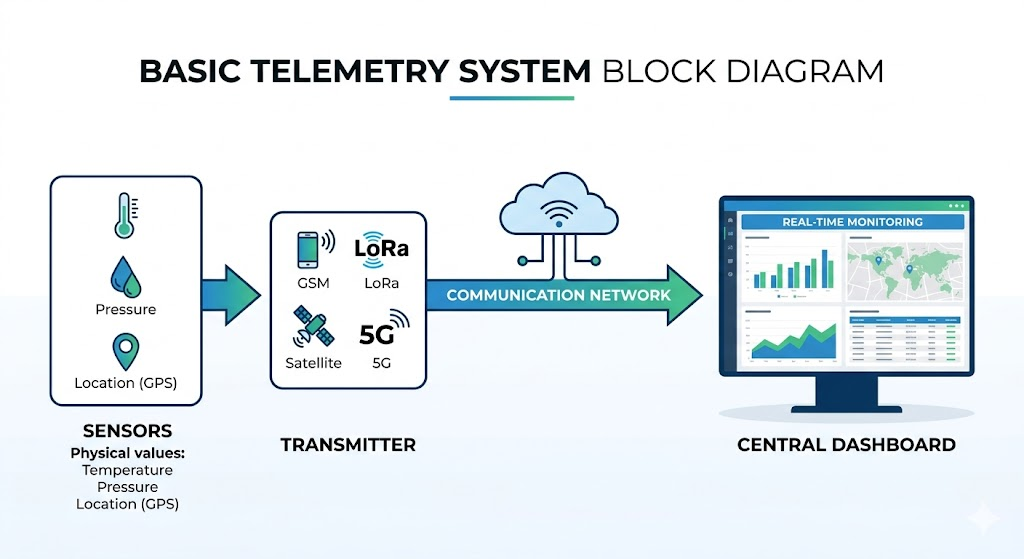
A complete telemetry system typically includes:
- Sensors that capture physical values (temperature, humidity, pressure, vibration, engine parameters, etc.).
- Transmission module (GSM modem, LoRa, satellite, Wi-Fi, or 5G).
- Software platform for data storage, visualization, and analysis at the control center.
Telemetry vs. Telematics – Key Differences
These terms are often confused:
- Telemetry focuses on remote measurement and transmission of raw data.
- Telematics combines telemetry with GPS location tracking, two-way communication, and advanced analytics (e.g., fleet management systems).
People Also Want to Know : What Are Q-Values in Statistics?
Real-World Applications of Telemetry Systems
Automotive and Transportation (Fleet Management)
In vehicles and fleets, telemetry systems monitor:
- Fuel consumption (reductions of 15-20% are common).
- Driver behavior.
- Real-time GPS location.
- Engine diagnostics via OBD.
Companies using telemetry report 10-25% lower operating costs. Digital tachographs with telemetry cards automatically send driver working hours to transport authorities.
Medical and Veterinary Telemetry
In healthcare, telemetryczny enables continuous monitoring of vital signs (ECG, oxygen saturation, blood pressure) while allowing patient mobility. In wildlife research, telemetric collars track animal movement, heart rate, and activity over vast distances.
Industrial IoT and Infrastructure Monitoring (Industry 4.0)
Telemetry modules in energy, water utilities, and gas networks detect leaks, transformer failures, or tank level changes early. A single telemetry controller can manage dozens of sensors across remote sites.
Other Key Sectors
- Vending machines — remote inventory and sales monitoring.
- Aerospace — classic use since the 1950s for rockets and aircraft.
- Wearables & Sports — fitness trackers sending heart rate and GPS data.
- Cybersecurity — log telemetry for anomaly detection.
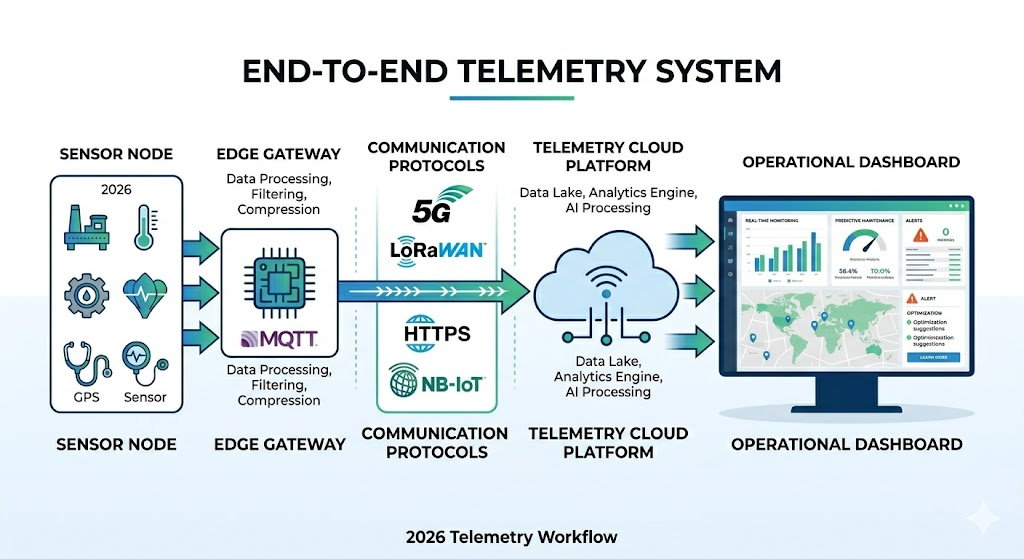
How Does a Telemetry System Work? Step-by-Step
- Data Collection — Sensors capture physical or operational values.
- Local Processing — Edge devices filter noise and compress data.
- Transmission — Data travels via lightweight protocols over wireless networks.
- Reception & Storage — Central servers (cloud or on-premise) log the information.
- Analysis & Action — Dashboards, alerts, and AI models turn data into decisions.
Data Flow Diagram in a Telemetry System
Advantages and Disadvantages of Telemetry Technology
Key Advantages:
- 24/7 monitoring without on-site personnel.
- Cost savings (up to 30% in maintenance and operations).
- Faster incident response (detection time drops from hours to seconds).
- Historical data for predictive maintenance (PdM).
Challenges and Limitations:
- Initial hardware and integration costs.
- Cybersecurity risks (strong encryption is mandatory).
- Dependence on network coverage.
- Compliance with data protection regulations (GDPR/CCPA).
People Also Ask (PAA) – Common Questions Answered
What is a telemetry controller? A telemetryczny controller is a specialized industrial computer (similar to a PLC) with analog/digital inputs, built-in communication modules, and programmable logic. It automates remote monitoring and control of equipment.
What’s the difference between telemetry and monitoring? Monitoring is the broader act of observation. Telemetry is the specific technology and mechanism that enables remote data collection and transmission to make monitoring possible at a distance.
Does telemetry always require internet? No. In remote areas, systems use satellite links, LoRaWAN, or store data locally for periodic upload when connectivity is restored.
Which protocols are used in telemetry systems? Popular options include MQTT (lightweight IoT standard), Modbus, OPC UA, HTTP/HTTPS, CoAP, and LoRaWAN.
How much does a telemetry system cost? Simple fleet modules start from a few hundred dollars. Complex industrial installations can reach tens or hundreds of thousands. ROI is typically achieved within 6–18 months.
Telemetry Trends in 2026 and Beyond
- AI & Machine Learning integration for predictive analytics.
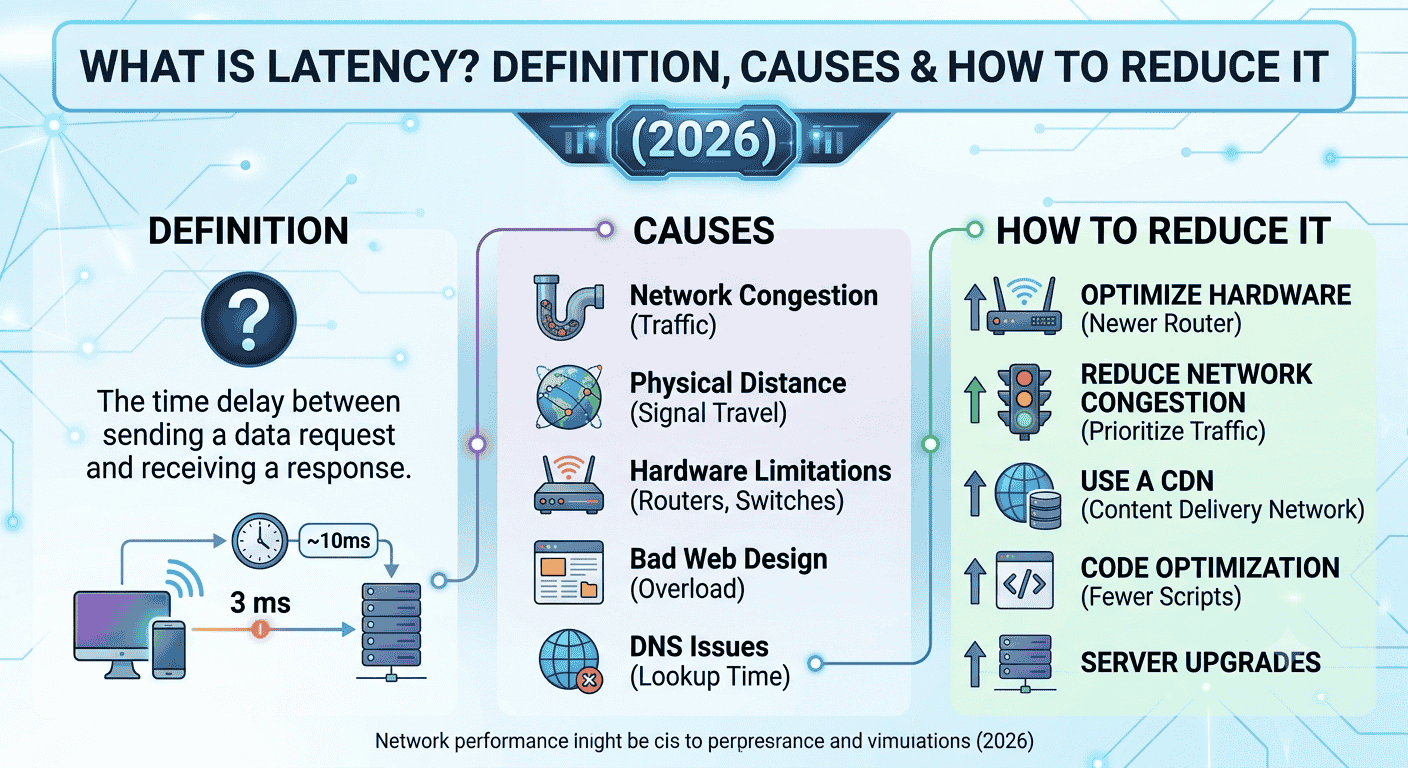
- Edge Computing to reduce latency and bandwidth usage.
- 5G and private networks for ultra-reliable, high-speed transmission.
- Sustainability tracking — carbon footprint monitoring for fleets and factories.
- Zero-trust cybersecurity built into telemetry architectures.
The global telemetry market continues to grow rapidly, driven by IoT adoption, smart cities, and digital transformation initiatives.
How to Choose the Right Telemetry Provider
- Clearly define the parameters you need to monitor.
- Verify compatibility with your existing equipment.
- Prioritize security certifications (ISO 27001, etc.).
- Evaluate scalability and deployment options (cloud vs. on-premise).
- Request references, case studies, and a proof-of-concept pilot.
Leading providers include specialized IoT companies, fleet solutions like Geotab or Samsara, and industrial giants such as Siemens and Schneider Electric.
Conclusion: Why Invest in Telemetry Solutions Today?
Telemetry systems are no longer optional — they are a competitive necessity. Organizations that ignore remote monitoring fall behind in efficiency, safety, and sustainability.
Telemetry is more than a technical term. It is the foundation of Industry 4.0, intelligent transportation, precision medicine, and data-driven decision making.


[…] Readers Favorite : Telemetry: Definition, Applications & How It Works (2026) […]