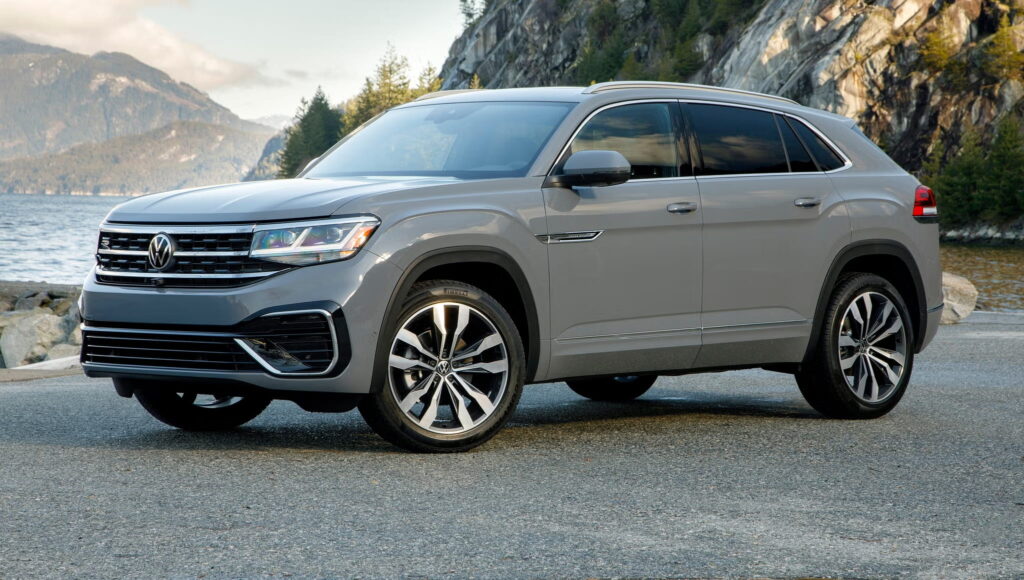

he Volkswagen Atlas Cross Sport is a 2-row midsize SUV focused on space, comfort, and everyday usability. It now runs a 2.0L turbocharged engine (269 hp, 273 lb-ft torque), replacing the older V6. Fuel economy sits around 20–27 MPG (EPA), with real-world averages closer to 21–24 MPG depending on driving habits.
It offers up to 77.8 cubic feet of cargo space, standard advanced safety features, and optional 4MOTION AWD. Pricing typically starts near the mid-$30,000 range and can exceed $50,000 for higher trims.
However, buyers consistently report infotainment lag, touch control frustration, and average fuel economy as key drawbacks. If you’re deciding whether it fits your needs, the next sections break down what actually matters.
What the Volkswagen Atlas Cross Sport Actually Is (Quick Overview)
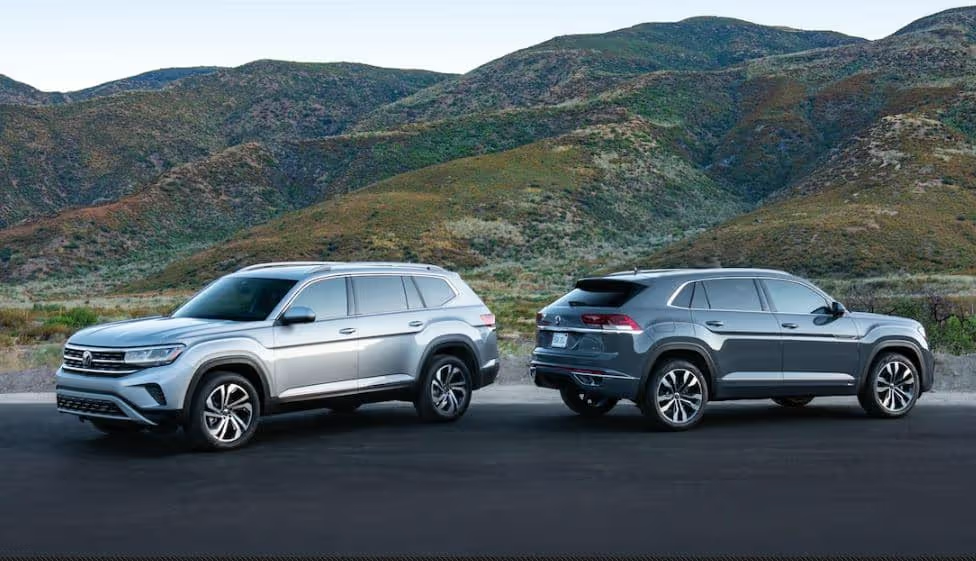
The Atlas Cross Sport is essentially a shorter, sportier version of the Atlas, removing the third row for more cargo space and style.
This makes it a better fit for:
- Small families
- Daily commuters needing space
- Buyers who want SUV size without a third row
Unlike many rivals, it prioritizes interior room over sporty handling. That trade-off becomes clear once you drive it.
For deeper background, see how Volkswagen positions its SUVs on Wikipedia.
What’s New in the Latest Model (2024–2026 Updates)
The recent refresh brought meaningful changes that affect real ownership:
- Engine update: V6 removed, replaced with a stronger turbo-4
- Interior redesign: Larger infotainment screen, improved materials
- Simplified trims: SE, SEL, and R-Line now clearer to compare
- Safety upgrades: More driver assistance features standard
This update improved efficiency slightly but also introduced touch-based controls, which not all users prefer. That leads directly into real usability.
Engine, Performance & Driving Experience (Real-World Insights)
The 2.0L turbo engine delivers quick low-end torque, which helps in city driving.
- 0–60 mph: ~7.5 seconds (average for class)
- Towing capacity: up to 5,000 lbs with AWD
- Transmission: 8-speed automatic
On the road, it feels smooth and stable, not sporty. Steering is light, and suspension is tuned for comfort.
Compared to rivals:
- Faster than some base SUVs
- Less engaging than performance-focused options
If you value relaxed driving over aggressive handling, it fits well. But if performance is a priority, you’ll notice the difference quickly.
Real Fuel Economy (Tested vs Claimed MPG)
Official EPA estimates:
- City: ~20 MPG
- Highway: ~27 MPG
Real-world data shows:
- City driving: 19–22 MPG
- Mixed use: ~21–24 MPG
This puts it slightly below top competitors in fuel efficiency.
Over 15,000 miles/year, this difference can add $300–$600 more in fuel costs compared to more efficient SUVs.
So while power improved, efficiency didn’t lead the segment. That trade-off matters for long-term ownership.
Interior Quality, Space & Practicality
Inside, the Atlas Cross Sport focuses on space first.
- Rear legroom: ~40 inches (among best in class)
- Cargo space: 40.3 cu ft (seats up)
- Max cargo: 77.8 cu ft
Adults can sit comfortably in the back, even on long trips.
However, the redesigned interior includes touch-sensitive climate and volume controls. Many users report these as distracting while driving.
Materials quality is improved, especially in higher trims, but still not class-leading at this price.
Common Problems & Reliability Concerns
This is where buyers should pay attention.
Most reported issues include:
- Infotainment lag and freezing
- Touch controls lack responsiveness
- Minor electrical glitches (sensors, alerts)
While not severe, these affect daily usability.
Reliability ratings are generally average, not top-tier. Maintenance costs are moderate, but resale value tends to be slightly below Japanese rivals.
If you plan long-term ownership, these factors should weigh into your decision.
Safety Ratings & Driver Assistance Features
The Atlas Cross Sport performs well in safety.
- Strong crash-test ratings from major agencies
- Standard features include:
- Adaptive cruise control
- Blind-spot monitoring
- Lane-keeping assist
These systems work reliably in daily driving.
Unlike some competitors, many safety features come standard, not locked behind higher trims.
Trim Levels Explained (Which One Is Worth It?)
SE (Base):
- Best for budget buyers
- Includes most essential safety tech
SEL:
- Adds premium interior features
- Better tech and comfort balance
SEL R-Line:
- Sportier styling
- Mostly cosmetic upgrades
Best value: SEL trim.
It avoids unnecessary extras while improving comfort and usability.
Volkswagen Atlas Cross Sport vs Key Competitors
1: vs Honda Passport
- Passport: better reliability
- Atlas: more interior space
2: vs Ford Edge
- Edge: stronger performance options
- Atlas: more comfortable ride
3: vs Jeep Grand Cherokee
- Jeep: better off-road capability
- Atlas: better everyday practicality
4: vs Hyundai Santa Fe
- Hyundai: better value and tech
- Atlas: larger and more spacious
This comparison shows the Atlas Cross Sport is strongest in space and comfort, not performance or efficiency.
Pricing, Resale Value & Ownership Costs
Typical pricing:
- Base: mid-$30,000s
- Fully loaded: $50,000+
Ownership costs:
- Insurance: average for class
- Maintenance: moderate
- Depreciation: slightly higher than rivals
After 5 years, resale value is typically 5–10% lower than segment leaders.
That affects total ownership cost more than upfront pricing.
Pros and Cons (No-Fluff Summary)
Pros:
- Spacious interior for a 2-row SUV
- Comfortable ride quality
- Strong low-end torque
Cons:
- Infotainment usability issues
- Average fuel economy
- Not as sporty as design suggests
Who Should Buy the Atlas Cross Sport (And Who Shouldn’t)
Good fit for:
- Families needing space without a third row
- Drivers prioritizing comfort
- Buyers wanting a large, practical SUV
Not ideal for:
- Performance-focused drivers
- Buyers prioritizing fuel efficiency
- Those needing maximum reliability ratings
Final Verdict: Is the Volkswagen Atlas Cross Sport Worth It in 2026?
The Atlas Cross Sport is a practical, space-focused SUV with strong everyday usability.
It works best if you value:
- Interior room
- Comfort
- Simple driving experience
However, it falls short in:
- Fuel efficiency
- Infotainment usability
- Long-term resale value
If those weaknesses don’t affect your priorities, it remains a solid option. Otherwise, some competitors may offer better long-term value.
FAQs
Is the Atlas Cross Sport reliable long-term?
It’s average. Expect minor tech-related issues but no widespread major failures.
Does it still offer a V6?
No. New models use a turbocharged 4-cylinder engine only.
How much can it tow?
Up to 5,000 lbs with AWD.
Is it better than the regular Atlas?
It depends. Choose Atlas for 3 rows, Cross Sport for cargo and style.
What are the biggest complaints?
Infotainment lag and touch control usability.