
Foosball is no longer limited to cafés, college lounges, or arcade corners. Competitive table soccer, often called sport foosball, has grown into an organized international sport with ranking systems, professional tournaments, standardized rules, and dedicated training methods. Organizations like the International Table Soccer Federation (ITSF) manage global competitions and player rankings across multiple countries.
Professional foosball is highly structured. Matches use approved tables, regulated balls, timed possession rules, and official scoring systems. Competitive players spend years mastering passing systems, defensive reads, and precision shots such as the pull shot and rollover snake shot. Unlike casual play, tournament foosball depends heavily on consistency and ball control rather than random spinning or power shots.
The sport has expanded steadily in Europe and North America. International tournaments now attract hundreds of players, and major championship streams regularly gain thousands of online viewers. According to the ITSF official rankings and tournament records, players compete throughout the year to earn ranking points through sanctioned events.
That structure is exactly why beginners searching for “sport foosball” often struggle to find clear information. Many articles only discuss recreational play. Competitive foosball is very different. Understanding the rules, equipment, training methods, and tournament systems makes a major difference for anyone planning to improve beyond casual matches.
What Is Sport Foosball?
Sport foosball refers to organized competitive table soccer played under official tournament rules. Matches are played either in singles or doubles format. Players compete on approved tables using standardized balls and scoring systems.
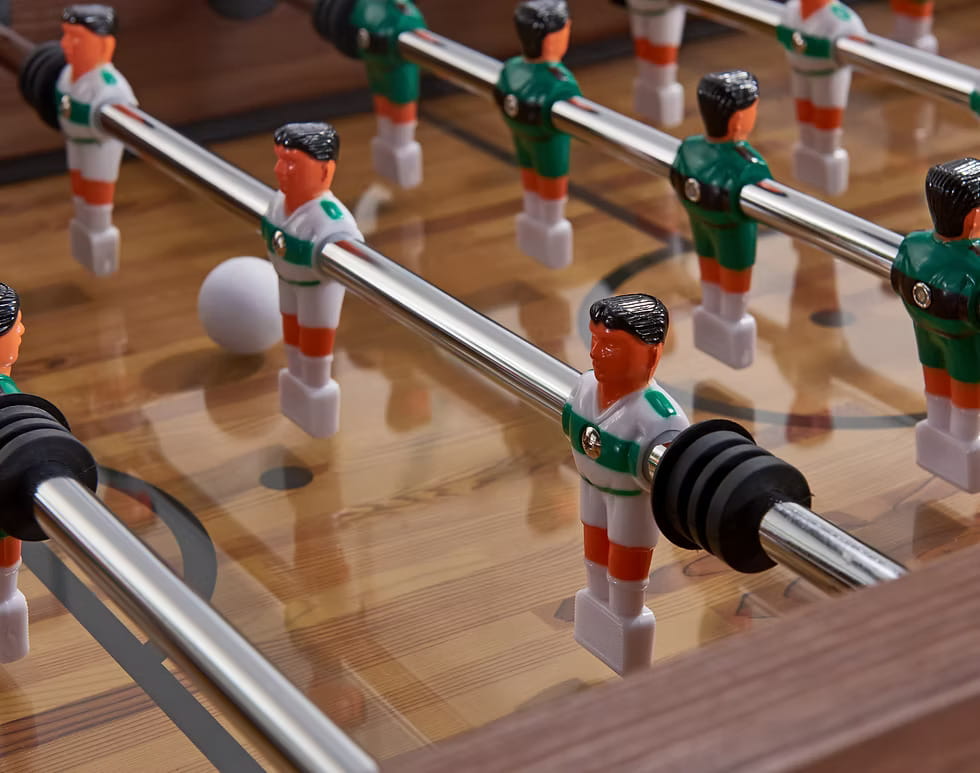
The game itself simulates soccer on a tabletop. Each player controls rods connected to miniature figures. The goal is simple: score into the opponent’s net while maintaining possession and defensive control.
However, tournament foosball introduces stricter mechanics:
- Rod spinning is illegal
- Possession time is limited
- Dead-ball rules apply
- Distraction tactics are penalized
- Tables must meet competition standards
This competitive format is recognized internationally through governing organizations such as the ITSF and national foosball federations.
For readers unfamiliar with the history, the game itself is closely related to the tabletop football concept explained on Wikipedia’s table football page.
Official Sport Foosball Rules
Competitive foosball follows detailed regulations. These rules keep matches fair and skill-based.
Match Format
Most professional matches are played to 5 goals or best-of-three sets. Singles involve one player per side, while doubles use two-player teams.
Tournament matches also include:
- Timed serves
- Controlled possession limits
- Legal restart procedures
- Official timeout allowances
Possession time is one of the biggest differences from casual play. In standard tournament rules:
- Players usually get 15 seconds on offensive rods
- Goalies may hold possession for 10 seconds
If time expires, possession changes.
Legal and Illegal Shots
Competitive players use specific shooting systems. The most common include:
- Pull shot
- Push shot
- Snake shot
- Bank shot
- Euro pin shot
Spinning rods more than 360 degrees before or after striking the ball is illegal in sanctioned competition.
That rule alone changes how serious foosball is played. Precision replaces uncontrolled power.
Types of Professional Foosball Tables
Different tournament circuits use different tables. Each one changes speed, control, and passing style.
Tornado Tables
Tornado is the dominant tournament table in the United States. It uses hard plastic men, square-sided feet, and fast gameplay.
Bonzini Tables
Bonzini tables are popular in France. They feature cork balls and more controlled play styles.
Leonhart Tables
Widely used in Europe, Leonhart tables balance speed and precision. Many international championships use them.
Roberto Sport and Garlando
These Italian tables emphasize quick passing and technical shooting systems.
Understanding table differences matters because techniques change across surfaces.


How to Choose the Right Foosball Table
Beginners often buy inexpensive recreational tables that develop rod issues, uneven surfaces, or poor ball control. Competitive practice becomes difficult on unstable equipment.
For serious training:
- Choose counter-balanced players
- Look for solid steel rods
- Check table weight and stability
- Avoid lightweight foldable models
Home players usually start with Tornado or Leonhart-style tables because tournament conditions stay consistent.
Essential Sport Foosball Skills
Most beginners focus only on shooting. Competitive players focus equally on:
- Ball control
- Passing
- Defensive positioning
- Shot setup timing
That balance separates recreational players from tournament competitors.
Passing Systems
Professional foosball relies heavily on controlled passing between rods.
Common systems include:
- Tic-tac passing
- Lane passing
- Wall passing
- Brush passing
Without consistent passing, offensive shots become predictable.
Defensive Reads
Strong defense is one of the hardest skills in sport foosball.
Defenders learn to:
- Read rod movement
- Predict shot lanes
- Block angles
- Force mistakes
High-level matches are often decided by defensive consistency rather than aggressive shooting.
Most Effective Competitive Shots
Pull Shot
The pull shot remains one of the most effective professional shots. Players pull the ball laterally before shooting into open lanes.
Snake Shot
Also called the rollover shot, the snake shot dominates many modern tournaments because of its speed and deception.
Push Kick
This shot pushes the ball sideways before release. It works well against aggressive defenders.
Each shooting system requires thousands of repetitions for tournament-level consistency.


Sport Foosball Rankings and Tournaments
Competitive foosball uses international ranking systems similar to tennis or chess ratings.
Players earn points through:
- Open tournaments
- National championships
- World events
- Regional leagues
The ITSF world rankings system tracks player performance globally.
Major Foosball Events
Important international competitions include:
- ITSF World Championships
- World Cup of Table Soccer
- National Open Championships
- Master Series tournaments
Top players often compete across multiple countries during the season.
How Players Train for Competitive Foosball
Professional foosball training is repetitive and technical.
Most advanced players practice:
- Passing drills
- Shot repetition
- Goalie reaction timing
- Transitional defense
Training sessions often focus on one shot system for hours rather than full matches.
Common Beginner Mistakes
Many players improve slowly because they:
- Use random shots
- Ignore defense
- Practice without structure
- Switch techniques too often
Competitive progress comes from repeating high-percentage systems consistently.
Foosball Accessories That Matter
Not every accessory improves gameplay. Competitive players usually focus on essentials.
Tournament Balls
Ball material changes control dramatically.
- Cork balls improve grip
- Hard plastic balls increase speed
Rod Lubrication
Proper silicone lubrication keeps rods smooth and reduces wear.
Grip Wraps
Grip consistency becomes important during long tournament sessions.
Is Foosball Really a Sport?
This question appears frequently because foosball looks simple from the outside. Competitive play says otherwise.
Professional matches require:
- Fast reaction speed
- Precision timing
- Hand coordination
- Tactical planning
- Mental consistency
Top-level players train regularly and compete internationally. Tournament matches can last hours during major events.
The organized structure, ranking systems, governing bodies, and international championships are why foosball is widely recognized as a legitimate competitive sport.
Final Thoughts
Sport foosball is far more technical than casual table soccer. Competitive players rely on structured passing systems, precise shooting mechanics, defensive positioning, and consistent training routines.
For beginners, the fastest improvement usually comes from:
- Learning one controlled shot
- Practicing passing daily
- Playing on stable tournament-style tables
- Understanding official rules early
That foundation matters more than flashy techniques. Competitive foosball rewards consistency, control, and decision-making far more than random speed or power.