





Introduction
Skype Vox is a digital communication solution associated with voice-over-internet technologies that enables users to make voice calls, communicate online, and connect across geographic boundaries using internet-based networks. It has played a role in the broader evolution of internet communication and remote connectivity.
The rise of internet communication transformed how people interact across the world. Traditional telephone systems once dominated long-distance communication. However, internet-based technologies changed the landscape by making communication faster, cheaper, and more accessible.
Among the many developments in digital communication, Skype Vox emerged as part of the growing movement toward Voice over Internet Protocol (VoIP) solutions. It contributed to the shift from traditional telephone networks to internet-powered communication systems.
Today, digital communication platforms influence personal relationships, business operations, education, healthcare, and international collaboration. Understanding the history of Skype Vox helps explain how modern communication technologies evolved and why they remain essential in a connected world.
The Origins of Skype Vox (Development & Early Adoption)
Understanding the VoIP Revolution
To understand Skype Vox, it is important to first understand Voice over Internet Protocol (VoIP).
VoIP is a technology that allows voice communication to travel through internet networks rather than conventional telephone lines. Instead of transmitting analog voice signals, VoIP converts voice into digital packets and sends them over data networks.
For a deeper understanding of VoIP technology, readers can explore the internal resource:
VoIP Technology Explained: How Internet Calling Works
The concept of internet calling began gaining attention during the 1990s. Internet infrastructure was improving rapidly. Broadband connections were becoming more available. Computer processing power was increasing.
These developments created opportunities for internet-based voice communication.
Early Internet Communication Challenges
The earliest internet communication systems faced several limitations:
- Slow dial-up connections
- High latency
- Poor audio quality
- Frequent disconnections
- Limited user adoption
Communication quality was often inconsistent.
Voice transmissions were frequently interrupted by network congestion.
Despite these challenges, innovators continued improving internet communication technologies.
Researchers and software developers recognized the enormous potential of replacing expensive international telephone services with internet-powered alternatives.
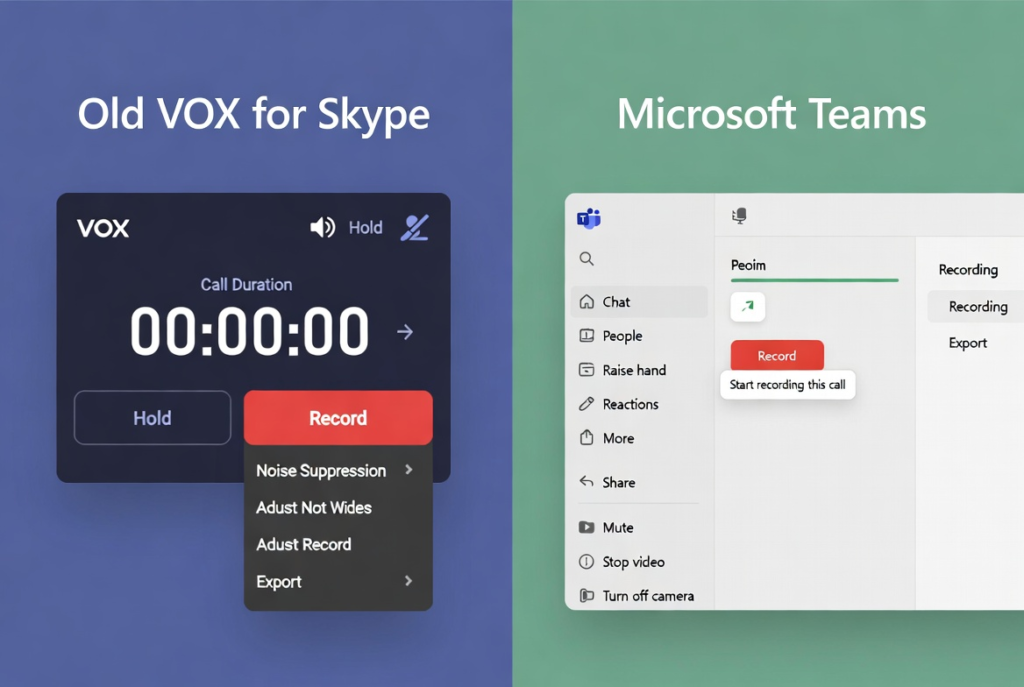
The Emergence of Skype Vox
Skype Vox developed within this broader technological environment.
Its growth reflected increasing demand for affordable communication tools that could connect users across countries and continents.
Several factors encouraged adoption:
1. Lower Communication Costs
Traditional international calls were expensive.
Internet-based calling significantly reduced costs.
Users could communicate with friends, family members, clients, and colleagues around the world at a fraction of previous expenses.
People Also Read : UberEats Black: What It Means and How It Works
2. Expanding Internet Access
Internet penetration increased rapidly throughout the early 2000s.
More households gained broadband access.
Businesses adopted internet infrastructure at scale.
This expansion created favorable conditions for Skype Vox and similar communication platforms.
3. User-Friendly Design
Digital communication tools needed to be easy to use.
Skype Vox simplified voice communication by reducing technical barriers.
Users could install software, create accounts, and begin communicating quickly.
Global Adoption and Market Expansion
As internet accessibility improved, Skype Vox reached diverse audiences.
Its user base expanded across:
- Personal communication
- Small businesses
- Remote workers
- Educational institutions
- International organizations
Global communication became more practical and affordable.
This transformation was driven by both technological innovation and growing user demand.
The Role of Technological Innovation
Several innovations supported Skype Vox’s growth:
- Broadband internet connections
- Packet-switched networking
- Digital audio processing
- Peer-to-peer communication architectures
- Improved network reliability
These advancements helped establish internet communication as a legitimate alternative to traditional telephony.
The foundation for modern digital communication was being built.
People Also Read : Dell Inc Pop Up: How to Stop It Permanently
Key Features and Communication Capabilities
Voice Calling
Voice communication remains the core feature of Skype Vox.
Users can communicate through internet-based voice channels rather than conventional telephone networks.
Benefits include:
- Lower costs
- International accessibility
- Flexible connectivity
- Improved scalability
Voice communication became more reliable as internet infrastructure matured.
Video Communication
The introduction of video communication marked a major milestone.
Users could see and hear one another in real time.
This feature transformed communication by adding visual interaction.
Video communication became especially valuable for:
- Remote work
- Online education
- International collaboration
- Family communication
Modern multimedia communication experiences were gradually developed through innovations in this area.
Instant Messaging
Text-based communication complements voice and video services.
Instant messaging provides:
- Quick conversations
- Status updates
- Group communication
- Communication history
Many users prefer messaging for routine interactions because it is efficient and convenient.
File Sharing
Digital collaboration often requires document exchange.
Skype Vox expanded communication capabilities by supporting file transfers.
Users could share:
- Documents
- Images
- Presentations
- Reports
- Multimedia files
This functionality improved workflow efficiency for both personal and professional users.
Conference Calling
Conference calling supports communication among multiple participants simultaneously.
Organizations use conference communication for:
- Team meetings
- Project coordination
- Client discussions
- Training sessions
As businesses became increasingly distributed, conference calling grew in importance.
Why Internet Communication Became the Preferred Choice
Several advantages encouraged adoption.
Accessibility
Users could connect from almost anywhere with internet access.
Affordability
Communication costs were significantly reduced.
Flexibility
Multiple communication methods became available within a single platform.
Global Connectivity
Geographic barriers were minimized.
These benefits contributed to widespread adoption across industries and regions.
Also See : Gene Hackman Movies: Best Films Ranked & Where to Watch (2026)
Mobile Devices and Cross-Platform Compatibility
The smartphone revolution accelerated growth.
Users increasingly expected communication tools to work across:
- Desktop computers
- Laptops
- Smartphones
- Tablets
Cross-platform compatibility became essential.
Communication experiences were improved through mobile optimization.
Users could remain connected regardless of device or location.
This flexibility increased adoption among consumers and enterprises alike.
Evolution & Technology
The Digital Communication Framework
Reliable digital communication depends on several technological components.
Together, these components form a digital communication framework.
Network Infrastructure
Network infrastructure serves as the foundation.
Key components include:
- Broadband networks
- Fiber-optic systems
- Wireless connectivity
- Data centers
- Cloud services
Without strong infrastructure, communication quality suffers.
Reliable networks support consistent voice and video experiences.
Audio Compression Technologies
Digital voice communication requires efficient data transmission.
Audio compression technologies reduce bandwidth requirements while maintaining acceptable quality.
Popular approaches include:
- Codec optimization
- Data packet compression
- Adaptive bitrate technologies
These innovations improved performance on varying network conditions.
Connection Stability Benchmarks
Communication quality depends heavily on network stability.
Key performance indicators include:
| Metric | Importance |
|---|---|
| Latency | Response speed |
| Packet Loss | Audio reliability |
| Jitter | Communication consistency |
| Bandwidth | Overall quality |
| Uptime | Service availability |
Modern communication systems continuously monitor these benchmarks.
Quality improvements have been achieved through advanced network management.
Security Considerations
Security is critical in digital communication.
Users expect communication systems to protect:
- Personal conversations
- Business discussions
- Shared files
- Sensitive information
Important security measures include:
- Authentication systems
- Data encryption
- Secure server architecture
- Access controls
- Threat monitoring
Security frameworks continue evolving to address emerging cyber risks.
Cloud Integration
Cloud computing transformed communication technologies.
Cloud-based communication provides:
- Scalability
- Reliability
- Centralized management
- Reduced infrastructure costs
Organizations can expand communication services without major hardware investments.
Cloud integration has become a standard feature of modern communication platforms.
Mobile Optimization
Mobile usage now dominates digital communication.
Developers optimized Skype Vox and similar solutions for:
- Battery efficiency
- Mobile networks
- Responsive interfaces
- Cross-device synchronization
This evolution ensured users could communicate effectively from virtually any location.
Encryption and Privacy Enhancements
Privacy expectations have increased significantly.
Communication systems now implement stronger protections through:
- End-to-end encryption technologies
- Secure transport protocols
- Identity verification systems
- Data protection measures
Trust remains essential for long-term adoption.
Artificial Intelligence Enhancements
Artificial intelligence is reshaping communication platforms.
AI-driven capabilities include:
- Noise suppression
- Speech recognition
- Real-time translation
- Meeting transcription
- Intelligent assistance
Communication experiences continue improving through automation and machine learning.
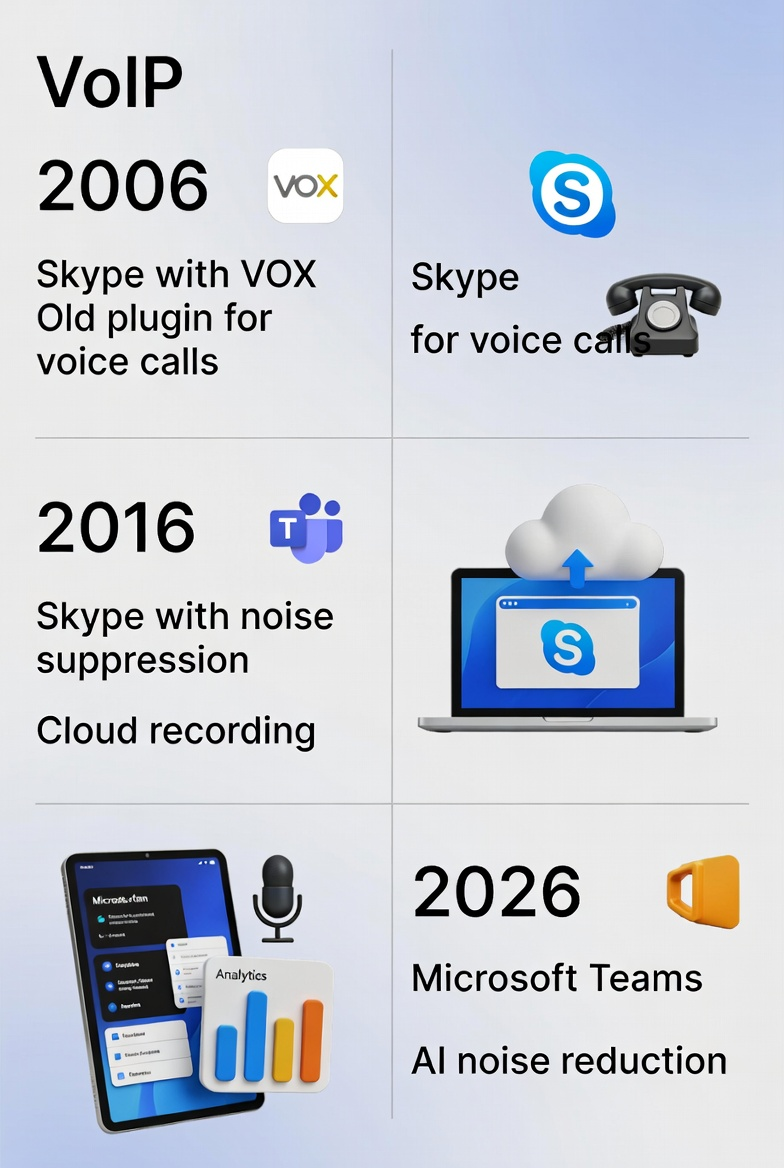
From Voice Transmission to Multimedia Experiences
Early internet communication focused primarily on voice.
Modern communication platforms support:
- Voice calls
- Video conferencing
- Screen sharing
- Collaboration tools
- Multimedia messaging
Communication has evolved from a single-purpose service into a comprehensive digital ecosystem.
Scalability for Every User Type
A key strength of modern communication technologies is scalability.
Individual Users
Personal communication remains simple and affordable.
Small Businesses
Collaboration tools improve productivity.
Enterprise Organizations
Large-scale communication systems support thousands of employees.
Scalable infrastructure enables growth without sacrificing performance.
Skype Vox User Learning Roadmap
Beginner Level
Learn:
- Basic VoIP concepts
- Account setup
- Voice calling
- Contact management
- Messaging features
Goal: Become comfortable with daily communication tasks.
Intermediate Level
Learn:
- Video communication
- File sharing
- Group collaboration
- Conference calling
- Mobile applications
Goal: Improve communication efficiency.
Advanced Professional Level
Learn:
- Security best practices
- Communication policies
- Cloud integration
- Team collaboration strategies
- Communication analytics
Goal: Optimize organizational communication performance.
Business Leadership Level
Learn:
- Enterprise deployment
- Infrastructure planning
- Compliance requirements
- Workforce communication strategy
- Digital transformation initiatives
Goal: Align communication systems with business objectives.
Cultural Impact & Future Preservation
Transforming Remote Work
Skype Vox helped normalize remote communication.
Organizations increasingly adopted distributed work models.
Employees could collaborate regardless of location.
Remote work practices that are common today were influenced by the broader adoption of internet communication technologies.
Supporting Online Education
Educational institutions embraced digital communication platforms.
Students gained access to:
- Virtual classrooms
- Remote tutoring
- Online collaboration
- International learning opportunities
Education became more flexible and accessible.
Advancing International Business
Global commerce depends on communication.
Skype Vox helped businesses:
- Connect with clients
- Coordinate international teams
- Reduce travel costs
- Accelerate decision-making
International collaboration became significantly easier.
Strengthening Social Connectivity
Digital communication platforms help people maintain relationships.
Families separated by geography can remain connected.
Friends can communicate across continents.
Communities can collaborate regardless of physical location.
Social interaction has been transformed by internet communication technologies.
Digital Preservation & Innovation
Preserving digital communication history is increasingly important.
Communication records help researchers understand technological development and social change.
Future preservation efforts should focus on:
- Maintaining secure infrastructure
- Protecting historical records
- Documenting technological milestones
- Encouraging sustainable innovation
- Preserving communication heritage
Without proper preservation, important aspects of digital history could be lost.
The Importance of Accurate Historical Documentation
The history of internet communication must be documented carefully.
Misattributed innovations can distort historical understanding.
Oversimplified narratives may overlook key contributors.
Important technological breakthroughs can be forgotten when records are incomplete.
Researchers, historians, and technology professionals share responsibility for maintaining accurate historical accounts.
Reliable documentation protects technological heritage for future generations.
For broader context regarding communication history, readers can explore:
Internal Link: The Evolution of Digital Communication Platforms
For additional background on the history of internet communication technologies, see the Wikipedia article on VoIP: Wikipedia VoIP Article
Digital Communication Technology Timeline
| Period | Major Development |
|---|---|
| 1970s | Early packet-switching research |
| 1980s | Growth of digital networking technologies |
| 1990s | Emergence of commercial internet access |
| Late 1990s | Early VoIP experimentation |
| Early 2000s | Widespread internet calling adoption |
| Mid 2000s | Video communication expansion |
| 2010s | Mobile communication revolution |
| Late 2010s | Cloud-based communication ecosystems |
| 2020s | AI-enhanced collaboration and communication platforms |
| Future | Intelligent, immersive communication environments |
Conclusion
Skype Vox represents an important chapter in the broader history of digital communication. By leveraging Voice over Internet Protocol technologies, it helped demonstrate how internet-based communication could provide affordable, accessible, and scalable alternatives to traditional telephony.
Its evolution reflects larger trends in internet infrastructure, cloud computing, mobile technology, security, and artificial intelligence. From basic voice calls to sophisticated multimedia collaboration, communication platforms have transformed how people connect, learn, work, and conduct business.
As digital communication continues evolving, preserving the history of technologies such as Skype Vox remains essential. Accurate historical documentation, secure infrastructure, and responsible innovation will ensure that future generations understand the technological breakthroughs that shaped modern global connectivity.





[…] Also people read : Skype Vox: How It Works, Problems, Fixes & When to Use It […]
[…] A mobile interactive group is a real-time communication space where users connect, respond, and collaborate through mobile-first platforms like messaging apps or collaboration tools. It supports two-way interaction, instant feedback, and structured engagement—unlike broadcast lists or static forums. […]
[…] park founders are entrepreneurs and entertainment companies.Their parks operate as businesses with revenue […]
[…] here’s where it gets important:BNPL is transitioning from a “growth tool” to a risk-managed financial product. That shift affects both users and businesses […]
[…] report ranking volatility, likely tied to ongoing algorithm refinements affecting conversion-heavy […]
[…] The PropTech market is not slowing—it’s shifting. Funding is becoming selective. AI tools are moving from pilot to production. And real estate operators are only adopting solutions that show measurable ROI. […]
[…] Disney has reduced the emphasis on reporting Disney+ subscriber numbers and is shifting toward profitability-focused metrics. This includes highlighting streaming operating income, ARPU (average revenue per user), and bundled performance instead of detailed quarterly subscriber adds. […]
[…] People Also Read : Skype Vox: From VoIP to Global CommunicationDreamstime […]