



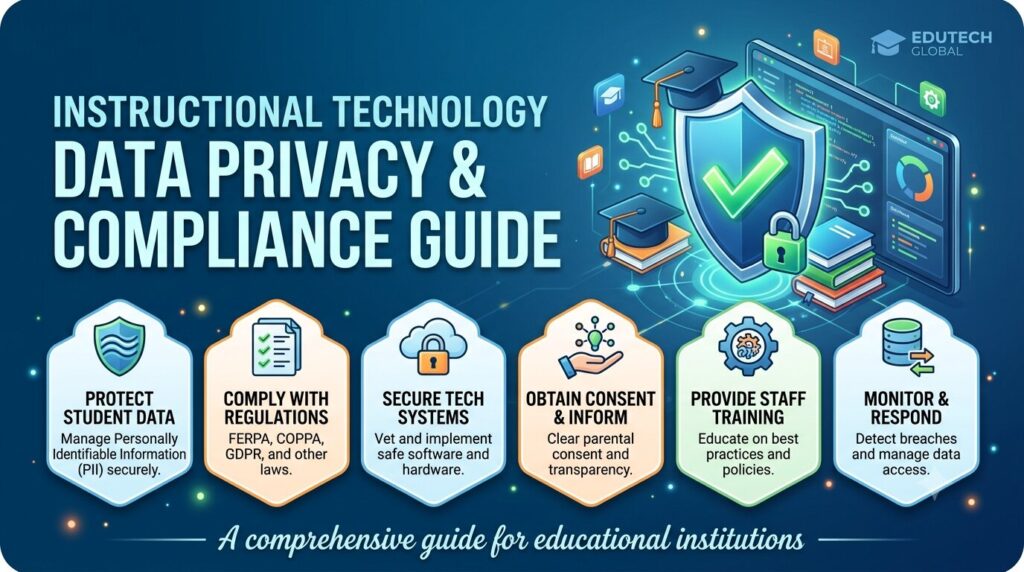

Instructional technology data privacy and compliance involves protecting student personally identifiable information (PII) and education records while using digital tools for learning. Schools and EdTech providers must adhere to laws like FERPA, COPPA, and state regulations through policies, vendor agreements, encryption, access controls, and data minimization to prevent breaches and ensure ethical use.
This comprehensive guide equips educators, administrators, and EdTech stakeholders with actionable strategies for 2026 realities.
Why Data Privacy Matters in Instructional Technology
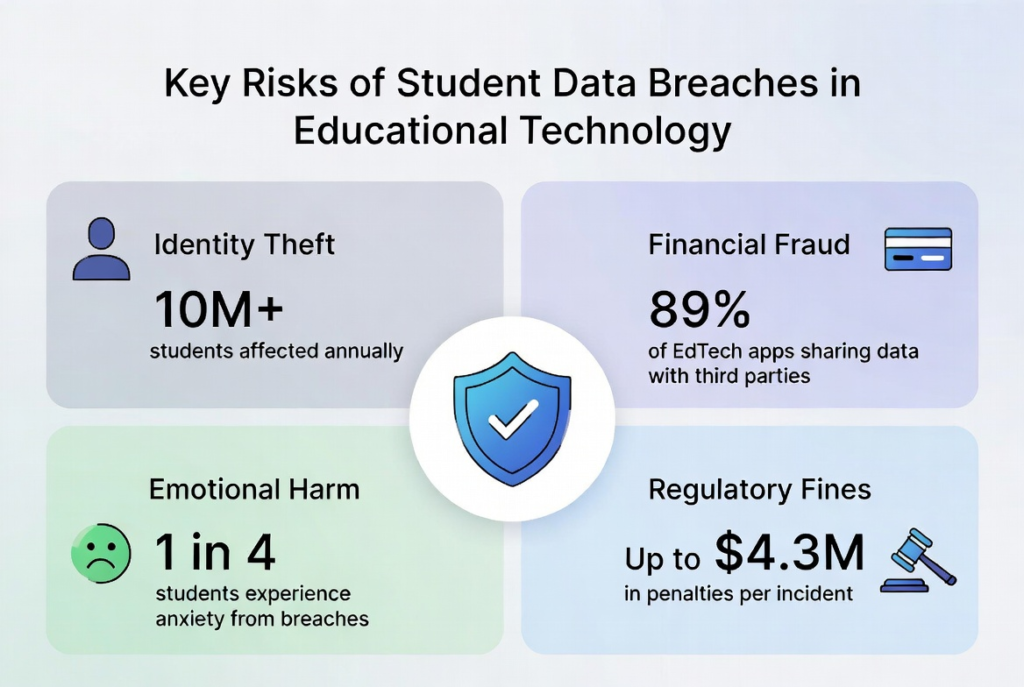
Student data fuels personalized learning but creates significant risks. Breaches expose academic records, health info, and PII, leading to identity theft, emotional harm, and loss of trust.
Recent incidents highlight urgency: One major EdTech provider breach affected over 10 million students’ data, including emails, birth dates, and health records. GAO reports show thousands of K-12 students impacted by breaches from 2016-2020, with academic and PII records most common.
Also See : Instructional Technology Services: Complete Guide & Benefits
Surveys indicate 89% of educational apps share data with third parties, yet only 25% of schools maintain comprehensive privacy policies. Parents often remain unaware of data practices. Cybersecurity and data privacy rank as top priorities for district leaders.
Compliance builds trust, avoids penalties (including loss of federal funding), and supports innovation without compromising rights.
Key Regulations Governing Instructional Technology
FERPA: Family Educational Rights and Privacy Act
FERPA (1974) protects education records at institutions receiving federal funds. It grants parents (and eligible students 18+) rights to inspect, amend records, and control disclosure.
“School official” exception allows sharing with vendors for legitimate educational purposes under direct control, with strict agreements required. Violations risk funding loss. Schools must notify parents annually of rights.
COPPA: Children’s Online Privacy Protection Act
COPPA targets operators collecting data from children under 13. It requires verifiable parental consent, clear privacy policies, and limits data collection/use to necessary purposes. Schools can consent on behalf of parents for educational tools.
EdTech providers must delete data upon request and secure it reasonably.
GDPR and International Considerations
For schools with EU students or operations, GDPR emphasizes consent, data minimization, breach notification (72 hours), and rights like erasure (“right to be forgotten”). It applies extraterritorially.
State Laws and Other Frameworks
Many states have stricter rules (e.g., California’s SOPIPA, Connecticut’s Student Data Privacy Act). These often require data privacy agreements (DPAs), no selling of student data, and transparency.
CIPA mandates internet filtering for schools receiving E-rate funds. PPRA covers surveys on sensitive topics.
CoSN’s Five Critical Guidelines for Data Privacy
CoSN provides practical leadership frameworks:
- Stay current and compliant with federal/state laws. Engage experts beyond general counsel.
- Address community expectations early through transparent communication with parents, educators, and stakeholders.
- Keep data secure via technical measures (encryption, access controls) and regular audits.
- Vet technology and service providers rigorously with DPAs and security reviews.
- Build a culture of privacy through training and governance programs.
These align with the Trusted Learning Environment (TLE) Seal program.
Implementing a Data Privacy Program in Schools
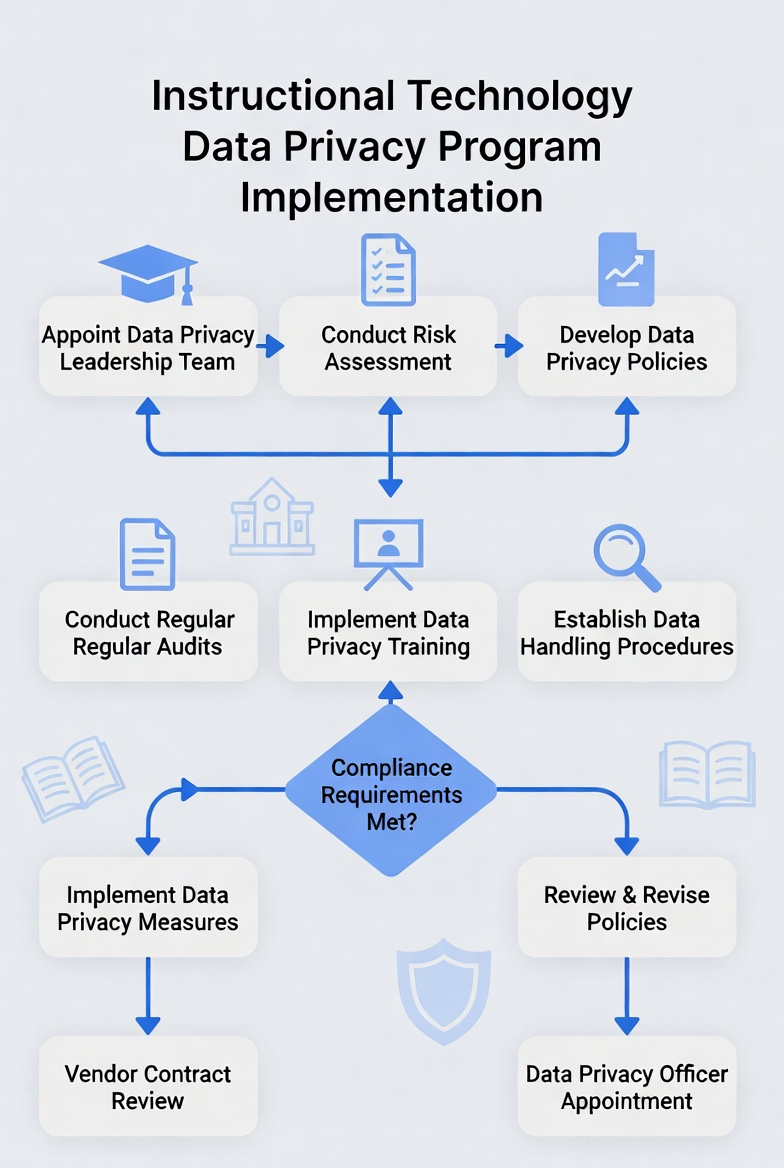
Step-by-Step Data Governance Checklist
- Designate leadership: Appoint a privacy officer or team.
- Inventory data: Map what PII/education records are collected, stored, shared.
- Develop policies: Cover data lifecycle (collection to deletion), access controls, breach response.
- Vendor vetting: Require DPAs; review privacy policies, security certifications (e.g., 1EdTech).
- Training: Annual staff/educator sessions on FERPA, phishing, safe AI use.
- Audit and monitor: Regular risk assessments, logging, and third-party reviews.
- Incident response plan: Define notification timelines, containment, and parent communication.
- Transparency: Publish approved tech lists and privacy notices.
Best Practices for EdTech Integration and Vendor Management
Prioritize “privacy by design.” Use tools with strong defaults: data minimization, encryption in transit/rest, role-based access, and automatic deletion.
Vendor Evaluation Criteria:
- Signed DPA aligning with FERPA/COPPA/state laws.
- No data selling or targeted advertising.
- Clear data retention/deletion policies.
- Security certifications and breach history review.
- Parental access and consent mechanisms.
Common Sense Media and similar rating programs help evaluate tools.
For AI tools: Avoid inputting PII where possible; ensure providers don’t use student data for model training.
Addressing People Also Ask Questions
What is the difference between FERPA and COPPA?
FERPA protects education records broadly for all students and focuses on school/institutional responsibilities. COPPA specifically safeguards children under 13 online, placing primary obligations on operators/websites with verifiable parental consent.
How do schools vet EdTech for privacy compliance?
Through RFPs requiring DPAs, privacy policy reviews, security questionnaires, reference checks, and tools like Common Sense Privacy Program or state hubs. Pilot testing with limited data is recommended.
What should parents know about student data privacy?
Parents have rights to access records (FERPA), consent for under-13 data (COPPA), and be notified of breaches. Ask schools for approved tech lists, privacy policies, and opt-out options.
Can schools use AI tools without violating privacy laws?
Yes, with safeguards: DPAs prohibiting data use for training, no PII in prompts where avoidable, transparency, and risk assessments. Many major providers offer education-specific assurances.
What happens in a student data breach?
Schools must notify affected parties per state timelines, offer credit monitoring if PII compromised, investigate, and report to regulators. Vendors face FTC/DOE actions. More on Wekipedia.
Risk Mitigation and Breach Prevention
Implement multi-factor authentication, regular patching, employee training (phishing is a top vector), and zero-trust architecture. Data minimization reduces attack surface—collect only what’s needed for instruction.
Monitor third-party risks, as many breaches originate from vendors.
Breach Response Steps:
- Contain the incident.
- Assess scope and notify leadership/legal.
- Comply with notification laws (often 30-60 days or sooner).
- Support affected individuals.
- Review and update policies.
Emerging Trends: AI, Biometrics, and Beyond
AI amplifies privacy challenges with adaptive learning and profiling. Ensure tools comply with data protection impact assessments. Biometrics and surveillance require heightened scrutiny.
2026 updates to COPPA emphasize stronger consent and minimization. States continue expanding protections.
People Read : Science of Digital Learning Engagement
Building a Culture of Privacy: Training and Stakeholder Engagement
Train all staff annually. Include students in digital citizenship programs. Engage parents via newsletters and portals. Foster transparency to build trust.
Compliance Checklist for Instructional Technology
- Annual FERPA notice distributed.
- All vendors have current DPAs.
- Data inventory and classification complete.
- Encryption and access controls enforced.
- Breach response plan tested.
- Staff training completed.
- Privacy policy publicly available and updated.
- Regular audits and risk assessments performed.



[…] – 22Jun2026 AI Technology Instructional Technology Services: Complete Guide & Benefits AI Technology Instructional Technology Data Privacy & Compliance Guide […]
[…] by default. These utilities are designed to provide driver updates, hardware diagnostics, and warranty information. As a result, notifications can appear even when users have never manually opened a Dell […]