
The sheer volume of daily artificial intelligence updates makes it difficult to extract actual business value. Ninety percent of standard AI headlines focus on minor model iterations or superficial web wrappers. To stay ahead, builders and executives must separate temporary market hype from structural industry shifts.
The industry has moved past the era of simple text generation into complex, multi-step autonomous workflows. According to data from the International Energy Agency (IEA), capital expenditure by major technology companies exceeded 400 billion dollars recently. This massive infrastructure investment is fundamentally changing how software is built, hosted, and scaled.
To filter out the noise, you need a rigid framework that categorizes announcements by structural impact. Evaluating news through technical infrastructure, architectural patterns, and physical resource bottlenecks protects you from information fatigue. This practical guide provides a system to analyze AI developments and integrate them into your technical strategy.
1. The AI News Noise Filter: How to Categorize Daily Announcements
An effective filtering strategy requires sorting incoming technical news into three distinct, actionable tiers. Instead of treating every product release as a groundbreaking event, look at where the update sits in the production ecosystem.
Tier 1: Infrastructure & Sovereign AI
This tier includes hardware manufacturing, data center power grid updates, and international export controls. When countries restrict access to frontier architectures, it forces regional ecosystems to rapidly build local, independent foundational models. These shifts directly impact your long-term cloud vendor stability and compliance requirements.
Tier 2: Architectural Shifts
Look for changes in how models handle context, memory, and tool usage. The transition from single-prompt interactions to collaborative multi-agent orchestration belongs in this bucket. If a new update alters how code agents execute commands in isolated environments, it signals an immediate shift in production software design.
Tier 3: Commodity Tools
This includes the vast majority of consumer tech announcements, software feature rollouts, and localized app plugins. While these tools offer minor productivity boosts, they rarely provide a sustainable competitive advantage. If a solution can be built over a weekend using basic API calls, it is a feature, not a structural market change.
+--------------------------------------------------------------+
|                   NOISE-TO-SIGNAL CHECKLIST                  |
+--------------------------------------------------------------+
| [ ] Does the update require physical infrastructure changes? |
| [ ] Is the model run locally or dependent on a cloud giant? |
| [ ] Does it execute multi-step logic without human prompts?  |
+--------------------------------------------------------------+
2. Structural Paradigm Shifts: Tracking the Move to Open-Weight & Agentic Automation
The technical frontier is undergoing a massive execution shift. The industry is moving away from basic chatbot prompting toward autonomous agent orchestration, where multiple models collaborate within a strict loop.
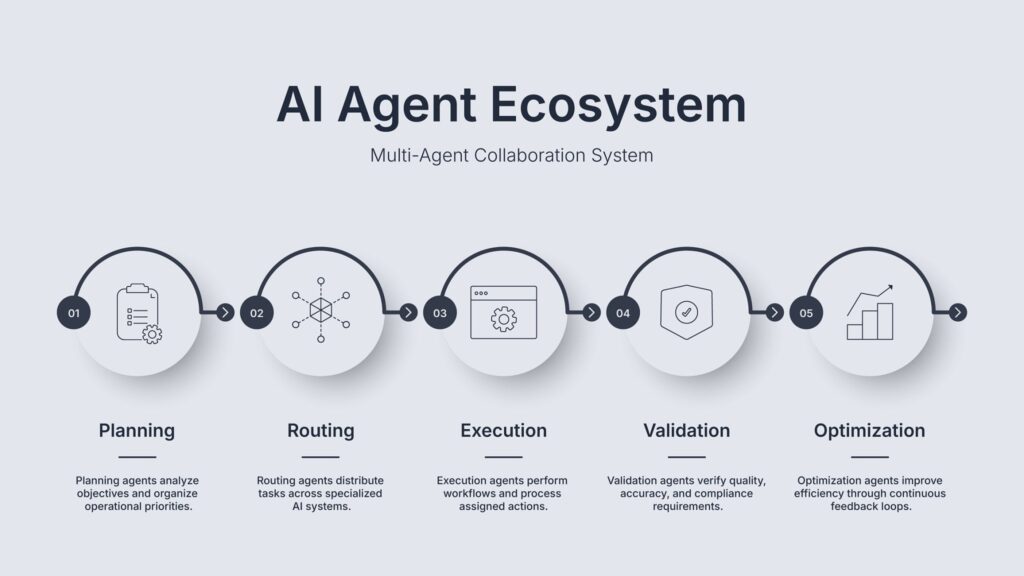
This structural shift requires deep engineering precision. According to recent enterprise data, roughly 64% of tracked organizations are actively running AI systems in their live production operations. Most of these teams are using highly optimized open-weight systems rather than relying purely on closed cloud architectures.
Open-weight models allow companies to download, customize, and deploy advanced neural networks inside their own private infrastructure. This completely bypasses the data privacy risks and latency issues associated with public cloud end-points. Running highly specialized, vertical models locally allows developers to build hyper-focused engineering agents that outperform generic, multi-purpose platforms.
This shift has changed the nature of context windows. Long-context windows often suffer from a phenomenon known as “lost in the middle,” where performance drops drastically when processing vast amounts of data. Successful engineering teams are shifting their focus from raw prompt engineering to rigorous context curation, providing agents with minimal, high-signal data.
3. The Bottlenecks Changing the Narrative: Energy, Hardware, and Regulation
Artificial intelligence does not operate in a vacuum; it is strictly limited by real-world physical infrastructure and complex regional legal frameworks. Tracking these hard constraints provides the most accurate signal for where the market is moving next.
The physical footprint of modern model training is expanding at an unprecedented rate. Data center electricity demand from AI-focused facilities grew by 50% over a single twelve-month tracking period. While basic text queries require minimal power, running complex reasoning models and autonomous agent loops consumes hundreds of times more energy per task.
This resource surge has triggered an energy crisis, forcing cloud providers to fund alternative power grids, advanced liquid cooling, and analog chip designs. When reading technical news, an announcement about a dedicated data center power agreement is often a far more critical market indicator than a minor model update.
Beyond the physical limitations of the power grid, legal compliance is actively fracturing global software distribution. Regulations like the European Union Artificial Intelligence Act enforce strict risk assessments, audit logs, and data transparency mandates. These legal changes mean that global enterprise teams must prioritize sovereign, localized infrastructure to ensure long-term operational compliance.
4. The Action Plan: Building a 15-Minute Weekly AI Audit Workflow
To protect your team from information fatigue, stop scrolling through chronological news aggregators. Instead, execute a highly structured, 15-minute weekly auditing workflow to extract real utility from market shifts.
1.Map Core Internal Dependencies:Minutes 0 to 5.
Document your team’s current production software stack. Identify every external API dependency, cloud model endpoint, and data processing pipeline to understand exactly where your system is vulnerable to external platform changes.
2.Filter by Competitive Moat Impact:Minutes 5 to 10.
Analyze the week’s Tier 1 and Tier 2 announcements against your stack. Determine if a new open-weight model release reduces your operating costs, or if an architectural shift threatens your core product delivery.
3.Execute Local Container Testing:Minutes 10 to 15.
Spin up newly released small language models or automated agents within an isolated local container. Run standard benchmarks using your private data to verify performance before making any strategic platform recommendations.