
The construction industry is moving through one of its biggest technology shifts in decades. Contractors are no longer testing digital tools only for experimentation. In 2026, many firms are deploying AI scheduling software, robotics, drones, and connected jobsite systems to solve immediate operational problems.
Labor shortages remain one of the biggest pressures. According to industry workforce reports, the U.S. construction sector still faces a significant skilled labor gap, especially in electrical, concrete, and heavy equipment roles. At the same time, material costs remain unpredictable and project owners expect faster delivery timelines.
That combination is pushing construction companies toward automation and real-time project management systems. Instead of relying on disconnected spreadsheets and manual reporting, firms are investing in technologies that reduce delays, improve visibility, and lower rework costs.
Construction technology adoption is also accelerating because megaprojects are becoming more complex. Semiconductor facilities, AI data centers, logistics hubs, and infrastructure modernization projects require tighter coordination between field teams, architects, engineers, and suppliers.
Before looking at the latest technologies, it is important to understand why many contractors now consider digital transformation a business necessity instead of a long-term innovation strategy.
Why Construction Technology Adoption Is Surging in 2026
The biggest driver is productivity pressure. Construction productivity growth has historically lagged behind manufacturing and logistics industries. Delays, documentation errors, and communication gaps still cost contractors millions annually.
Another factor is workforce availability. Many experienced workers are approaching retirement age, while fewer younger workers are entering skilled trades. Contractors are using automation to reduce dependency on repetitive manual tasks.
Large-scale infrastructure spending is also changing technology investment priorities. Governments and private developers are funding transportation upgrades, energy facilities, and data centers that demand tighter timelines and more accurate forecasting.
This is where connected construction platforms are becoming critical.
Modern project management systems now integrate scheduling, RFIs, BIM coordination, budgeting, field reporting, and procurement into centralized dashboards. That reduces information silos between office teams and jobsites.
For readers unfamiliar with BIM, or Building Information Modeling, it refers to digital 3D models that allow teams to coordinate structural, mechanical, and architectural systems before physical construction begins. You can learn more about Building Information Modeling (BIM) on Wikipedia.
AI-Powered Construction Management Is Expanding Quickly
Artificial intelligence is becoming one of the most discussed topics in construction technology news.
Unlike general AI discussions online, construction-focused AI tools are mainly being used for operational workflows. Companies are deploying AI systems to analyze schedules, detect project risks, automate documentation, and improve forecasting accuracy.
For example, AI scheduling software can identify activities likely to cause delays based on historical project data. Some platforms also flag subcontractor conflicts before they affect timelines.
AI is also improving document management. Construction projects generate thousands of RFIs, submittals, inspection reports, and change orders. AI-assisted systems can now categorize documents automatically and surface missing information faster than manual review processes.
However, contractors are still cautious.
Many firms are testing AI tools through pilot programs instead of full deployments. Project managers remain concerned about inaccurate outputs, compliance risks, and overreliance on automated recommendations.
That caution is reasonable because construction projects involve legal, financial, and safety responsibilities that require human oversight.
Robotics and Autonomous Equipment Are Solving Labor Challenges
Robotics adoption is growing fastest in repetitive construction tasks.
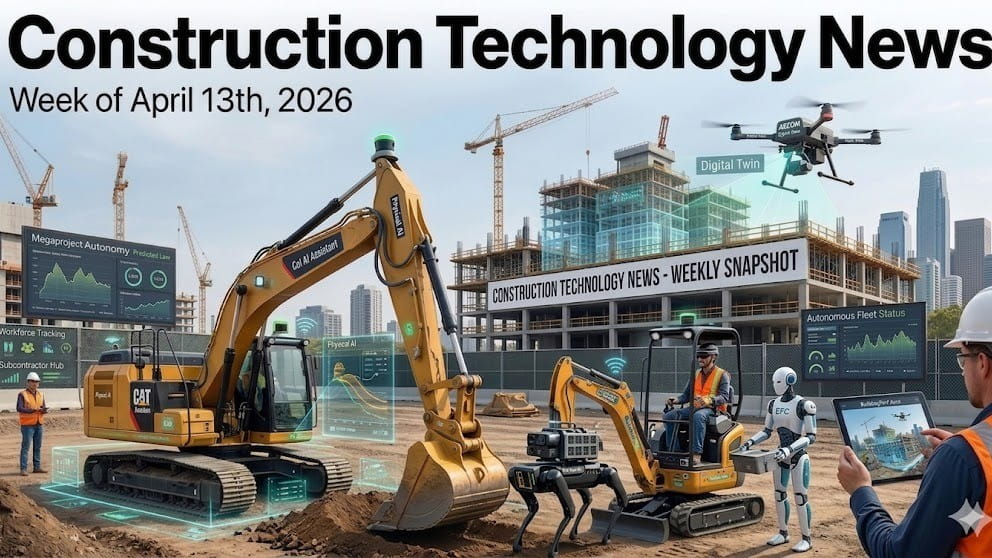
Automated bricklaying systems, robotic layout machines, and autonomous excavation equipment are already being used on selected commercial and industrial projects.
These systems are not replacing entire field crews. Instead, they are helping contractors improve consistency and reduce labor bottlenecks in specialized tasks.
For example, robotic layout systems can mark floor plans directly from BIM models with higher precision than manual measurements. That reduces layout errors and lowers costly rework risks later in the project.


Autonomous heavy equipment is also gaining attention in mining, roadwork, and large infrastructure projects. GPS-guided machinery can optimize excavation routes and improve fuel efficiency while reducing idle time.
Still, equipment costs remain a major barrier for mid-sized contractors. Many firms are waiting for clearer ROI data before expanding robotics investments.
Drones, LiDAR, and Smart Jobsite Monitoring
Drone usage in construction has moved far beyond aerial photography.
Today, drones are commonly used for site inspections, surveying, stockpile measurement, and progress tracking. Combined with LiDAR scanning and computer vision systems, drones help teams compare actual construction progress against BIM models.
This improves visibility during active construction phases.
Instead of waiting for manual inspections, project teams can identify deviations earlier and resolve issues before they affect downstream trades.
Computer vision systems are also improving safety monitoring. AI-powered cameras can detect missing PPE, restricted-zone access, and unsafe equipment movement patterns.
This matters because construction safety violations remain a major industry concern. According to occupational safety data, falls, struck-by incidents, and equipment accidents continue to rank among the leading causes of construction injuries.
The industry is responding by increasing investment in predictive safety technologies.
Digital Twins and Connected Jobsites
Digital twins are becoming a major topic in construction technology news because they allow contractors and owners to monitor assets in real time.
A digital twin is a virtual representation of a physical building, infrastructure system, or facility. Sensors continuously feed operational data into the model, allowing teams to track performance, maintenance needs, and equipment conditions.
You can explore the concept further on Digital Twin Wikipedia Page.
In construction, digital twins help reduce downtime and improve long-term facility management.
For example, smart commercial buildings can use sensor data to monitor HVAC efficiency, occupancy patterns, and energy consumption. Facility managers can identify problems before systems fail completely.
This shift is important because many owners now evaluate projects based on lifecycle performance rather than only construction costs.
Modular Construction and Prefabrication Are Growing
Modular construction adoption continues to expand in healthcare, hospitality, residential, and industrial projects.
Prefabrication allows contractors to assemble building components in controlled factory environments before transporting them to jobsites.
This improves quality control and reduces weather-related delays.
It also helps address labor shortages because fewer workers may be required onsite for assembly compared to traditional construction methods.


Another advantage is waste reduction.
Research from construction sustainability studies shows modular methods can lower material waste significantly compared to conventional site-built projects.
However, modular construction is not suitable for every project type. Transportation logistics, design limitations, and regional building codes still create adoption challenges.
Biggest Challenges Slowing Construction Tech Adoption
Despite strong investment growth, several barriers remain.
The first is cost. Advanced software platforms, robotics systems, and connected equipment require major upfront investment. Smaller contractors often struggle to justify deployment costs without immediate operational gains.
The second challenge is workforce training.
Field adoption frequently fails when crews are not trained properly. Many contractors underestimate how much change management is required during technology rollouts.
Integration is another major issue.
Older ERP systems, accounting software, and legacy project management tools often do not connect smoothly with modern cloud-based platforms. This creates data fragmentation instead of solving it.
Cybersecurity concerns are also increasing as jobsites become more connected through IoT devices and cloud systems.
The Future of Construction Technology
Construction technology development is moving toward connected ecosystems rather than standalone tools.
In the next few years, more contractors are expected to deploy integrated systems that combine BIM, AI scheduling, safety monitoring, procurement tracking, and equipment analytics into unified platforms.
AI assistants may also become more common for administrative tasks such as progress reporting, compliance tracking, and documentation management.
At the same time, sustainability requirements are influencing technology investment decisions. Carbon tracking systems, energy-efficient materials, and smart building management tools are becoming part of large-scale project planning.
The construction industry has traditionally adopted technology slowly compared to manufacturing and logistics sectors. That trend is changing because operational pressures are no longer temporary.
Contractors that improve visibility, coordination, and workflow efficiency through practical technology deployment are likely to gain stronger project control in increasingly competitive markets.