
Introduction: What the 10x Parameter Update Actually Refers To
Tesla’s Full Self-Driving (FSD) “10x parameter update” refers to a significant increase in neural network model size discussed in engineering breakdowns and industry analysis of Tesla’s AI evolution.
In simple terms, it suggests that Tesla expanded the number of neural network parameters used for driving decisions by roughly an order of magnitude compared to earlier FSD builds.
This matters because FSD is no longer rule-based software. It is a vision-first neural network that learns driving behavior from large-scale video data.
The shift directly affects decision quality in city driving, highway transitions, and edge-case handling. It also increases compute requirements on Tesla hardware.
Before going deeper, it is important to separate confirmed Tesla engineering direction from community and analyst interpretations. Tesla has not publicly standardized the term “10x parameter update” in official release notes.
What “10x Parameters” Means in Tesla FSD
In AI systems, parameters define how a neural network processes input data and generates outputs.
More parameters usually mean better pattern recognition, but also higher compute cost.
Tesla’s FSD stack uses end-to-end neural networks trained on billions of miles of driving data.
Key idea:
- More parameters = better environmental understanding
- But also higher latency risk without optimized hardware
For reference, modern autonomous driving networks often scale from tens of millions to billions of parameters.
Tesla’s transition toward larger models aligns with its push for end-to-end AI systems replacing traditional perception + planning pipelines.
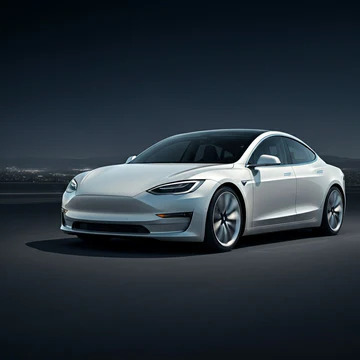
Visual Overview: Tesla FSD AI Scaling Concept


Why Tesla Scales FSD Models Instead of Adding Rules
Traditional driver-assist systems rely on manually coded rules.
Tesla moved away from that approach.
Instead, it uses large-scale video learning, where the system predicts driving actions based on past human behavior.
The reason for scaling:
- Human driving is too complex for fixed rules
- Edge cases dominate safety outcomes
- Video learning improves rare-event handling
Internal Tesla data (shared in public AI discussions) suggests that edge cases account for a small percentage of miles but a large percentage of disengagements.
Scaling parameters improves performance in these rare cases.
What Actually Improves in Real Driving Behavior
A larger FSD model does not just “drive better” in a general sense. Improvements appear in specific driving scenarios.
1. City driving decisions
- Better gap selection in traffic
- Improved pedestrian prediction
- More stable lane positioning
2. Intersections
- Fewer hesitation loops
- Better right-of-way judgment
3. Highway behavior
- Smoother lane merges
- Reduced abrupt braking patterns
4. Construction zones
- More adaptive path planning
These improvements are usually incremental per version, but scaling can amplify consistency.
Tesla FSD Scaling in Context (Hardware Dependency)
The effectiveness of a 10x parameter model depends heavily on onboard compute hardware.
Tesla vehicles use different hardware generations:
- HW3 (older FSD computer)
- HW4 (newer AI-focused platform)
Key limitation:
A larger model can exceed HW3 compute capacity, forcing optimization or reduced model execution.
Hardware Comparison for FSD Execution


HW3 vs HW4 vs Future Hardware
The hardware generation significantly impacts how much of the “larger model” can actually run in real time.
HW3
- Built for earlier FSD versions
- Limited AI inference headroom
- May require compressed models
HW4
- Higher compute capacity
- Better suited for larger parameter networks
- Improved camera processing pipeline
Future platforms (often referred to as HW5 in industry discussion)
- Expected focus: full unsupervised autonomy
- Higher memory bandwidth and AI acceleration
Tesla’s scaling strategy assumes hardware upgrades over time, especially for unsupervised driving goals.
Does More Parameters Guarantee Safer Driving?
No direct guarantee exists.
A larger model improves pattern recognition but does not eliminate all failure modes.
Remaining challenges:
- Heavy rain and low visibility
- Sun glare and camera saturation
- Unusual road layouts
- Poor lane markings
- Sudden human behavior (jaywalking, erratic driving)
Autonomy safety depends on:
- Training data quality
- Real-world validation
- Redundancy in decision systems
A common industry benchmark shows that autonomy systems still require millions of validation miles per software iteration.
Training Process Behind Larger FSD Models
Tesla trains its FSD system using fleet data collected from millions of vehicles.
This includes:
- Multi-camera video feeds
- Driver interventions
- Edge-case labeling
Tesla’s Dojo supercomputer plays a role in accelerating training cycles.
According to AI infrastructure estimates, Tesla processes petabytes of driving video annually.
What Tesla Owners Actually Experience
User reports after major FSD scaling updates tend to show mixed but structured feedback.
Common improvements reported:
- smoother turns
- fewer sudden braking events
- better lane centering consistency
Common issues still reported:
- occasional hesitation at complex intersections
- over-cautious driving in dense traffic
- inconsistent behavior in unfamiliar road layouts
These observations align with typical neural network scaling behavior: improvements in average cases, slower progress in rare edge cases.
Long-Term Direction: Toward Unsupervised Driving
Tesla’s long-term FSD roadmap focuses on removing driver supervision.
This requires:
- larger models
- real-time decision optimization
- stronger fleet learning loops
The “10x parameter” direction is part of scaling toward robotaxi-level autonomy.
The idea is not just better driving assistance, but continuous reduction of intervention frequency.
For reference context, Tesla’s AI direction is often discussed alongside broader autonomous vehicle research in the Wikipedia overview of .
Final Assessment: What the 10x Parameter Update Actually Represents
The Tesla FSD 10x parameter concept represents scaling in neural network capacity rather than a single feature upgrade.
Key outcomes:
- improved perception consistency
- better edge-case handling
- higher compute dependency
- stronger HW4 advantage over HW3
It is not a sudden shift to full autonomy. It is a structured step in model scaling strategy.
Performance gains depend on hardware, training data, and software optimization working together.
The most important takeaway is that FSD progress is now primarily driven by AI scaling rather than feature-based updates.