



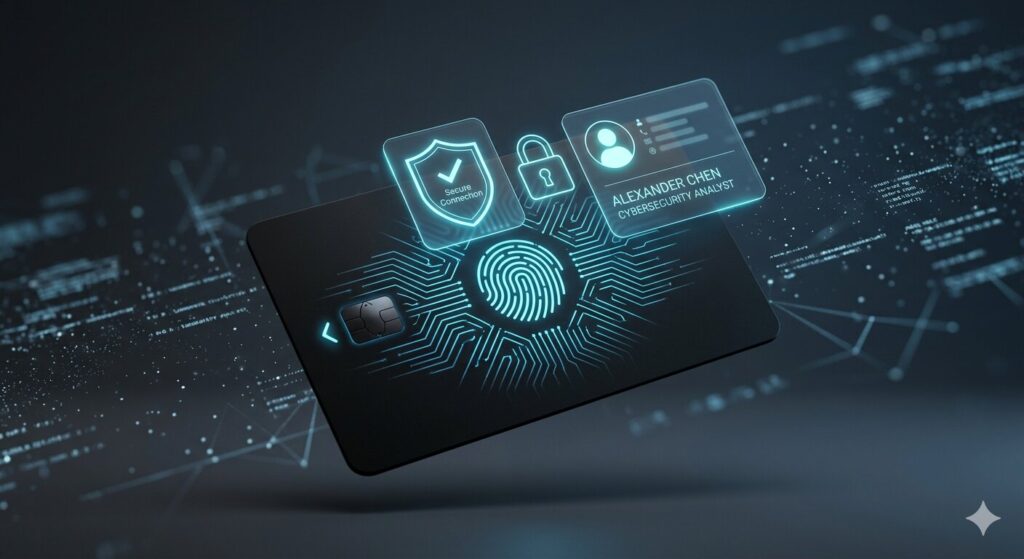

NFC Business Cards Are Generally Secure Due to Their Short 4cm Range and URL-Based Data Linking, But Risks Like Unauthorized Skimming, Tag Tampering, and Lost Cards Require Password Protection, Encryption, Reputable Providers, and Best Practices to Prevent Privacy Breaches and Data Misuse.
NFC business cards leverage Near Field Communication (NFC) technology for instant, contactless sharing of contact details, websites, and profiles. While convenient, security depends on implementation—most store only a URL pointing to a secure cloud profile rather than raw sensitive data, minimizing direct exposure. However, vulnerabilities in cheap tags, lack of locking, and poor provider practices can lead to interception or tampering. This comprehensive guide equips professionals with actionable strategies to mitigate risks while maximizing benefits.
What Are NFC Business Cards and How Do They Work?
NFC business cards embed a small passive chip (often NTAG series) that activates when tapped by an NFC-enabled smartphone within 4 cm. The chip typically holds a short URL or NDEF record that directs the recipient’s device to a dynamic digital profile.
People Also Read : How Many Hours Are in a Year? Exact Calculations
This setup offers advantages over static paper cards: real-time updates, analytics on taps, and multi-format sharing (vCard, links, calendars). Adoption is rising—37% of businesses used digital cards by 2025-2026, with NFC variants growing at ~12% CAGR. Over 126 million NFC business cards were in circulation by late 2024.
Key Technical Components:
- Chip Types: NTAG213/215/216 for writable memory (up to ~500-900 bytes).
- Data Format: Usually a URL for cloud-hosted profiles (HTTPS recommended).
- Range and Speed: 13.56 MHz, 2-4 cm effective range, near-instant transfer.
Unlike Bluetooth or Wi-Fi, the extreme proximity inherently limits remote eavesdropping.
Primary Security Risks of NFC Business Cards
1. Unauthorized Access and Skimming Anyone with an NFC reader app and close proximity can scan an unlocked card. In crowded events, attackers could skim data without notice.
2. Insufficient or Missing Encryption Basic tags transmit data in plaintext or with weak protection. Limited chip power restricts advanced crypto on-card.
3. Data Tampering and Tag Rewriting Unlocked tags can be overwritten to redirect to phishing sites or malware. Researchers have demonstrated rewriting to malicious links.
4. Lost or Stolen Cards A physical card in the wrong hands provides ongoing access until the linked profile is deactivated. No remote “kill switch” on the hardware itself.
5. Device and Recipient-Side Vulnerabilities Tapping a compromised card could exploit weaknesses on the recipient’s phone if it leads to malicious payloads.
6. Privacy and Tracking Issues Tap analytics (location, device, frequency) can reveal patterns if not handled transparently. Some providers may share data.
Real-World Context: NFC fraud rates are low (~0.02% in related contactless systems), but targeted attacks at events remain a concern.
How to Secure Your NFC Business Card: Step-by-Step Best Practices
1. Choose Password-Protected and Lockable Tags
Use apps like NFC Tools or provider encoders to set passwords on compatible chips (NTAG21x series). This prevents unauthorized writes. Some allow attempt limits before permanent lock.
Steps to Password Protect:
- Install a reliable NFC app (NFC Tools, Seritag Encoder).
- Write your URL or data.
- Set a strong password (avoid defaults).
- Optionally configure protection for read/write.
- Test thoroughly.
For maximum security, opt for permanently lockable after final write (read-only mode).
2. Use Reputable Providers with Strong Security
Select platforms offering:
- HTTPS URLs and TLS encryption.
- Dynamic profiles with remote deactivation.
- Compliance (GDPR, ISO 27001, SOC 2).
- Analytics without excessive tracking.
- QR fallback for broad compatibility.
Avoid free/cheap services that may sell data or lack encryption.
3. Implement Encryption and Secure Linking
- Always use HTTPS landing pages.
- Enable server-side authentication (e.g., one-time tokens).
- Store minimal data on the chip—link to cloud profile.
- Consider end-to-end encryption for sensitive attachments.
4. Manage Physical and Operational Security
- Store cards in RFID-blocking sleeves when not in use.
- Disable NFC on your phone except when needed.
- Track issued cards and revoke access promptly for lost ones or departing employees.
- Use enterprise solutions with centralized management for teams.
5. Monitor and Update Regularly
- Review tap logs for anomalies.
- Update profiles and firmware promptly.
- Educate recipients on safe tapping (verify source).
Privacy Best Practices for NFC Business Cards
Address Common Concerns:
- Data Minimization: Share only necessary info (name, LinkedIn, email). Use conditional profiles.
- Consent and Transparency: Inform recipients what data is collected.
- Opt-Out and Control: Provide easy profile deletion or tap revocation.
- Compliance: Adhere to GDPR/CCPA; choose providers with clear privacy policies.
PAA: Can someone steal my info just by being near my NFC card? Unlikely for full profiles due to range limits, but unlocked tags risk partial reads. Use passwords and blocking sleeves.
PAA: Are NFC business cards safer than QR codes? NFC requires physical proximity (safer against remote scans), but QR can be static and scanned from afar. Hybrid cards (NFC + QR) offer the best of both.
PAA: What if I lose my NFC business card? Immediately log into your provider dashboard to deactivate or change the linked URL. Password-protected tags add extra hurdles.
Comparative Analysis: NFC vs. Alternatives
| Aspect | NFC Business Cards | QR Code Digital Cards | Traditional Paper Cards | App-Based Digital (e.g., HiHello-style) |
|---|---|---|---|---|
| Convenience | Excellent (tap) | Good (scan) | Poor (manual entry) | Good (share link) |
| Security Risks | Medium (proximity + locking) | Low-Medium (static links) | Low (physical only) | Low (cloud controls) |
| Updateability | High (dynamic URL) | High | None | High |
| Cost Long-Term | Medium (hardware) | Low | High (reprints) | Low |
| Privacy Controls | Good with reputable provider | Variable | High (no digital trail) | Excellent (analytics + consent) |
| Adoption Barriers | NFC-enabled phones required | Universal (camera) | None | App/download possible |
Recommendation: For security-conscious users, hybrid NFC + managed digital profiles outperform pure hardware solutions.
Advanced Security Features and Emerging Trends
- Biometrics and MFA: Tie profiles to recipient verification.
- Blockchain for Verification: Immutable audit trails for high-stakes industries.
- AI Anomaly Detection: Flag unusual tap patterns.
- Quantum-Resistant Crypto: Future-proofing against advancing threats.
Market growth projections show the NFC segment reaching significant value by 2030-2035, driven by demand for secure implementations.
Common Myths Debunked
- Myth: NFC cards store all your personal data on the chip. Fact: Most store only a URL; data lives securely in the cloud.
- Myth: Anyone can hack them easily. Fact: Short range + proper locking makes casual attacks difficult.
- Myth: They’re not eco-friendly. Fact: Reduce paper waste significantly, though manufacturing has impacts.
Case Studies
Success: Financial firms using compliant platforms report zero incidents and 30-40% better lead follow-up via CRM integration.
Incident: Trade show skimming of unprotected tags led to contact harvesting—resolved by switching to locked, dynamic solutions.
Implementation Checklist (How-To)
- Select and order cards from a secure provider.
- Encode with strong password and HTTPS URL.
- Test on multiple devices.
- Set up dashboard monitoring.
- Distribute with usage guidelines.
- Train team on revocation procedures.
- Regularly audit and update.
Future Outlook
By 2026+, expect tighter integration with digital wallets (Apple/Google), enhanced on-device security, and regulatory pushes for privacy-by-design. NFC will coexist with other contactless methods, but secure, managed solutions will dominate enterprise use.
Conclusion: NFC business cards offer powerful networking advantages when secured properly. Prioritize locked tags, reputable platforms, minimal data exposure, and vigilant management. By following this guide, you protect your digital identity while embracing efficient, modern professional interactions. Always verify provider security claims and stay updated on threats.



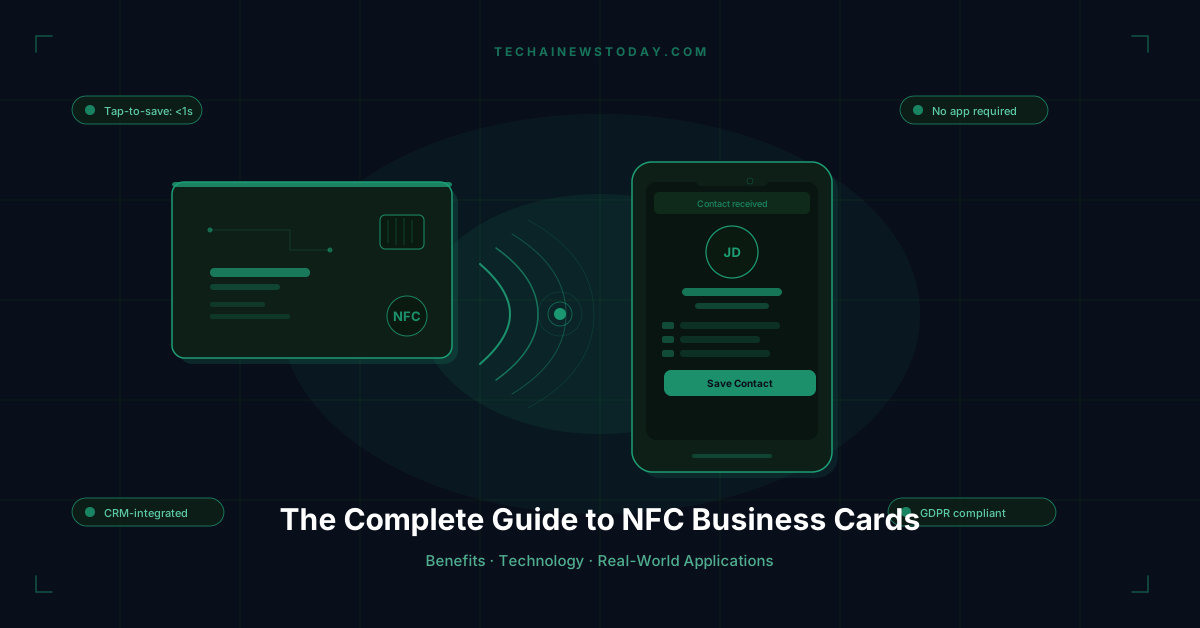

[…] – 12Jun2026 Business The Complete Guide to NFC Business Cards Business NFC Business Cards Security & Privacy Guide […]
[…] Also See : NFC Business Cards Security & Privacy Guide […]
[…] Also See : NFC Business Cards Security & Privacy Guide […]