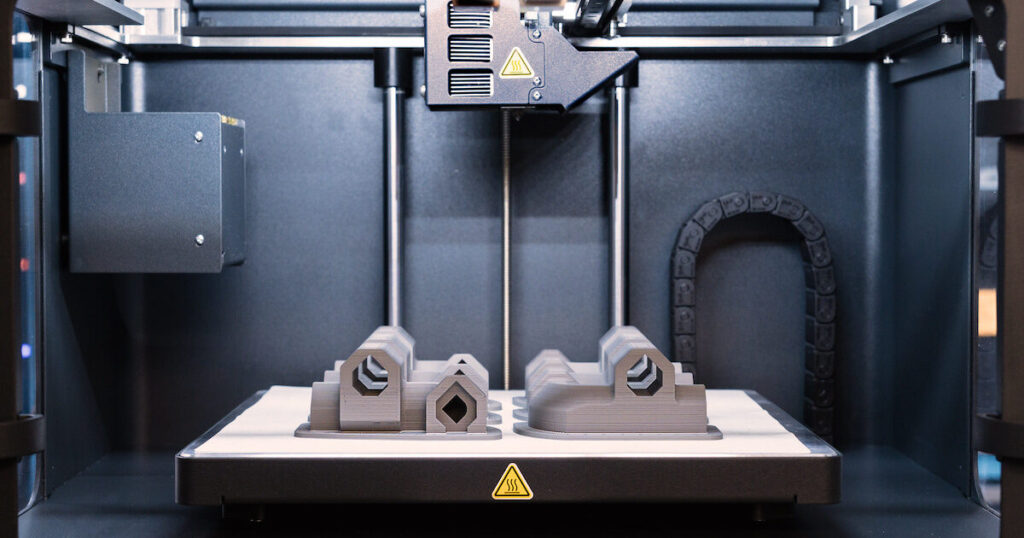

Metal 3D printer technology is no longer limited to aerospace labs or research centers. Manufacturers now use it to produce turbine components, surgical implants, industrial tooling, automotive prototypes, and lightweight structural parts. The reason is simple. Traditional machining removes material, while metal additive manufacturing builds parts layer by layer with far less waste.
The technology has also matured fast. According to industry reports, the global metal additive manufacturing market is expected to cross billions in annual revenue during the next few years as aerospace, healthcare, and energy companies increase adoption. The biggest growth areas are titanium parts, low-volume production, and custom industrial tooling.
Still, metal 3D printing is not a replacement for CNC machining in every situation. Machine cost, powder safety, post-processing, and production speed remain major limitations. Understanding these factors matters more than marketing claims. This guide explains how metal 3D printer technology actually works, where it performs well, and what buyers should know before investing.
For background on additive manufacturing principles, the Wikipedia page on Additive Manufacturing provides a useful overview.
What Is Metal 3D Printer Technology?
Metal 3D printing is a manufacturing process that creates metal components layer by layer from digital CAD models. Instead of cutting material away from a metal block, the printer deposits or fuses material precisely where needed.
The process normally starts with:
- A CAD design
- Slicing software
- Metal powder, wire, or filament feedstock
- A thermal fusion system
Most industrial systems use lasers or electron beams to fuse thin layers of metal powder. Each layer is typically between 20 and 60 microns thick depending on the printer and material.
Unlike plastic desktop printers, metal systems require controlled environments. Oxygen levels, heat distribution, and powder contamination directly affect final part quality.
That is where metal additive manufacturing becomes more technical than consumer 3D printing.
How Metal 3D Printers Work
CAD Design and Slicing
The process starts with a 3D model created in CAD software. Engineers often redesign parts specifically for additive manufacturing rather than copying traditional machined designs.
This step matters because metal 3D printing supports:
- Internal cooling channels
- Lightweight lattice structures
- Complex geometries impossible with CNC machining
The design file is then sliced into hundreds or thousands of printable layers.
Metal Powder Preparation
Industrial systems mainly use:
- Stainless steel powder
- Titanium alloys
- Aluminum alloys
- Inconel superalloys
- Cobalt chrome
Powder quality directly affects print success. Particle size distribution and powder flow consistency are critical in laser-based systems.


Layer Fusion Process
The printer spreads a thin powder layer across the build platform. A high-powered laser or electron beam then fuses selected regions.
The platform lowers slightly after each layer. The process repeats until the part is complete.
This method allows manufacturers to create geometries that are difficult or impossible with subtractive manufacturing.
However, thermal stress becomes a major challenge during printing. Uneven heat distribution can cause:
- Warping
- Residual stress
- Surface defects
- Cracking in sensitive alloys
That is why support structures are essential in most builds.
Post-Processing Stage
This is one area many articles underestimate.
Most metal printed parts are not production-ready immediately after printing. Additional processing often includes:
- Heat treatment
- Support removal
- CNC finishing
- Surface polishing
- Dimensional inspection
In aerospace and medical manufacturing, post-processing can represent a large percentage of total production cost.
Main Types of Metal 3D Printing Technologies
Selective Laser Melting (SLM)
SLM fully melts metal powder using high-powered lasers. It produces highly dense parts with strong mechanical properties.
Industries using SLM:
- Aerospace
- Defense
- Medical implants
- Precision engineering
SLM is known for excellent dimensional accuracy but requires expensive industrial equipment.
Direct Metal Laser Sintering (DMLS)
DMLS is similar to SLM but sinters powder differently depending on the material and system design.
It is widely used for:
- Functional prototypes
- Industrial tooling
- Complex engineering parts
Many aerospace suppliers use DMLS for lightweight bracket manufacturing.
Electron Beam Melting (EBM)
EBM uses an electron beam instead of lasers and operates in a vacuum environment.
This technology performs particularly well with titanium components because vacuum conditions reduce oxidation risk.
Medical implant manufacturers frequently use EBM for:
- Hip implants
- Orthopedic devices
- Porous bone structures
Binder Jetting
Binder jetting applies a liquid binding agent to metal powder layers.
Unlike laser systems, the printed part must later go through sintering to achieve full strength.
The advantage is speed. Binder jetting can produce larger batches faster than laser-based systems.
Directed Energy Deposition (DED)
DED deposits metal while simultaneously melting it using laser or plasma energy.
This process is often used for:
- Repairing turbine blades
- Rebuilding industrial components
- Large-format manufacturing
DED systems are common in aerospace maintenance operations.
Metal Materials Used in 3D Printing
Different industries choose materials based on heat resistance, weight, and corrosion performance.
Stainless Steel
Stainless steel remains one of the most common materials because it offers:
- Corrosion resistance
- Lower cost
- Good mechanical strength
It is widely used in tooling and industrial manufacturing.
Titanium
The Titanium is important in aerospace and medical applications because of its:
- High strength-to-weight ratio
- Corrosion resistance
- Biocompatibility
Titanium powder is expensive, but the weight savings often justify the cost.
Aluminum
Aluminum alloys help reduce component weight in:
- Automotive manufacturing
- Aerospace structures
- Heat exchanger systems
Printing aluminum requires careful thermal management due to cracking risks.
Inconel and Superalloys
Superalloys are used in high-temperature environments such as:
- Jet engines
- Turbines
- Energy systems
These materials are difficult to machine traditionally, making additive manufacturing attractive.


Advantages of Metal 3D Printer Technology
The biggest advantage is geometric freedom.
Engineers can combine multiple components into a single printed part. This reduces:
- Assembly requirements
- Weight
- Fasteners
- Failure points
Other important benefits include:
- Reduced material waste
- Faster prototyping
- Lightweight optimization
- On-demand spare part production
In aerospace manufacturing, reducing component weight even slightly can improve fuel efficiency significantly over time.
Real Challenges Most Buyers Face
High Equipment Costs
Industrial metal printers can cost from tens of thousands to well over one million dollars depending on system size and technology.
Additional infrastructure costs include:
- Ventilation systems
- Powder handling equipment
- Inert gas supply
- Fire safety systems
Powder Safety Risks
Metal powders can become hazardous if improperly handled.
Fine powders may create:
- Fire risks
- Explosion hazards
- Respiratory exposure concerns
Facilities must follow strict powder management procedures.
Slow Production for Large Volumes
Metal additive manufacturing works best for:
- Complex parts
- Low-volume production
- Specialized components
Traditional manufacturing still dominates high-volume simple parts because it remains faster and cheaper.
Metal 3D Printing vs CNC Machining
Metal 3D printing excels with complexity.
CNC machining performs better for:
- Tight surface finish requirements
- High-volume manufacturing
- Simple geometries
Many manufacturers now combine both methods. They print complex near-net shapes and then machine critical surfaces afterward.
This hybrid workflow is becoming increasingly common in aerospace and industrial engineering.
Industries Using Metal Additive Manufacturing
Aerospace
Aerospace companies use metal 3D printing for:
- Fuel nozzles
- Engine brackets
- Turbine components
Weight reduction is a major driver.
Medical Industry
Hospitals and implant manufacturers use additive manufacturing for:
- Custom implants
- Dental crowns
- Surgical tools
Patient-specific geometry is one of the biggest advantages here.
Automotive Manufacturing
Automotive companies mainly use metal printing for:
- Prototype tooling
- Performance parts
- Lightweight racing components
Mass-market production remains limited because of cost.
Future of Metal 3D Printer Technology
The industry is moving toward:
- Faster multi-laser systems
- Lower-cost metal extrusion printers
- Automated post-processing
- AI-driven print monitoring
Machine prices are gradually decreasing, but industrial-grade systems still require significant investment.
The strongest growth will likely remain in industries where complexity, customization, and lightweight performance justify the added manufacturing cost.
Conclusion
Metal 3D printer technology has become a practical manufacturing solution for aerospace, medical, defense, and industrial engineering applications. Its biggest strengths are geometric flexibility, lightweight optimization, and reduced material waste.
At the same time, the technology still comes with serious operational requirements. Machine cost, post-processing, powder handling, and production speed all affect real-world adoption.
Companies evaluating metal additive manufacturing should focus less on marketing claims and more on:
- Material compatibility
- Production goals
- Total operational cost
- Required post-processing workflow
That approach usually determines whether metal 3D printing becomes a productive manufacturing tool or an expensive experiment.