



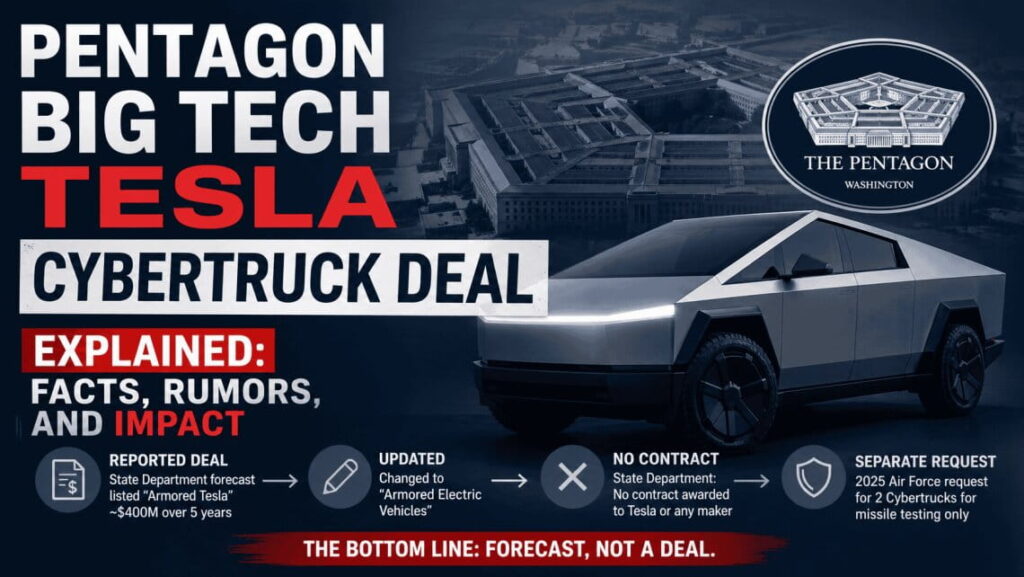

The connection between the Pentagon, Big Tech companies, and the Tesla Cybertruck is no longer just an internet rumor cycle. Over the last two years, defense agencies in the United States have increased their focus on commercial technologies that can support military logistics, mobility, surveillance, and energy efficiency. That includes electric vehicles, AI software, satellite systems, and connected transportation platforms.
The Tesla Cybertruck entered this discussion after reports linked the vehicle to military testing scenarios and defense-related evaluations. Some online claims exaggerated the story into “Tesla building military combat trucks.” Publicly available information does not support that conclusion. What does exist is growing Pentagon interest in how commercial EV platforms could support future defense operations.
This matters because the Pentagon is changing how it works with technology companies. Instead of relying only on traditional defense contractors, military agencies now study innovations coming from companies that already dominate consumer markets. Tesla, SpaceX, Microsoft, Palantir, and Amazon Web Services are all part of this broader shift.
That shift creates an important question: why would the military care about a consumer electric truck in the first place?
Why the Pentagon Is Studying Commercial EV Platforms
The U.S. Department of Defense operates one of the world’s largest vehicle fleets. Fuel logistics are expensive, vulnerable, and operationally risky during conflicts. According to Pentagon energy reports, fuel transportation has historically been one of the military’s biggest logistical challenges during overseas operations.
Electric vehicles offer several advantages that defense planners are now studying:
- Lower fuel dependency
- Reduced engine noise
- Fewer moving mechanical parts
- Portable power generation
- Software-based diagnostics
- Remote update capabilities
The Cybertruck became part of these discussions because its design differs from traditional pickup trucks. Tesla built it around a stainless-steel exterior structure, high battery capacity, and advanced onboard software systems.
While Tesla has not officially announced a dedicated military Cybertruck program, analysts tracking defense technology trends noticed growing interest around rugged EV platforms for tactical support roles.
That distinction matters. Evaluation is not the same as adoption.
Why the Tesla Cybertruck Drew Attention
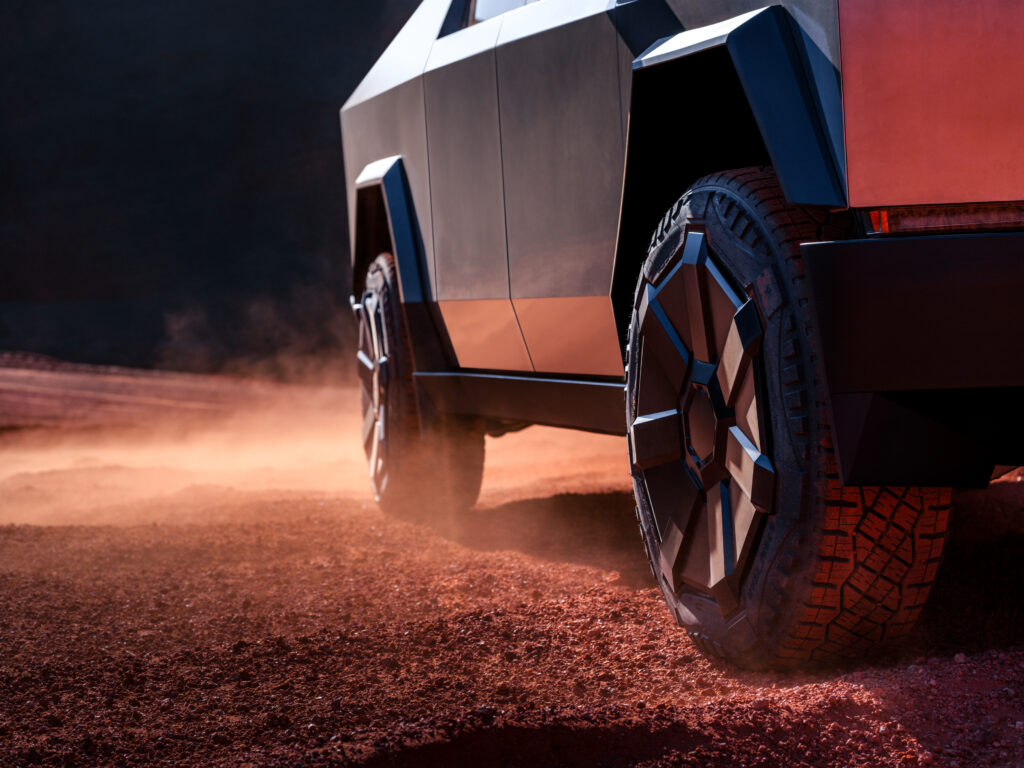
Several features made the Cybertruck relevant to defense discussions.
Stainless-Steel Exoskeleton
Tesla designed the Cybertruck using ultra-hard stainless steel panels instead of standard body construction. The Pentagon often studies vehicle durability for extreme operational environments, especially when considering vehicles for logistics or testing programs.
The vehicle’s exterior structure attracted attention because it differs from traditional commercial trucks.
Quiet Electric Operation
Electric vehicles operate far more quietly than gasoline or diesel trucks. In surveillance, reconnaissance, and tactical mobility situations, reduced sound signatures can provide operational advantages.
Military researchers have already explored silent electric motorcycles and lightweight EV transport systems for similar reasons.
The Cybertruck naturally entered those conversations because of its battery-electric platform.
Mobile Energy Source
One of the biggest defense-related advantages of EVs is energy storage.
Modern electric trucks can function as mobile power systems during emergencies or field operations. This can support:
- Communications equipment
- Portable medical systems
- Field computing infrastructure
- Temporary power outages
Tesla markets vehicle-to-load and power-sharing capabilities heavily, and these functions align with some military disaster-response scenarios.
The Bigger Pentagon Relationship With Big Tech
The Cybertruck story only makes sense when viewed inside the Pentagon’s larger relationship with Big Tech.
Over the past decade, defense agencies increased partnerships with technology firms that specialize in:
- Artificial intelligence
- Cloud computing
- Satellite communications
- Autonomous systems
- Cybersecurity
- Data analytics
For example, companies like Microsoft and Palantir Technologies already provide software and infrastructure tied to defense operations.
Meanwhile, SpaceX became deeply connected to U.S. military satellite communication systems through Starlink and launch services.
Tesla is not traditionally viewed as a defense contractor, but its expertise in batteries, AI-driven software, robotics, and autonomous systems overlaps with areas the Pentagon increasingly studies.
That overlap explains why discussions around Tesla and defense technology continue growing.
What Has Actually Been Confirmed
Online discussions around the Pentagon and Cybertruck often mix verified information with speculation.
Here are the important facts currently supported by public reporting:
- There is no confirmed large-scale Pentagon procurement of Tesla Cybertrucks.
- No official evidence shows Cybertrucks being deployed in combat operations.
- Defense agencies have shown increasing interest in EV technology for logistics and mobility research.
- Commercial vehicles are frequently evaluated for testing and simulation purposes.
This distinction is critical because many viral posts overstated the situation.
The Pentagon routinely studies commercial technologies without fully adopting them. Military testing programs often analyze civilian products to understand both their strengths and vulnerabilities.
Challenges That Limit Military EV Adoption
Even though electric military vehicles sound attractive on paper, several major obstacles remain.
Charging Infrastructure
Combat zones rarely have stable electrical infrastructure.
Fuel can be transported and stored relatively easily compared to building high-capacity charging systems in remote areas. Fast charging also creates logistical complications during active military operations.
This remains one of the biggest limitations for large-scale military EV adoption.
Cybersecurity Risks
Modern vehicles are software-connected systems.
Tesla vehicles rely heavily on sensors, onboard computing, wireless connectivity, and remote updates. That creates cybersecurity concerns in defense environments.
Military vehicles must operate securely even during electronic warfare conditions or cyberattacks.
This is one reason defense agencies remain cautious about consumer-connected platforms.
Repair Complexity
Traditional military vehicles are designed for field repairability.
Highly computerized EV systems can become difficult to repair in remote or hostile environments. Battery damage also presents operational risks that differ from traditional fuel-powered systems.
These limitations prevent immediate large-scale replacement of military fleets with commercial EVs.
Why Software Matters More Than Ever
One reason Big Tech companies increasingly influence defense strategy is because warfare itself is becoming software-driven.
Military systems now depend heavily on:
- Real-time data processing
- AI-assisted analysis
- Satellite connectivity
- Autonomous navigation
- Cybersecurity protection
Tesla vehicles are often described as “computers on wheels” because software controls many core vehicle functions.
That model closely aligns with broader defense trends where software updates can rapidly improve operational systems without rebuilding physical hardware.
This is one reason the Pentagon studies commercial technology companies more aggressively than it did twenty years ago.
Could Electric Military Vehicles Become Common?
Electric military vehicles are already being tested globally, but adoption will likely happen gradually.
The most realistic near-term uses include:
- Base transportation
- Logistics support
- Reconnaissance vehicles
- Emergency response fleets
- Energy support vehicles
Heavy frontline combat systems still face major battery and infrastructure limitations.
For now, hybrid systems may become more common before fully electric military fleets emerge.
Several NATO-aligned defense research programs are already studying these transitional models.
Public Debate Around Big Tech and Defense
The relationship between Big Tech and the Pentagon remains politically controversial.
Critics argue that private technology companies now hold too much influence over military infrastructure and communications systems.
Others argue that modern defense systems cannot operate effectively without commercial innovation, especially in AI, cloud computing, and satellite networking.
Tesla’s connection to these conversations increased because of CEO Elon Musk and his growing influence across transportation, aerospace, communications, and AI industries.
That public attention often amplifies rumors faster than verified defense reporting.
Final Thoughts
The Pentagon’s interest in technologies connected to the Tesla Cybertruck reflects a larger transformation happening across defense strategy.
Military agencies are no longer focused only on tanks, aircraft carriers, and traditional contractors. Software, batteries, AI systems, autonomous mobility, and connected infrastructure are becoming equally important.
The Cybertruck itself is not currently a confirmed military vehicle program. However, the technologies behind it — electric mobility, battery systems, onboard computing, and software-driven operations — match areas the Pentagon is actively researching.
That is the real story behind the growing connection between the Pentagon, Big Tech, and Tesla.
For additional background on the Pentagon, readers can review the Wikipedia page for the United States Department of Defense


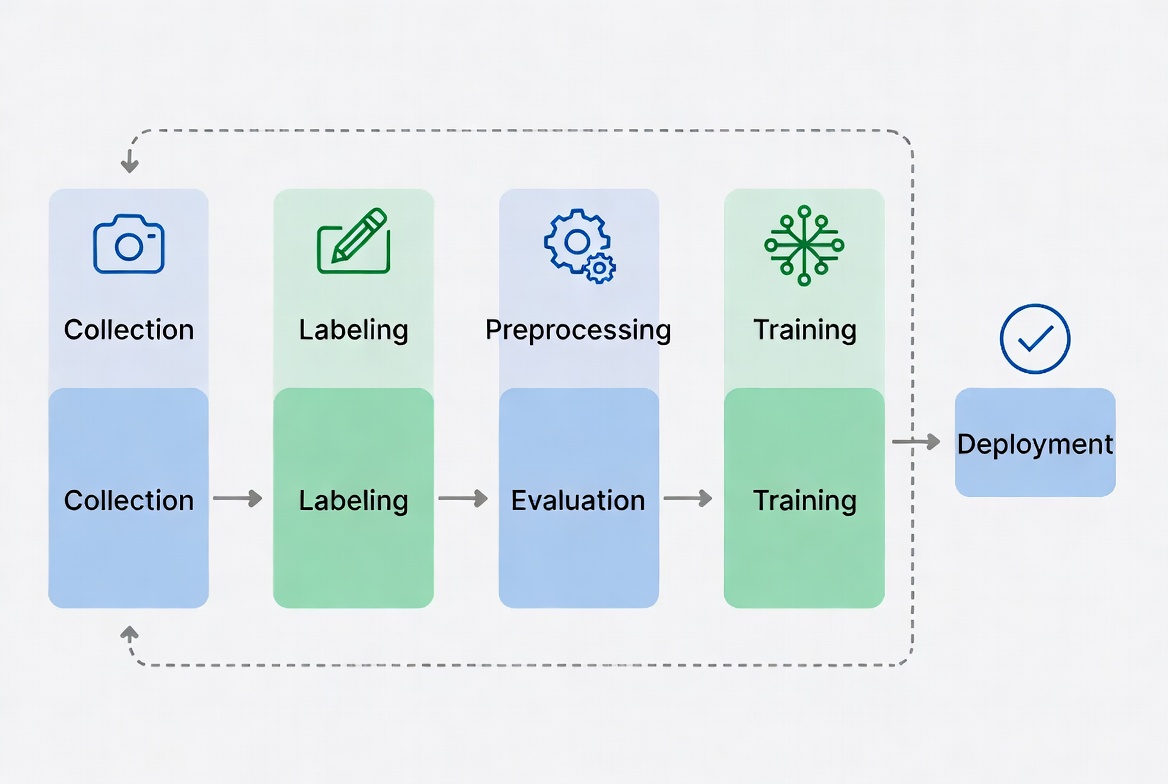


[…] Tesla’s Full Self-Driving (FSD) “10x parameter update” refers to a significant increase in neural network model size discussed in engineering breakdowns and industry analysis of Tesla’s AI evolution. […]