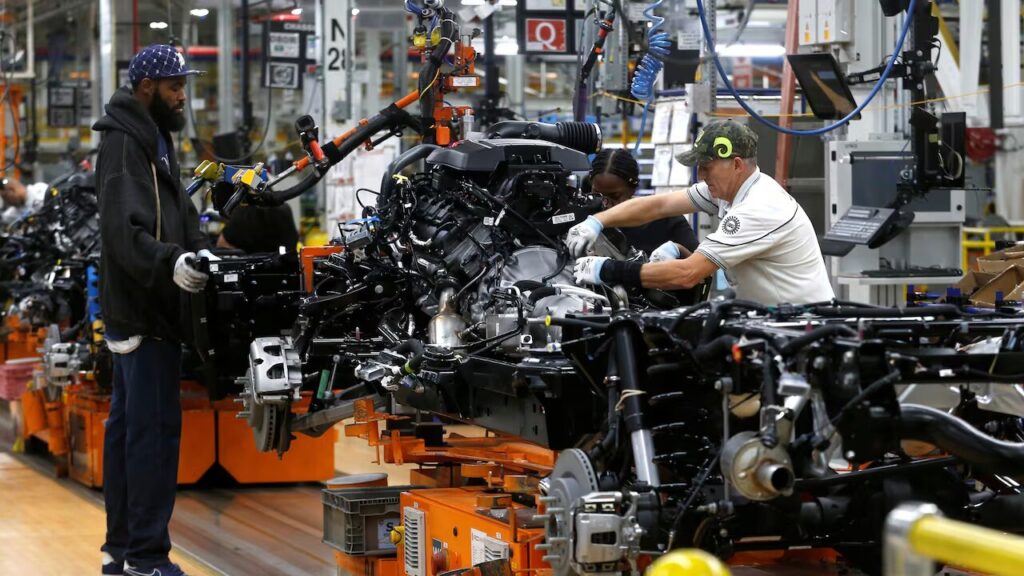

Automakers are not relocating production to the US for a single reason. It’s a combination of policy pressure, EV incentives, supply chain risk, and long-term cost control. The decision is complex and often irreversible once capital is deployed.
Here’s what matters most right now. US EV tax credits require local production and sourcing. Tariffs continue to increase the cost of imports. Supply chain disruptions exposed the risks of overseas dependency. And logistics costs remain volatile.
This is why manufacturers are shifting assembly lines, battery plants, and supplier networks closer to the US market. But the real question is not why it’s happening. It’s whether relocation actually makes financial and operational sense.
Let’s break it down step by step.
People Also Read : Japan AI Regulation News 2026:Updates on the AI Promotion Act
Why Automakers Are Moving Production to the US
The biggest trigger is policy alignment. The US government is pushing domestic manufacturing through incentives and compliance rules.
The Inflation Reduction Act (IRA) offers up to $7,500 in EV tax credits. But eligibility depends on local assembly and battery sourcing. This forces automakers to rethink global production.
At the same time, USMCA rules require 75% North American content. Vehicles that don’t comply face tariffs. That alone can add thousands of dollars per unit.
Now connect this with supply chain shocks.
During the semiconductor shortage, global auto production dropped by over 9 million vehicles in 2021. Companies that depended heavily on overseas suppliers suffered the most.
This created a shift from cost efficiency to supply chain resilience.
Cost Reality: Is US Production Actually Cheaper?
At first glance, US manufacturing looks expensive. Labor costs are higher than Mexico or Asia. But that’s only one part of the equation.
Labor vs Productivity
Average hourly wages:
- US: $25–$35/hour
- Mexico: $6–$10/hour
- China: $8–$12/hour
But US plants are highly automated. Productivity per worker is significantly higher. This reduces the real cost gap.
Now add logistics.
Latest in Category : APPI Amendment News Today: Latest Updates, Key Changes
Logistics and Inventory Savings
Shipping a vehicle from Asia to the US can cost $1,000–$2,500 per unit, depending on fuel and port delays. Local production removes this cost entirely.
Inventory holding costs also drop. Faster delivery cycles mean less capital tied up in stock.
Capital Investment
Building a new plant in the US can cost $1 billion to $5 billion. EV battery plants alone often exceed $3 billion.
Retrofitting older plants is cheaper. But it comes with limitations in scalability and technology.
Hidden Costs Most Companies Miss
This is where many relocation strategies fail.
- Workforce training can take 12–24 months
- Supplier gaps force partial imports
- Environmental approvals delay projects by years
- State incentives often come with strict conditions
So the real cost is not just financial. It’s operational complexity.
Step-by-Step Strategy for Production Relocation
Relocation works when it’s structured. Not rushed.
1. Policy and Incentive Analysis
Start with federal and state incentives. Compare long-term benefits, not just upfront grants.
Some states offer tax breaks for 10–20 years. Others focus on infrastructure support.
2. Location Selection
Automakers are focusing on the Southern US and Midwest.
Why?
- Lower labor costs than coastal regions
- Strong logistics networks
- Growing EV ecosystem
Proximity to suppliers is critical. A plant without a nearby supply chain increases dependency risks.
3. Supplier Network Realignment
Relocation is not just about the factory. It’s about the ecosystem.
If 50% of components are still imported, the benefits drop significantly.
That’s why automakers are pushing suppliers to move alongside them.
4. Workforce Development
The US faces a skilled labor shortage in manufacturing.
Companies are solving this through:
- Partnerships with technical colleges
- In-house training programs
- Automation to reduce labor dependency
5. Phased Transition
Most companies follow a dual production model.
They maintain existing plants while gradually shifting production. This reduces risk and ensures continuity.
Typical timeline: 18 to 36 months.

What Real-World Cases Reveal
Some automakers executed relocation successfully. Others faced delays.
Success Factors
- Strong alignment with government incentives
- Early supplier integration
- Investment in automation
Common Failures
- Underestimating labor shortages
- Delays in regulatory approvals
- Overdependence on imported components
These issues can push project timelines beyond 3–5 years.
Major Challenges You Can’t Ignore
Relocation sounds strategic. Execution is difficult.
- Skilled labor shortage remains a major bottleneck
- Supplier ecosystems are still developing in many regions
- High upfront investment delays ROI
- Policy risks change with political cycles
For example, a change in EV subsidy rules can impact long-term profitability.
Impact on the US Automotive Industry
Relocation is reshaping the industry.
- Billions of dollars are being invested in EV and battery plants
- States like Texas, Tennessee, and Michigan are becoming manufacturing hubs
- Job creation is rising, but automation limits workforce expansion
This is not a return to old manufacturing. It’s a shift to advanced, tech-driven production.
Featured Post : Tech News Togtechify: Coverage, Reliability, and Best Use Cases
Global Impact of US Relocation
When production moves, global supply chains shift.
Mexico remains competitive due to lower labor costs and USMCA access. China is focusing more on domestic and European markets.
This creates a regional manufacturing model instead of a global one.
You can explore the broader concept of supply chain restructuring on Wikipedia.
Will This Trend Continue?
Short answer: yes, but selectively.
Relocation will continue for:
- EV production
- Battery manufacturing
- High-value vehicle segments
But low-cost vehicle production may stay in Mexico or آسيا due to cost advantages.
Automation will play a key role. It helps offset high labor costs and improves consistency.
Actionable Insights for Decision Makers
Relocation makes sense when:
- Incentives offset capital investment
- Supply chain can be localized
- Production volume justifies scale
It does not make sense when:
- Supplier dependency remains global
- Labor shortages impact output
- Policy incentives are uncertain
A structured feasibility analysis is critical before committing billions in capital.
Final Takeaway
Automaker production relocation to the US is not a trend. It’s a strategic shift driven by policy, risk, and technology.
But it’s not a one-size-fits-all solution.
Companies that succeed treat relocation as a full ecosystem transformation. Not just a factory move.