
The Argentine national team is under an official FIFA investigation following their 2-1 World Cup semi-final victory over England. During the post-match celebrations in Atlanta, several players displayed a banner reading “Las Malvinas son Argentinas” (The Malvinas are Argentine). This direct reference to the disputed Falkland Islands violates FIFA’s strict stadium code of conduct regarding political messaging. Disciplinary action is highly likely, with historical precedents pointing heavily toward fines for the Argentine Football Association (AFA).
Fans and football analysts are now questioning if key players face suspensions ahead of the World Cup final against Spain. The independent disciplinary committee is currently assessing the match reports to determine the severity of the breach. UK government officials, including Prime Minister Keir Starmer’s office, have strongly urged FIFA to thoroughly investigate the incident. The primary concern is whether this political statement crosses the line into player misconduct that warrants a match ban.
A ruling is expected swiftly, as the integrity of Sunday’s final in New Jersey hangs in the balance. While the AFA faces almost certain financial penalties, individual player suspensions would dramatically alter the championship match. To understand the potential outcomes, we must examine the specific rules broken and how FIFA has historically handled identical infractions.
Let’s break down exactly what happened on the pitch and why it triggered such an immediate global response.
What Triggered the Potential FIFA Punishment for Argentina?
The celebration started normally after a thrilling 2-1 comeback win over England. However, the atmosphere shifted drastically when a highly controversial banner was brought onto the pitch.
The Incident
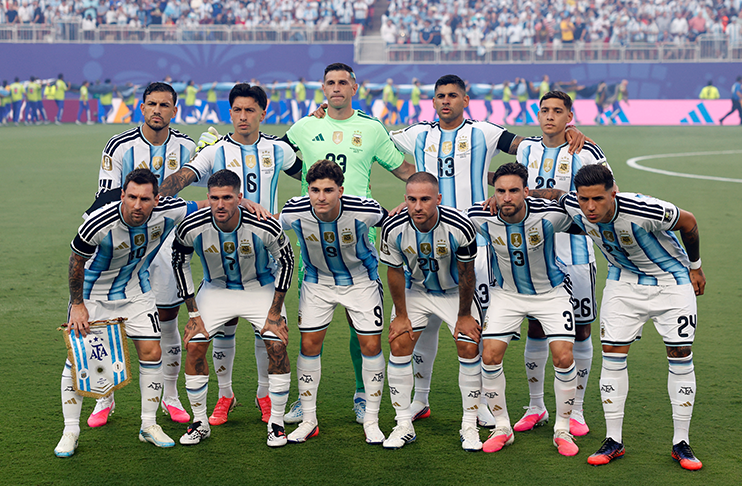
Following the final whistle at the Atlanta stadium, Argentina’s players celebrated their hard-fought victory with traveling supporters. Amid the singing and cheering, a large banner was handed down from the stands. Players including Giovani Lo Celso, Nicolas Otamendi, and Lisandro Martinez were seen holding and posing with the display on the field. The moment was captured by international broadcasters and instantly sparked a global debate.
The Banner
The banner clearly read “Las Malvinas son Argentinas”, which translates to “The Falkland Islands are Argentine”. This phrase represents Argentina’s long-standing sovereignty claim over the territory. The players briefly paraded the message before placing it on the pitch. While the action was celebrated by many Argentine fans and politicians, it immediately drew sharp criticism from UK officials.
The Context
To understand the gravity of this situation, you have to look back at the history between the two nations. The UK and Argentina fought a 10-week conflict over the Falkland Islands in 1982. The Falklands War resulted in the deaths of 649 Argentine troops, 255 British service personnel, and three islanders. While Britain maintains control of the territory, Argentina’s constitutional claim remains an unwavering objective. Bringing this geopolitical dispute onto a World Cup pitch guarantees a severe reaction.
So, what exactly do the governing bodies say about bringing such historical conflicts into the stadium?
FIFA’s Stance on Political Messages in Football
Football’s governing bodies have always strived to maintain complete neutrality during international competitions. The rules surrounding this incident are unambiguous and firmly established.
The Rulebook
The International Football Association Board (IFAB) and FIFA maintain extremely strict regulations regarding player conduct. The stadium code clearly states that equipment must not have any political, religious, or personal slogans. Furthermore, players are strictly prohibited from displaying statements or images of a political nature during matches. Any offense leaves the player or the team vulnerable to harsh sanctions by the competition organizer.
Why It Matters
This is not merely a technicality; it strikes at the core of FIFA’s operational philosophy. The organization goes to great lengths to ensure the World Cup remains a neutral sporting event, separate from global politics. FIFA’s independent disciplinary committee is currently assessing the match reports from the Atlanta semi-final. If they allow this banner to go unpunished, it sets a dangerous precedent for future tournaments. The integrity of the rules requires immediate and consistent enforcement.
With the investigation confirmed, everyone wants to know what the actual punishment will look like.
What Are the Likely Sanctions? (Precedents & Penalties)
When predicting a FIFA punishment, historical precedent is always our best guide. The organization rarely creates new penalties when a nearly identical infraction has occurred previously.
The 2014 Precedent (Fines)
The most likely outcome is a significant financial penalty directed at the Argentine Football Association. In 2014, the AFA was fined roughly £20,000 by FIFA. This happened after players displayed an identical “Las Malvinas son Argentinas” banner before a friendly match against Slovenia. Because the message and the offending party are exactly the same, a fine is almost guaranteed. Financial sanctions punish the federation without impacting the sporting balance of upcoming matches.
The 2012 Precedent (Player Suspensions)
However, individual player suspensions cannot be entirely ruled out. We saw this during the 2012 Olympics when South Korea’s Park Jong-woo held up a political sign regarding a territorial dispute with Japan. Park was banned for two matches and temporarily denied his bronze medal. If FIFA decides that players like Lo Celso or Otamendi actively orchestrated the display, they could face similar bans. This represents the worst-case scenario for the South American champions.
This brings us to the most pressing question for football fans ahead of the weekend.
Will the Investigation Impact the 2026 World Cup Final?
The timing of this controversy could not be worse for the defending champions. The World Cup final against Spain is just days away, adding immense pressure to the situation.
The Timeline Problem
Fans are incredibly anxious about whether key midfielders and defenders will be suspended for Sunday’s clash in New Jersey. FIFA is under immense pressure to deliver a verdict quickly. Suspending players hours before a World Cup final would cause unprecedented chaos and spark massive outrage. However, allowing players who breached the disciplinary code to play without a ruling also invites heavy criticism. The disciplinary committee must act swiftly to resolve this timeline problem.
Manager vs. State
The incident has also highlighted a fascinating divide in leadership styles. Argentine manager Lionel Scaloni has historically preferred to keep politics out of his locker room, focusing solely on football. Conversely, Argentine President Javier Milei publicly backed the players, stating it is understandable that they get carried away by emotions. Vice President Victoria Villarruel also voiced strong support on social media, proclaiming the islands belong to Argentina. This political backing complicates matters for the AFA as they navigate FIFA’s disciplinary process.
Do you still have questions? Let’s clarify the most common queries surrounding this event.
FAQ: Argentina FIFA Sanctions
- Why did Argentina hold up the Malvinas banner? The players were celebrating their semi-final victory and accepted a banner from supporters in the stands. The banner reflects Argentina’s national claim over the Falkland Islands, a deeply ingrained geopolitical belief in the country.
- Can FIFA ban players for holding political banners? Yes. IFAB and FIFA rules explicitly forbid the display of political slogans. Players found guilty of severe breaches can be suspended, as seen in previous international tournaments.
- Has Argentina been fined for this before? Yes. FIFA fined the Argentine Football Association £20,000 in 2014 for displaying the exact same message before an international match.