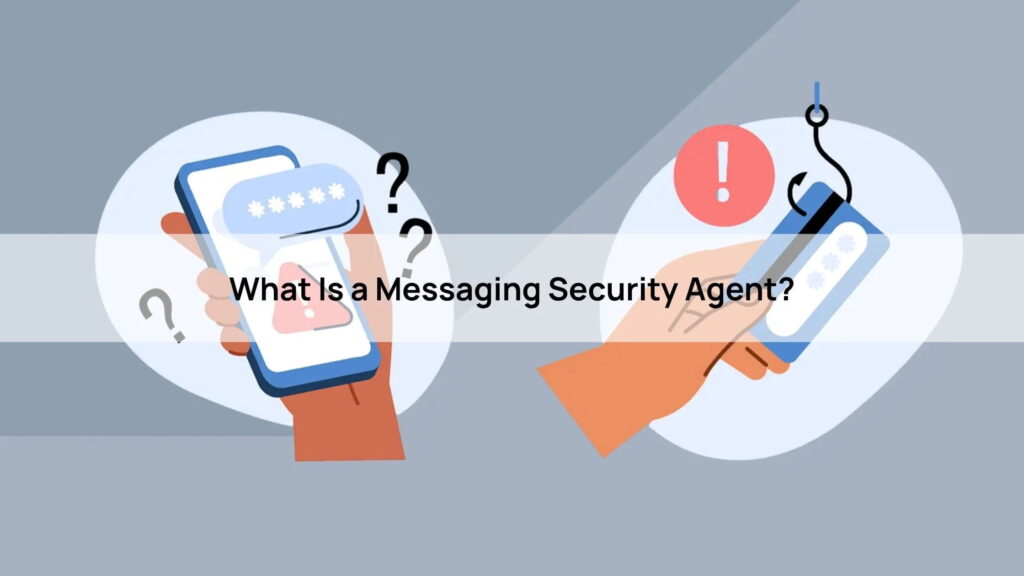

Messaging security is no longer limited to email filters. A messaging security agent (MSA) sits closer to the message flow and inspects communication across email, chat, SMS, and APIs in real time. It blocks phishing links, detects impersonation, enforces encryption policies, and prevents sensitive data leakage before or after delivery.
Organizations are shifting toward MSAs because attackers now target collaboration tools and messaging APIs, not just inboxes. According to industry reports, over 60% of phishing attacks now originate outside traditional email channels, including chat apps and SMS. This creates blind spots that older tools cannot cover.
At a practical level, an MSA works by intercepting messages, analyzing content and metadata, and applying policies such as blocking, quarantining, or alerting. It integrates with identity systems, threat intelligence feeds, and security operations tools to provide a unified defense layer.
Now that the core function is clear, the next question is where MSAs actually fit and why they outperform older approaches.
What Is a Messaging Security Agent?
A messaging security agent is a software layer that monitors and secures message flows across multiple communication channels. Unlike secure email gateways, it is not limited to a single entry point.
It can be deployed:
- On endpoints (user devices)
- Within cloud platforms (Microsoft 365, Slack)
- As an API-layer security control
This flexibility allows it to inspect messages across:
- Email systems
- Team collaboration tools
- SMS and mobile messaging
- Customer messaging APIs
- Internal message queues
That broader visibility is what makes MSAs relevant in current threat environments.

Why Messaging Security Agents Are Critical in 2026
Attackers follow users, not infrastructure. As teams move to chat platforms and API-driven messaging, threats move with them.
Recent data shows:
- BEC (Business Email Compromise) losses exceeded $50 billion globally (FBI estimates cumulative)
- Smishing (SMS phishing) attacks increased by over 300% in the past 3 years
- Internal chat tools are now a top vector for credential theft
Traditional tools fail because they:
- Focus only on inbound email
- Lack visibility into internal conversations
- Do not analyze API-generated messages
This gap is exactly where MSAs operate.
Core Functions of a Messaging Security Agent
An effective MSA performs multiple tasks in real time. Each function targets a specific risk area.
1. Message Inspection
- Scans text, links, attachments, and metadata
- Identifies suspicious patterns instantly
2. URL and Attachment Analysis
- Sandboxes links before users click
- Blocks malicious file payloads
3. Identity and Spoofing Detection
- Verifies sender authenticity
- Detects impersonation attempts
4. Data Loss Prevention (DLP)
- Stops sensitive data from leaving the organization
- Applies policies based on content type
5. Encryption Enforcement
- Ensures secure transmission (TLS, E2EE policies)
- Flags insecure fallback routes
6. Behavioral Analysis
- Detects anomalies in user messaging behavior
- Uses machine learning to adapt over time
Each of these functions connects directly to real-world attack scenarios, which makes MSAs practical rather than theoretical.
Messaging Security Agent Architecture Explained
To understand deployment, you need to see how the system flows.
A typical architecture includes:
1. Ingestion Layer
Messages are intercepted via APIs, proxies, or agents.
2. Analysis Engine
Content is scanned using rules, AI models, and threat intelligence.
3. Policy Engine
Decisions are applied:
- Allow
- Block
- Quarantine
- Alert
4. Integration Layer
Connects with:
- SIEM systems
- Identity providers (SSO, IAM)
- Incident response tools
This layered approach ensures coverage without disrupting message delivery.
Messaging Channels Covered
MSAs extend beyond email. This is where most solutions differ.
Email Platforms
- Microsoft 365
- Google Workspace
Collaboration Tools
- Slack
- Microsoft Teams
SMS and Mobile Messaging
- Detects smishing and OTP abuse
Customer Messaging APIs
- Platforms like Twilio or WhatsApp Business
Internal Messaging Systems
- Kafka
- RabbitMQ
This multi-channel coverage reduces fragmented security controls.
Key Threats a Messaging Security Agent Stops
Each threat category maps to a specific detection capability.
- Business Email Compromise (BEC)
Targets executives and finance teams - Phishing and Spear Phishing
Uses social engineering and fake links - Malicious Attachments
Includes fileless malware - Data Exfiltration
Sensitive data shared via chat or email - Insider Threats
Misuse of internal communication tools - API Abuse
Fake transactional messages or alerts
For background on phishing, refer to this resource on Phishing.
How Messaging Security Agents Work (Step-by-Step)
Understanding the workflow helps with implementation decisions.
- Message Interception
Captured before or after delivery - Content Parsing
Extracts text, links, attachments - Threat Intelligence Check
Compares against known malicious indicators - Policy Enforcement
Applies predefined rules - User Notification or SOC Alert
Sends alerts for suspicious activity